There’s a moment every growing company hits.
It’s subtle at first.
Messages start getting missed.
Someone says, “I thought that was your task.”
A client follows up twice.
HR approvals sit somewhere in email.
And suddenly, the problem isn’t talent.
It’s coordination.
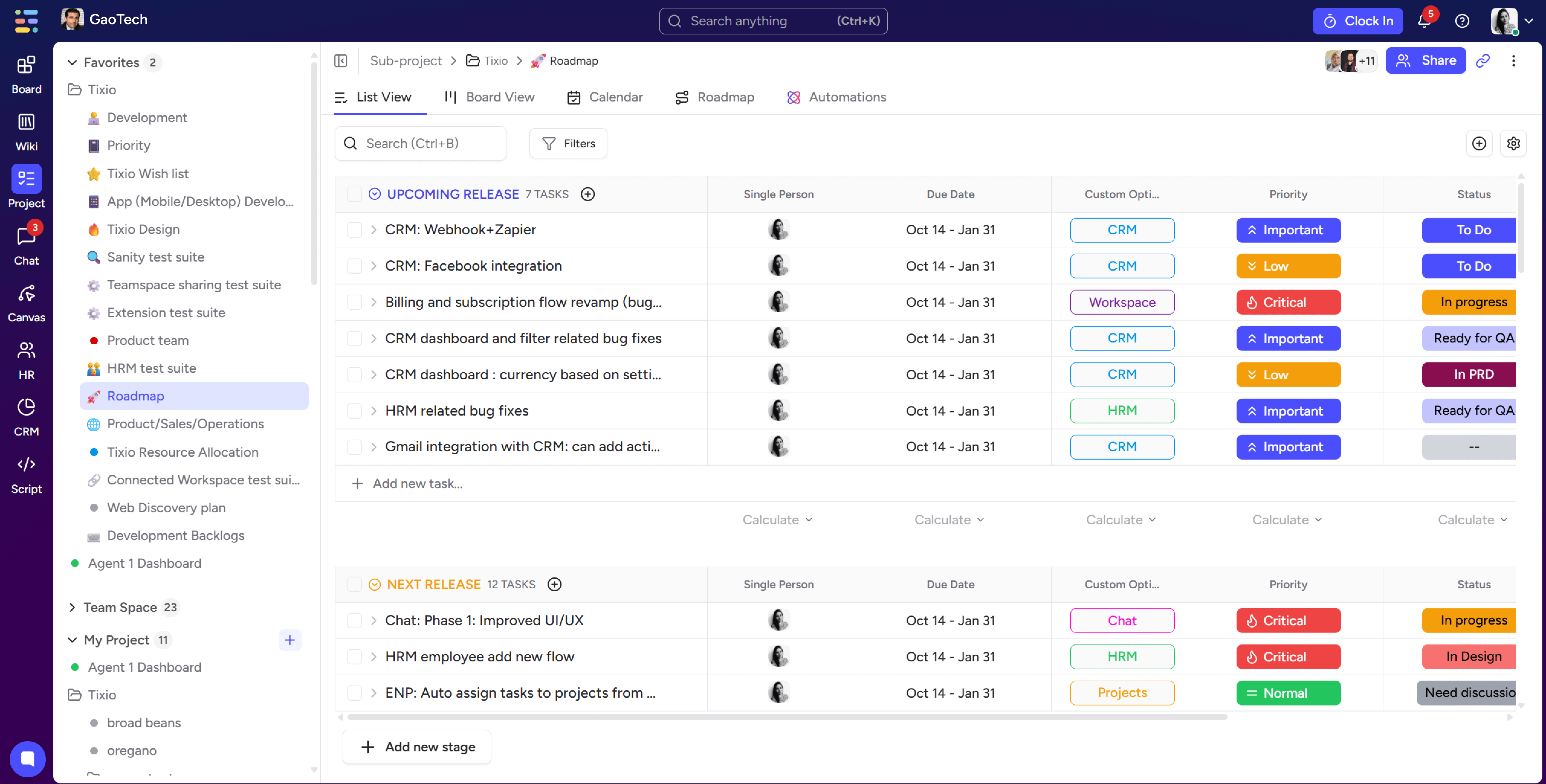
This is where a real team collaboration tool stops being optional and starts becoming infrastructure.
Not a “nice-to-have.”
Not another SaaS subscription.
Infrastructure.
The Myth: More Tools = More Productivity
Most companies don’t lack tools.
They lack structure.
A typical 20–50 person company today uses:
- Slack for chat
- Google Drive for files
- Notion for documentation
- Trello or Asana for tasks
- A separate HR tool
- CRM somewhere else
It feels organized.
Until it’s not.
According to McKinsey, employees spend nearly 20% of their workweek searching for internal information or tracking down colleagues for help.
Source: https://www.mckinsey.com/industries/technology-media-and-telecommunications/our-insights/the-social-economy
That’s one full day per week lost.
Not because people are lazy.
Because systems are fragmented.
A real team collaboration tool isn’t about adding another platform.
It’s about reducing fragmentation.
What Actually Breaks When You Scale
Let’s talk real scale pain.
At 5 people, collaboration is verbal.
At 15 people, collaboration is reactive.
At 40 people, collaboration needs design.
Most founders don’t redesign their operating system as they grow.
They just stack tools.
That’s where collapse begins.
Salesforce reports that 86% of employees and executives cite lack of collaboration or ineffective communication as the main cause of workplace failures.
Source: https://www.salesforce.com/resources/articles/workplace-collaboration-statistics/
That number isn’t random.
It reflects a structural flaw in how companies approach growth.
What a Real Team Collaboration Tool Should Solve
A serious team collaboration tool must do five things well:
1. Context Alignment
Chat must connect to tasks.
Tasks must connect to documentation.
Documentation must connect to people.
If conversations live in Slack and tasks live in another tool, context breaks.
Context switching reduces deep work. Research from the University of California Irvine shows it takes 23 minutes to refocus after interruption.
Multiply that across a team.
That’s hidden cost.
2. Ownership Clarity
Every task must have:
- Clear assignee
- Clear deadline
- Clear status
- Visible progress
No ambiguity.
Ambiguity kills velocity.
3. Visibility Without Micromanagement
This is critical.
A good team collaboration tool gives leadership visibility without constant check-ins.
If managers still need daily “status update” meetings, your system is failing.
4. Cross-Department Sync
Sales should see delivery status.
HR should see onboarding tasks.
Operations should see pipeline load.
When departments operate in silos, revenue slows down.
5. Scalable Structure
The system must work at 10 users and 200 users.
Many tools feel clean at small scale but become overwhelming as layers increase.
The Hidden Cost of Tool Sprawl
Let’s calculate something simple.
Assume:
25 employees
30 minutes daily lost in context switching
22 working days
That equals 275 hours per month.
If average cost per employee hour is $15 (conservative in many markets):
$4,125 monthly productivity loss.
That’s nearly $50,000 per year.
And that’s only for 25 people.
Now scale that.
This is why choosing the right team collaboration tool isn’t about UX preference.
It’s financial architecture.
Modern Teams Need Operating Systems, Not Apps
Gen Z and millennial professionals don’t want:
- Email chains
- Static dashboards
- Manual reporting
- Spreadsheet chaos
They expect:
- Real-time sync
- Clear structure
- Transparent workflows
- Minimal friction
The new workforce grew up in structured digital ecosystems.
If your internal system feels clunky, adoption drops.
And adoption is everything.
A team collaboration tool only works if everyone uses it daily.
The Founder Mistake
Most founders evaluate collaboration tools based on:
- Feature count
- Pricing
- Popularity
Rarely on:
- Adoption friction
- Workflow fit
- Cultural alignment
- Long-term scalability
Peter Drucker once said:
“Efficiency is doing things right; effectiveness is doing the right things.”
Choosing the wrong team collaboration tool might be efficient in onboarding.
But ineffective in scaling.
Implementation Is Where Most Teams Fail
According to Gartner, nearly 50% of digital transformation initiatives fail due to poor change management.
Buying software is easy.
Changing behavior is hard.
A proper rollout of a team collaboration tool requires:
- Leadership adoption first
- Clear workflow mapping
- Defined communication norms
- Training sessions
- Measured adoption metrics
If leadership continues using WhatsApp for urgent matters, your internal tool will never become central.
Consistency builds system trust.
What the Future Looks Like
The future of team collaboration tools is not just chat + tasks.
It’s:
- AI summaries
- Automated reporting
- Smart task allocation
- Integrated CRM + HR
- Predictive workload balancing
Companies that treat collaboration as infrastructure will scale smoother.
Companies that treat it as a collection of apps will continuously firefight.
Final Thought
The real question is not:
“Which team collaboration tool should we use?”
The real question is:
“Do we have a structured operating system for how our company works?”
If the answer is unclear, scale will eventually expose it.
A team collaboration tool is not software.
It’s your company’s digital backbone.