Team Collaboration Tools in 2025: The Annual Roundup You Actually Need
Every year around this time, I find myself sitting down with a fresh cup of coffee, opening way too many browser tabs, and trying to make sense of what has actually changed in the world of team collaboration. Not the press releases. Not the VC-funded hype. The real stuff. What teams are using day to day, what is saving them time, and what is quietly being abandoned after the onboarding phase.
2025 has been a particularly interesting year. The dust has settled on a lot of the post-pandemic remote work chaos, and organizations are now making more deliberate decisions about their tech stacks. AI has moved from being a buzzword to being genuinely baked into collaboration workflows. Async-first culture is no longer just a startup thing. And frankly, the bar for what a good collaboration tool looks like has gone up significantly.
So let us get into it. This is the annual roundup of team collaboration tools for 2025, written for founders, team leads, and operations folks who want clarity, not confusion.
Why Team Collaboration Tools Matter More Than Ever in 2025
Before we dive into specific tools, let us look at the landscape. According to a McKinsey report, companies that invest in collaboration technologies see a 20 to 25 percent increase in worker productivity. That is not a small number. Meanwhile, Gartner predicts that by the end of 2025, over 75 percent of enterprise organizations will have adopted some form of AI-augmented collaboration platform.
The shift is real. Teams are no longer just looking for a place to send messages or store files. They want platforms that reduce context switching, surface the right information at the right time, and support both synchronous and asynchronous workflows without forcing people to be online 24/7.
A 2024 Slack Future of Work survey found that employees switch between apps an average of 10 times per hour. That fragmentation is costing companies thousands of dollars per employee per year in lost focus time. The best team collaboration tools 2025 has produced are specifically trying to solve this fragmentation problem.
The Big Trends Shaping Team Collaboration Tools in 2025
1. AI Is Now Table Stakes
If a collaboration tool does not have some form of AI assistance in 2025, it feels outdated. But not all AI features are created equal. The ones getting real traction are:
- Meeting summaries and action item extraction
- Smart search that understands context, not just keywords
- Writing assistance that adapts to your team's tone
- Automated task creation from conversations
- AI-generated project status updates
The tools that have nailed this are not just slapping a chatbot on top of existing features. They are weaving AI into the workflow in ways that feel natural. Notion AI, for example, has become a genuine productivity layer for teams using Notion as their knowledge base. Microsoft Copilot inside Teams has started delivering on its promises for organizations already in the Microsoft ecosystem.
2. Async-First Is the Default, Not the Exception
The nine-to-five synchronous workday is officially on life support. With distributed teams spanning multiple time zones, async communication is not a workaround anymore. It is the primary way work gets done.
This has pushed a new category of tools into the spotlight. Loom for video messaging, Twist as a structured async alternative to Slack, and tools like Tandem and Yac have all gained ground among teams that are serious about reducing unnecessary meetings.
A Buffer State of Remote Work report found that 68 percent of remote workers prefer async communication for non-urgent tasks, and that number has been climbing year over year. The best collaboration tools in 2025 are designing for async by default and making sync feel intentional when it happens.
3. The All-in-One vs. Best-of-Breed Debate Continues
This one never really goes away, but 2025 has brought some interesting developments. A lot of smaller teams are gravitating toward all-in-one platforms like Notion, ClickUp, or Monday.com because the switching cost between apps is just too high. Larger enterprises, on the other hand, are still leaning toward best-of-breed solutions integrated through middleware like Zapier or Make.
The interesting middle ground is tools that are building deeper integrations rather than trying to do everything themselves. Linear, for instance, is staying laser-focused on engineering workflows but has built integrations that make it feel like part of a larger ecosystem rather than an isolated tool.
4. Security and Data Sovereignty Are Non-Negotiable
With remote work came a massive expansion of the attack surface for cybersecurity threats. In 2025, collaboration tools are being evaluated not just on features but on where your data lives, how it is encrypted, and whether it meets compliance requirements like SOC 2, GDPR, and HIPAA.
Teams in regulated industries like healthcare, finance, and legal are particularly focused on this. Tools like Rocket.Chat, which offers self-hosted options, and Microsoft Teams, with its enterprise-grade compliance features, are seeing strong adoption in these verticals.
The Best Team Collaboration Tools 2025: Category by Category
Communication and Messaging
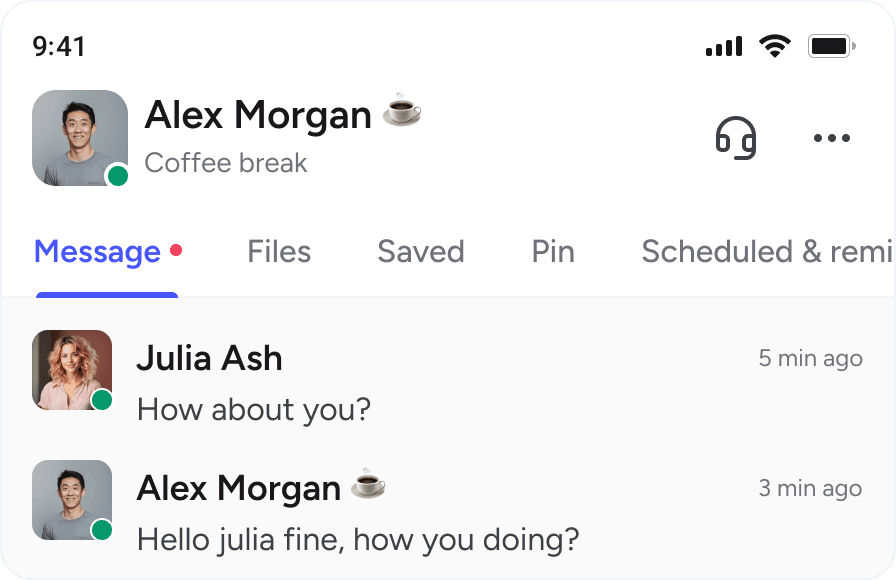
Slack is still the default for a reason. Its channel-based communication model, combined with a massive app ecosystem and now solid AI features through Slack AI, makes it the safest bet for most teams. Pricing has gone up, which has pushed some smaller teams to look elsewhere, but for organizations that live in Slack, the switching cost is just too high to justify leaving.
Microsoft Teams has quietly become one of the most powerful collaboration platforms available, especially for organizations already using Microsoft 365. The integration with Word, Excel, PowerPoint, and now Copilot AI is genuinely impressive. If you are not already in the Microsoft ecosystem, onboarding can feel clunky. But if you are, Teams in 2025 is worth a serious second look.
Discord has made a surprising push into the professional space, particularly among developer teams and creator-led organizations. Its voice channel model is uniquely useful for teams that want ambient audio presence without the formality of a scheduled call.
Project Management
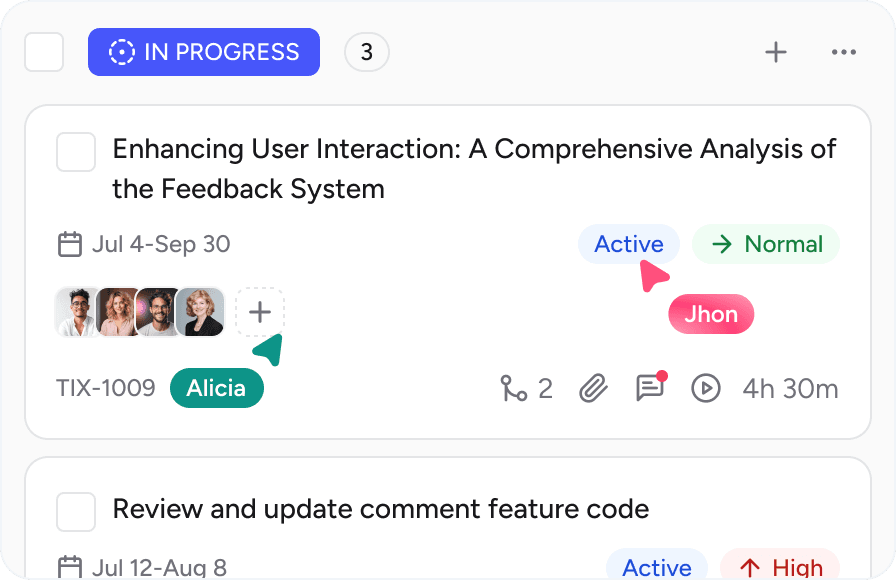
Linear has become the go-to for engineering and product teams that want speed and clarity. Its opinionated approach to workflows means less configuration time and more actual work. The 2025 updates have improved roadmap views and added better cross-team dependency tracking.
ClickUp remains the most feature-rich option on the market. The downside is that same richness can overwhelm new users. For teams willing to invest in setup, it can genuinely replace five or six other tools. For teams that want something that works out of the box, it might be overkill.
Asana continues to be a strong choice for marketing, operations, and cross-functional teams. Its timeline view and reporting features have matured well, and the AI-powered workflow suggestions added in 2024 are now a real time-saver heading into 2025.
Monday.com is excellent for teams that are more visual and less technical. Its no-code automation builder is one of the best in the category, and it has expanded its CRM and service management features significantly this year.
Document Collaboration and Knowledge Management
Notion is the clear leader here. It has evolved from a notes app into a full-blown operating system for teams. With Notion AI now deeply integrated, you can draft documents, summarize meeting notes, and query your entire workspace with natural language. For teams that want a single source of truth, Notion is hard to beat in 2025.
Confluence is still widely used in enterprise settings, particularly teams that are already running on Jira and the Atlassian stack. It is not the most modern interface, but it is stable, scalable, and has deep integration with project tracking.
Coda sits in an interesting middle space between spreadsheet and document. For teams that want to build custom internal tools without writing code, Coda's Doc Maker features are genuinely powerful and underrated.
Video Collaboration
Zoom is still everywhere, but its AI Companion features have added real value. Auto-generated summaries, smart clips, and better noise cancellation have kept it competitive even as other players have grown.
Loom is the standout for async video. Being able to record a quick walkthrough, share it instantly, and have AI generate a transcript and summary has become a core part of how modern teams communicate. Loom was acquired by Atlassian, which should accelerate its integration into the broader product suite.
Mmhmm and Descript are worth watching for teams that produce a lot of video content internally. Descript in particular has made video editing as easy as editing a text document, which is remarkable for teams that do not have video production skills.
Whiteboarding and Visual Collaboration
Miro remains the default for remote workshops, brainstorming sessions, and design sprints. Its template library is enormous and the real-time collaboration is smooth. The AI features for summarizing sticky notes and generating diagrams from text have become genuinely useful in 2025.
FigJam is the designer-friendly alternative, and for teams already working in Figma, the tight integration makes it a natural choice. It is simpler than Miro, which is either a feature or a limitation depending on your team's needs.
How to Actually Choose the Right Tools for Your Team
Here is where I will be honest with you. The best team collaboration tools 2025 has available are only as good as the adoption you get from your team. A tool nobody uses is worse than a mediocre tool everyone uses consistently.
Start With the Problem, Not the Product
Before you evaluate any tool, write down the specific problems you are trying to solve. Is it that meetings are out of control? Information is getting lost in email threads? New hires cannot find documentation? Each of these has a different solution, and starting from the problem keeps you from being distracted by shiny features that do not apply to your situation.
Audit What You Already Have
Most teams are overpaying for tools they barely use. Do a proper audit. Look at what your team actually opens every day versus what is being paid for but ignored. You might find that consolidating onto fewer, better-used tools saves money and reduces friction at the same time.
Involve the Team in the Decision
This sounds obvious but is frequently skipped. The people who will use the tool every day should have input on what gets chosen. A quick async survey asking what is working, what is not, and what they wish they had will give you better signal than any demo from a sales rep.
Run a Real Pilot
Most SaaS tools offer free trials. Use them properly. Pick a specific team or project, run it through the new tool for 30 days, and measure real outcomes. Not vibes. Not impressions. Actual outcomes like meeting time reduced, tasks completed on time, or support tickets resolved faster.
What Is Coming Next: Collaboration Tool Trends to Watch Beyond 2025
Looking ahead, a few things stand out as early signals worth paying attention to.
Spatial and Immersive Collaboration
With Apple Vision Pro having launched and Meta continuing to iterate on its Quest platform, spatial computing is slowly becoming a real consideration for forward-thinking organizations. Tools like Spatial and Horizon Workrooms are early but show what immersive collaboration could look like in a few years. This is not mainstream yet, but if your team does complex 3D work or heavily visual collaboration, it is worth watching closely.
AI Agents Doing Actual Work
The next frontier is not AI assisting humans but AI agents completing tasks autonomously. Tools like ClickUp Brain and Notion AI are already starting to move in this direction. Within the next two to three years, we will likely see AI agents that can coordinate across tools, update project status, send status updates, and flag blockers without any human input. The collaboration tools that build reliable agent infrastructure early will have a significant advantage.
Deeper Calendar and Focus Integration
There is growing recognition that the biggest enemy of collaboration is not bad tools but bad time management. Tools like Reclaim.ai and Clockwise are now integrating with project management and communication tools to protect focus time automatically. Expect this category to grow significantly as organizations get more serious about sustainable work practices.
Final Thoughts
The landscape of team collaboration tools in 2025 is both exciting and a little overwhelming. There are genuinely great tools available across every category, which means the challenge is no longer finding something that works. It is choosing wisely, implementing thoughtfully, and maintaining the discipline to actually use what you have adopted.
The teams winning right now are not necessarily the ones with the most tools. They are the ones with clear workflows, strong adoption habits, and a willingness to periodically revisit what is working and what is not.
If I had to give one piece of advice coming out of this annual roundup, it would be this: pick fewer tools, use them deeper, and let AI handle the grunt work so your team can focus on the thinking that actually moves the needle.
That is what the best team collaboration tools 2025 is pushing us toward, and honestly, it is a good direction to be heading.