Education institutions run some of the world's most complex operations. Their admin tools are a disaster.
Universities, schools, and EdTech companies coordinate programs, manage staff, launch new initiatives, handle compliance, and run HR, all simultaneously, all on budgets that leave no room for a dedicated operations team. Most of them are doing it across email, shared drives, WhatsApp groups, and a Notion page nobody updates. There is a better way.
Here is a scenario every person who has worked in education administration will recognize. A new program is launching. The curriculum is finalized, the faculty are assigned, the accreditation paperwork has been submitted. Three weeks before the first cohort starts, the program coordinator is searching their inbox for the student handbook draft, asking the department head which version of the onboarding checklist is current, and discovering the IT team was never told about the new course platform access requirements.
None of this happens because the people involved are incompetent. It happens because the information is scattered across email threads, shared drives with inconsistent naming, WhatsApp groups where everything is technically searchable but practically impossible to find, and a wiki that someone set up enthusiastically and then stopped maintaining when the semester got busy.
The problem is not the people. It is the infrastructure. And unlike classroom technology, which receives enormous attention and investment, the operational infrastructure that enables educational institutions to actually function is chronically under tooled. This blog is about what that costs, and what fixing it actually looks like in practice.
The Education Operations Problem Nobody Talks About
When the conversation turns to improving education, it almost always goes to pedagogy, learning outcomes, and student experience. Those things matter deeply. But behind every functioning educational institution is an operations layer that either enables or actively undermines everything else. And for most institutions, that operations layer is patched together from tools that were never designed to work together.

Here is what the operations and administration side of a typical mid-size educational institution runs on in 2025:
- Google Workspace or Microsoft 365 for email and documents — without consistent folder structure, so finding anything older than two months is a genuine forensic exercise.
- A student information system for enrolment records — that has essentially nothing to do with how faculty and operations staff coordinate their work.
- WhatsApp groups for quick staff coordination — ungoverned, unsearchable, and a compliance risk for anything even slightly sensitive.
- Spreadsheets for HR tracking, leave management, and staff records — maintained by whoever cares enough to update them when they remember.
- A project management tool that was enthusiastically adopted by one department, quietly ignored by everyone else, and is now mostly used by the person who set it up.
The cumulative effect is that the people running educational operations spend a significant portion of every week on coordination overhead: hunting for the right document version, chasing updates from colleagues across departments, reconstructing timelines from email threads, and manually compiling status reports for leadership that should be a live project view. Every hour spent on that overhead is an hour not spent on improving programs, supporting faculty, or serving students.
What Education Operations Teams Actually Need
The requirements are consistent across institutions, whether it is a university department, a K-12 administration team, or an EdTech startup. None of it is particularly exotic:
- One place for institutional documentation. Curriculum frameworks, accreditation records, policy documents, faculty guides — versioned, searchable, and always current.
- Real project tracking for program launches and institutional initiatives. With clear ownership, milestones, and a status view that does not require a weekly meeting to assemble.
- Staff HR without a full enterprise HRMS. Leave management, onboarding workflows, and staff records in one place, without a $500-a-month HR system most institutions cannot justify.
- Communication organized by purpose. Department channels and program-specific channels instead of a WhatsApp group where every message competes equally for attention.
The classroom technology gets the attention. The operations infrastructure that makes the whole institution function gets a shared Google Drive and a prayer.
Module by Module: Tixio for Education Teams
Tixio Wiki: The institutional knowledge base that actually stays current
Every educational institution has documentation that should be findable by any staff member in under 30 seconds: curriculum frameworks, program policies, compliance records, accreditation submissions, faculty onboarding guides, and student handbooks. In practice, this information is scattered across shared drives with folder structures that made sense to whoever created them three years ago and nobody else since.
Tixio Wiki gives you a structured, searchable knowledge base where every document is versioned, always current, and linked to the program or project it belongs to. When accreditation review arrives, you are not spending three weeks assembling documentation from six locations. It is in the wiki, organized, ready, and linked to the project timeline it belongs to.
Tixio Projects: Program launches and accreditation cycles run as real projects
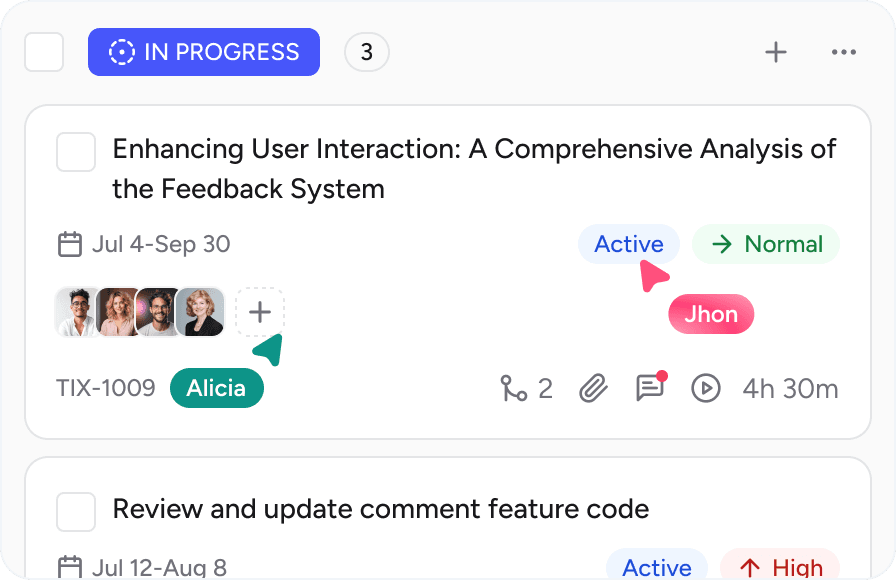
Launching a new academic program involves dozens of tasks across faculty, operations, IT, marketing, student services, and compliance, all converging on a hard external deadline. Accreditation submissions are similarly complex multi-month undertakings. Both of these routinely get "managed" through a combination of email, shared documents, and calendar reminders in someone's personal inbox.
Tixio gives every institutional initiative a proper project: tasks with owners, milestones with dates, and a timeline view that tells leadership exactly where things stand without a weekly status meeting to compile the information. When something is at risk of missing a deadline, it is visible before it becomes a problem, not after.
Tixio HR: Faculty and staff HR without the enterprise HRMS price tag
For institutions that cannot justify a full enterprise HR system — which covers most universities at the department level and virtually all K-12 administrations — managing staff leave, onboarding new faculty, and maintaining HR records can feel like a constant juggle between spreadsheets, email, and paper forms that live in a physical folder nobody can find when they need it.
Tixio HRM handles the operational essentials: leave requests, onboarding workflows, and staff records, all inside the same workspace where program management and institutional docs already live. No separate system, no integration to maintain, no spreadsheet that is three months out of date because the person who owns it was on leave.
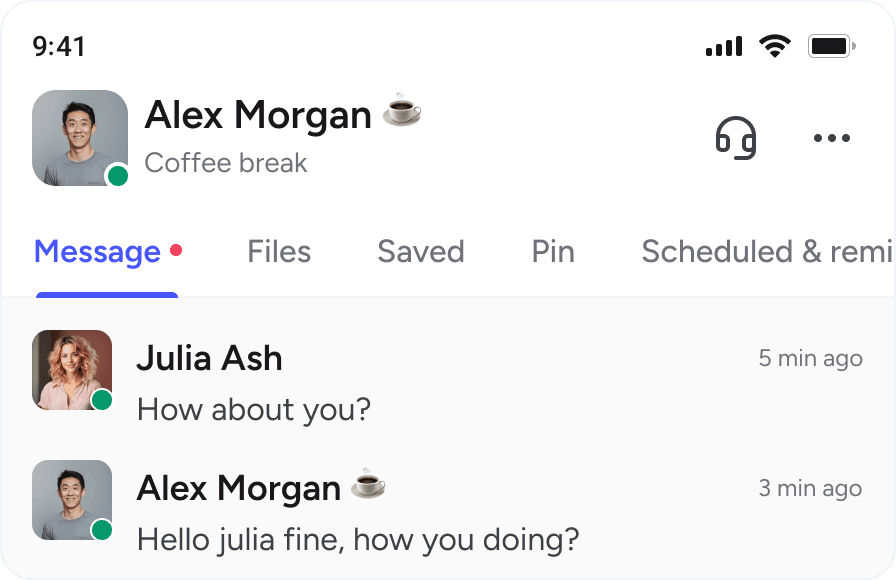
Tixio Chat: Staff coordination that does not live in a WhatsApp group
The faculty WhatsApp group is an entirely understandable solution to a real problem: people need a fast, frictionless way to coordinate. The issue is that WhatsApp is ungoverned, completely unsearchable by the institution, not connected to any of the work it is supposedly coordinating, and creates a genuine compliance risk for anything that qualifies as sensitive personnel or student information.
Tixio replaces it with structured, searchable channels: one per department, one per program, one per initiative, and one for institution-wide announcements. Important decisions do not get buried under weekend coordination messages. Everything is searchable. Everything is attached to the institution's workspace rather than a personal messaging app that people will eventually leave, mute, or lose access to when they change roles.
Tixio Whiteboard: Curriculum planning sessions that produce lasting artifacts
Program design workshops, curriculum mapping sessions, and strategic planning days generate genuinely valuable thinking that almost always evaporates into a whiteboard photograph, a Miro export that nobody looks at again, or a meeting recording that exists but nobody has time to watch. Tixio Whiteboard lives inside the project it belongs to, so the curriculum map from the January planning session is fully intact, annotated, and accessible when the August implementation review needs to refer back to it. The thinking accumulates over time instead of disappearing after every meeting.
Tixio CRM: For EdTech companies: from prospect to onboarded customer without the handoff chaos
EdTech companies face all the same internal coordination problems as educational institutions, with the added complexity of managing a sales pipeline and a customer onboarding process simultaneously. When a school district or corporate training client converts, someone manually creates an onboarding project, copies over the client details, briefs the implementation team, and sets up the customer workspace. Every time. With Tixio CRM, the deal record and the onboarding project live in the same workspace. When a deal closes, the project spins up from the CRM record in one click, with client contacts, contract notes, and agreed scope carrying over automatically.
With Tixio
The program launch is a Tixio project. The task board has owners and due dates. The curriculum documents live in the project wiki, versioned and linked to the relevant tasks. Faculty onboarding is a structured workflow in Tixio HRM: tasks, documents, and introductions all in one place, triggered automatically when a new faculty member is added. Leave is managed through HRM; the team calendar updates automatically. The accreditation documents are in the institutional wiki, organized by category. Leadership sees a live project view whenever they want one. Everything gets done. The coordination cost is a fraction of what it was.
The Honest Case for Making the Switch
Educational institutions are not known for fast technology adoption. There is institutional inertia, there are approval processes, and there is always a percentage of staff who have learned to work around the limitations of the current system and do not want to relearn a new one. These are real obstacles and dismissing them is not helpful.
But the case for a connected workspace is not really about technology adoption. It is about whether your operations team spends their time on coordination overhead that tools should be handling, or on the actual work of improving programs and supporting the people in them. Every hour spent searching for documents, compiling status reports, and manually managing leave in a spreadsheet is an hour not spent on something that actually matters to your institution's mission.
What Tixio replaces for education teams: Scattered shared drive documentation (Wiki), disconnected project management (Projects), HR spreadsheets and email (HRM add-on), WhatsApp and group chat (Team Chat), and for EdTech companies, a standalone CRM (CRM add-on). One workspace. Starting at $2.30/seat/month billed annually.
The most practical evaluation is to take one real program or institutional initiative and run it through Tixio for 30 days. Compare the coordination overhead — the time spent finding things, chasing updates, and manually compiling status — against what your team was doing before. Most education operations teams find the difference is immediately obvious and the case for expanding adoption makes itself.