The on call runbook lives in one senior engineer's head, and that engineer is on holiday.
The architecture diagram is a screenshot someone pasted into a chat thread in March. The API contract sits in a document nobody has opened since the rewrite.
Then production falls over at 02:00 and three people spend forty minutes rebuilding context that already existed somewhere.
Tixio is the layer around the code work. Not the code, not the pipeline, but everything that explains them.
Why engineering documentation rots
- The runbook is tribal knowledge. The steps for rotating a certificate or draining a node live in the head of whoever built it, and the wiki entry stopped being true two deploys ago.
- Diagrams are screenshots. Someone drew the system in a whiteboard tool, exported a PNG, pasted it in chat, then changed the system. The PNG is still there. It is now fiction.
- Incident context is scattered. The alert is in one tool, the discussion in another, the fix in a pull request, the customer impact in a support thread. Nobody assembles the timeline, so the post mortem never gets written.
- Onboarding is a scavenger hunt. A new backend engineer spends the first week asking questions that were already answered, in DMs, to people who have since left.
- Maintenance work is invisible. Certificate renewals, dependency upgrades, quarterly access reviews and backup restore drills never make it onto a board, so they only get attention when they fail.
- Retro actions evaporate. The team agrees on three fixes, someone types them into a doc, and none of them become work anyone owns.
What Tixio does for engineering teams
Five modules cover most of what sits around the code.
Tixio Wiki: runbooks, ADRs and onboarding docs in one tree
Wiki holds nested pages with real time co-editing, global search, inline comments and page level permissions. Structure it the way your team thinks: a Runbooks section with one page per service, an Architecture Decision Records section where each RFC keeps its own page and comment thread, and an Onboarding section with the environment setup guide and the first week checklist.
Templates mean the next runbook starts from the same shape as the last one, so the deploy checklist and the rollback steps are always in the same place. Inline comments let a reviewer question a step without turning it into a meeting.
Tixio Projects: sprints, roadmap and the maintenance work nobody schedules
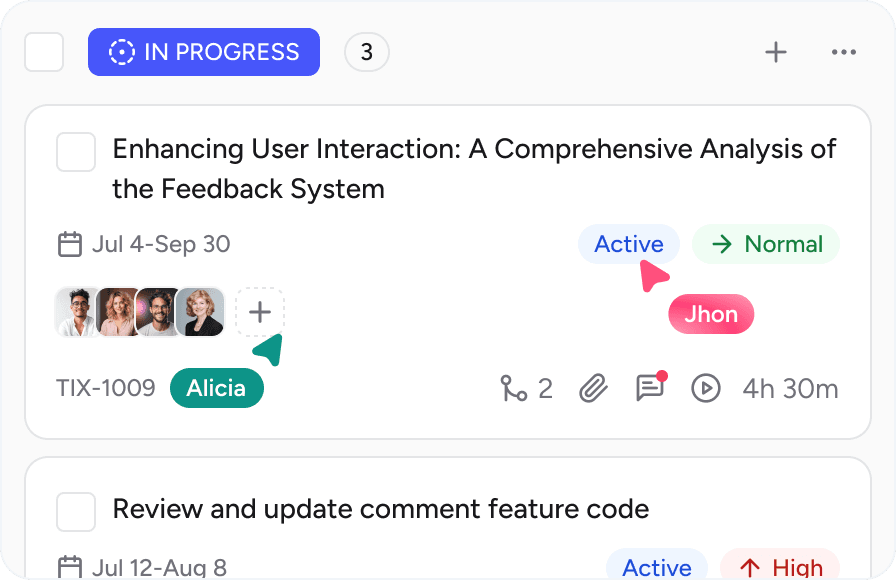
Projects gives you List, Kanban, Calendar and Roadmap views over the same work, plus subtasks, custom fields and time tracking. Run the sprint on Kanban and show the quarter on Roadmap.
Use recurring tasks for the work that has no owner by default: certificate renewals, dependency bumps, backup restore drills, quarterly access reviews. Custom fields carry the context you actually filter on, like environment, severity or service owner. Automations with AI handle routine transitions so nobody is dragging cards as a full time job.
Canvas: architecture diagrams your team can edit
Canvas is a collaborative infinite whiteboard with live cursors, flowcharts, templates and export. Draw the service topology, the request path, or the data flow for a migration, then link the Canvas from the Wiki page it explains.
When the design changes, someone edits the diagram instead of exporting a new screenshot. Sprint planning, story mapping and retro templates are already there, which covers most of what an engineering team does at a whiteboard.
Chat: incident channels that leave a record
Chat gives you channels, DMs, threads, file sharing, voice messages and scheduled messages. Open a channel per incident, keep the timeline in it, and when the fire is out the channel is the raw material for the post mortem.
Because Chat sits next to Wiki and Projects in the same workspace, the follow up tasks and the write up do not require a tool switch. That switch is usually where good intentions die.
Tixio Meetings: standups and retros that produce tasks
Meetings has native video, screen share and recording with AI transcription and summaries, plus notes and action items that sync to tasks. Run the standup or the incident review, let the transcription carry the detail, and turn the three agreed fixes into owned tasks before anyone closes the tab.
How an engineering week runs in Tixio
- Monday: sprint planning on a Canvas board, then the agreed work lands on the Projects Kanban with owners, estimates and a service custom field.
- Daily: standup in Meetings, ten minutes, transcription on, blockers turned into tasks rather than things someone will remember.
- Midweek: an RFC goes up as a Wiki page, reviewers leave inline comments, and the decision is recorded on the page instead of in a thread that scrolls away.
- Wednesday night: an alert fires, the on call engineer opens the service runbook in Wiki, follows the documented steps, and posts the timeline in the incident channel as it happens.
- Thursday: post mortem in Meetings using the incident channel as the source of record, with action items syncing straight to Projects with owners and dates.
- Friday: retro on a Canvas template, the three improvements become tasks, and next month's recurring maintenance items are already sitting on the Calendar view.
- Ongoing: a Board acts as the team start page, with widgets and bookmarks for dashboards, the status page, the on call rota and the current sprint.
What you can stop paying for
Count the non code stack most engineering teams run, per user per month: a wiki at 8 to 10 dollars, a chat tool at 7 to 8 dollars, a whiteboard at 8 dollars, a video tool at 12 to 15 dollars and a project tool at 8 to 12 dollars. That is roughly 43 to 53 dollars per person before anyone adds the annual commitments.
Tixio Team is 9 dollars per user per month, or 6.30 dollars billed yearly, and covers unlimited projects, Kanban, Roadmap and Calendar views, unlimited Canvas, unlimited chat groups, automations, guest users up to 20 and role based access control. Starter is 4 dollars, or 2.80 billed yearly.
For a 20 person engineering team on the yearly Team plan that is about 126 dollars a month against roughly 900 for the separate stack. There is no free forever plan. There is 14 days of full access with no credit card.
Who this is for
Tixio fits engineering teams of 5 to 200 who write code but do not want five separate tools to describe it: platform and infrastructure teams, in house product engineering, agencies running client builds, and IT teams supporting internal systems.
This is probably not for you if your workflow depends on deep git integration and issue automation. Tixio Projects is not a replacement for Jira or Linear when you need branch linked issues, commit driven status changes or a fully custom workflow engine.
Tixio is also not an APM, not an alerting system and not a customer ticketing desk. Keep your observability stack. Keep your issue tracker if it earns its keep. Use Tixio for the documentation, diagrams, discussion and rituals that currently have no home.
Getting started
Start with one runbook. Pick the service that pages people most often, write the on call runbook as a Wiki page with the deploy checklist and rollback steps, and link it from the incident channel. That single page usually pays for the first month.
Then move the current sprint into Projects and put the architecture diagram on a Canvas. Fourteen days of full access, no credit card, is enough to find out whether the team opens it.
Related reading: Tixio for product managers, Tixio for startups and Tixio vs Confluence.