Your startup pays five vendors to solve one problem. Chat in one tab, the sprint board in another, the product spec in a third, the whiteboard in a fourth, and a CRM nobody has opened since the last fundraise.
Ten people, five seats each, and a bill that quietly passed 600 dollars a month while you were shipping.
The money is the smaller half of the cost. The bigger half is the hour a day your team spends finding things.
Tixio is one workspace where projects, wiki, chat, canvas, CRM and HR live together.
Why the startup tool stack turns into a tax
- Seat prices compound where you cannot see them. Each tool looks cheap on its own. Chat at roughly 9 dollars, docs at 10 to 15, a task tracker at 11, a whiteboard at 8 to 16, a starter CRM at 20, and you are north of 60 dollars per seat per month before anyone has written a line of code.
- The investor update becomes an archaeology project. Revenue sits in the CRM, shipped features sit in the task tracker, headcount sits in a spreadsheet, and someone spends a Sunday stitching it into a narrative.
- Context switching is the real burn. Every handoff between a spec, a ticket and a chat thread costs a reload of attention. Ten people losing an hour a day is a full time engineer you never hired.
- Nothing has one home. The runbook exists in three versions: the doc, the pinned message, and the version in someone's head who is on holiday.
- Onboarding takes a week instead of a day. Every new hire needs five invites, five permission models, and a tour of where things actually live rather than where they are supposed to live.
What Tixio does for startups
Tixio is a work OS. The modules below are one product with one login, one search bar and one permission model, not five apps behind a shared invoice.
Tixio Projects: the sprint board and the roadmap in the same place
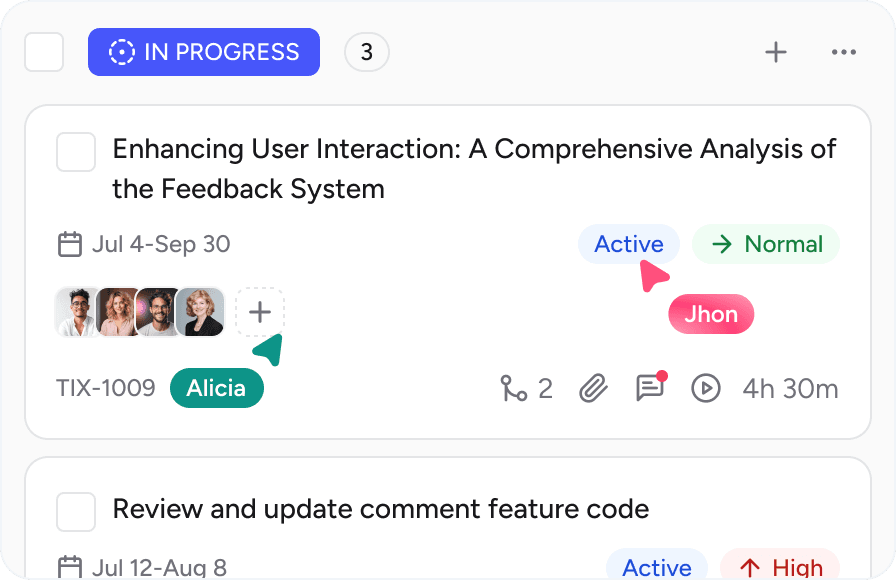
Tixio Projects gives you List, Kanban, Calendar and Roadmap views over the same tasks, so the engineering board and the investor facing roadmap are two views of one truth rather than two documents that drift.
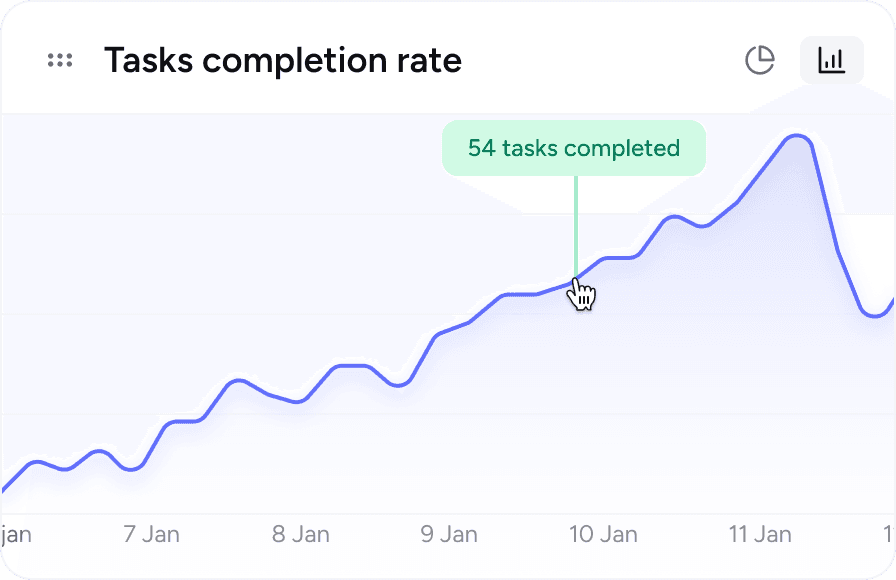
Subtasks, custom fields, recurring tasks, time tracking and automations cover the mechanics. Project reports cover the part where someone asks what actually shipped last month.
Tixio Wiki: the spec, the runbook and the onboarding doc
Tixio Wiki holds nested pages with real time co-editing, inline comments, page level permissions and global search.
The product spec links to the tasks it created. The deploy runbook sits next to the on call rota. New hires get a single page called Start Here instead of a chat thread from March.
Chat: decisions that stay attached to the work
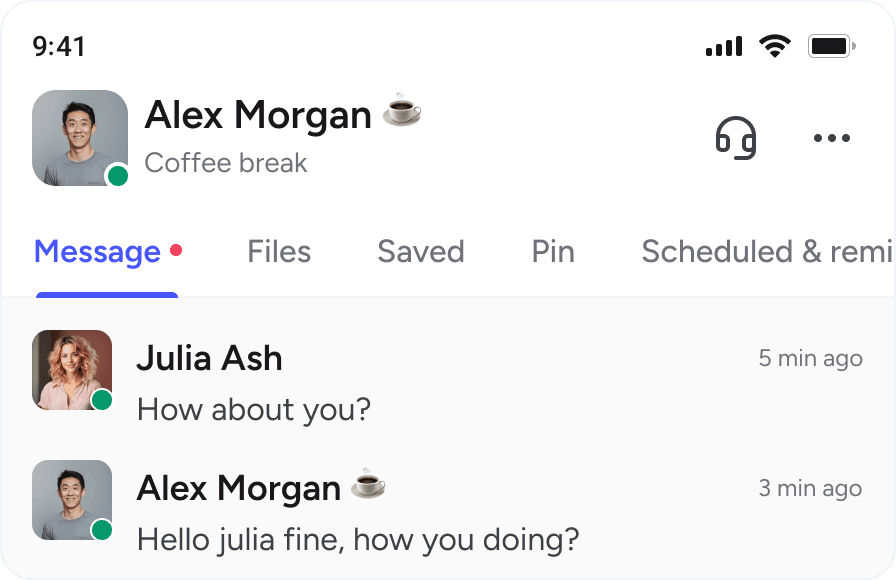
Chat covers channels, DMs, threads, file sharing, voice messages and scheduled messages.
The difference is proximity. A thread about the pricing page sits in the same workspace as the pricing page, so the decision does not evaporate when the channel scrolls.
Canvas: sprint planning and the messy early thinking
Canvas is a collaborative infinite whiteboard with live cursors, flowcharts, share links and templates for retros, sprint planning and story mapping.
Use it for the architecture sketch, the funnel diagram and the quarterly retro, then link the output straight into a wiki page instead of leaving it to rot in a separate whiteboard tool.
Tixio CRM: a pipeline before you can justify a real CRM
Tixio CRM is a paid add on at 5 dollars per user per month. Leads list, Kanban pipeline, activity tracking, contacts and companies directories, email sent from inside the CRM, and custom sales reports.
For a founder led sales motion with 40 open conversations, that is the whole job. It also means your first sales hire inherits a system rather than your inbox.
Tixio HR: the hiring pipeline and the first ten offer letters
Tixio HR is a 5 dollar add on covering attendance, leave management, contracts with version history, payroll and salary, on and offboarding checklists, equipment tracking and an organogram.
Most startups run this in a spreadsheet until the day it breaks, usually the week two people are on leave and a laptop goes missing.
How a startup week runs in Tixio
- Monday planning happens on the Projects Kanban. You pull the sprint from the roadmap view, assign owners, and the calendar view shows who is already underwater.
- The product spec goes into Wiki, gets inline comments from engineering and design, and spawns tasks directly rather than through a copy and paste ritual.
- Mid week, an architecture question turns into a Canvas sketch. The final version gets embedded in the spec page so the reasoning survives.
- Sales conversations move through the CRM pipeline. Activity is logged as it happens, so pipeline value is a number you read rather than a number you reconstruct.
- A candidate moves through the HR hiring pipeline. Offer sent, contract stored with version history, onboarding checklist triggered for day one.
- Friday, the investor update is assembled from things that already exist: shipped tasks from the project report, pipeline from the CRM dashboard, headcount from HR. It takes twenty minutes rather than a Sunday.
What you can stop paying for
The typical ten person startup stack is a team chat tool, a docs and wiki tool, a task tracker, a whiteboard and a starter CRM. List prices move, but the shape holds: somewhere between 60 and 70 dollars per seat per month, or roughly 7,000 to 8,000 dollars a year for ten people.
Tixio pricing works out differently.
- Team plan: 9 dollars per user per month, or 6.30 billed yearly. Unlimited projects, all views, automations, unlimited Canvas, unlimited chat groups, role based access control and up to 20 guest users.
- Starter plan: 4 dollars per user per month, or 2.80 yearly, if you mainly need boards, wikis, DMs and the project manager.
- With both add ons: Team plus CRM plus HR lands near 16 dollars per seat per month billed yearly. Ten seats, all six modules, under 2,000 dollars a year.
That is roughly a quarter of the stack it replaces, and you stop paying five renewal dates.
Who this is for
Tixio fits seed to Series A teams between roughly 8 and 60 people who are feeling the seams in their tool stack and would rather consolidate than keep integrating. It fits especially well if you have a founder led sales motion and are about to start hiring properly.
This is probably not for you if you are a two person team. At that size a shared doc and a chat app is genuinely enough, and adding a work OS is process for its own sake. Come back when the fifth person joins and nobody can find the runbook.
It is also not the right call if your engineering workflow depends on git linked issue tracking, branch automation and deep code review integration. Tixio is not Linear, and we are not going to pretend otherwise. Plenty of teams run engineering in a dedicated tracker and everything else in Tixio, which is a reasonable answer.
Getting started
Pick the one artefact that causes the most pain, usually the product spec or the runbook, and move it into Wiki first. Link it to the tasks it generates. That single move tends to convince the rest of the team faster than any migration plan.
Tixio gives you 14 days of full access, free, with no credit card required. Over 1,000 companies have onboarded so far, so the path is fairly worn.
Related reading: Tixio for product managers, Tixio for remote teams managing multiple clients, and Tixio vs Notion.