A consulting firm sells two things, expertise and hours, and both leak.
The expertise leaks because the deliverable from last year's engagement is sitting on a partner's local drive, named final_v4_REALLYfinal.
The hours leak because nobody logs them until the invoice is due, and by then Tuesday is a guess.
Tixio puts the firm's methodology, its engagements, its time and its client conversations in one workspace, so the second engagement costs less to deliver than the first.
Why consulting firms lose money on work they have already done
- The methodology lives in people, not in the firm. The interview guide, the maturity model, the workshop format and the diagnostic framework exist, but as attachments in three inboxes rather than as reusable firm IP.
- Time is reconstructed, not recorded. Consultants fill timesheets on Friday afternoon from memory, which quietly costs you billable hours and makes utilisation numbers fiction.
- Every engagement starts from a blank page. The engagement plan for a supply chain review gets rebuilt from scratch because nobody can find the one from eight months ago.
- The proposal and the statement of work drift apart. What was sold, what was scoped and what the team is actually doing end up in three different documents with three different owners.
- Client access means email attachments. Sharing an interim deliverable turns into a thread with twelve versions, and nobody is sure which one the client actually read.
- The case study never gets written. The engagement closes, the team rolls onto the next one, and the best proof you had for business development evaporates.
What Tixio does for consulting firms
Tixio is one workspace covering knowledge, projects, time, pipeline and client collaboration. Here is what matters for a firm that bills for expertise.
Wiki: your methodology, written down once
Tixio Wiki is where the firm's reusable IP lives. Nested pages for each practice area, templates for the engagement plan and the interview note, page level permissions so the pricing logic is partner only, and global search that actually finds the 2024 operating model deck when a partner needs it in a pitch. This is the asset. Everything else is delivery.
Projects: one project per engagement
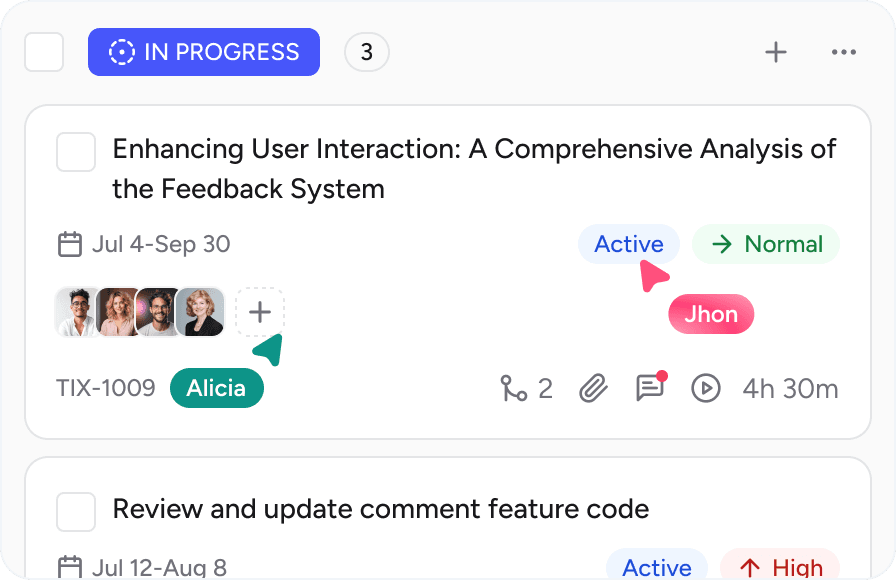
Tixio Projects gives each engagement its own project with phases as sections, milestones for client checkpoints, and custom fields for client name, workstream, partner in charge and engagement code. Use Roadmap view to see which engagements overlap in the next six weeks, Kanban for the deliverable pipeline, and recurring tasks for the weekly status pack you send every Thursday.
Time tracking: utilisation and realisation in the same place as the work
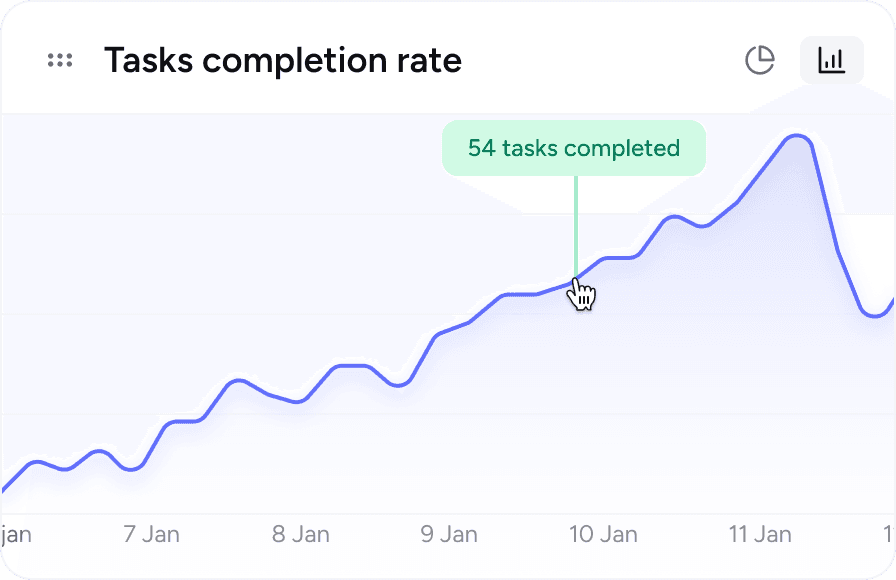
Time is tracked on the task, in the project, while the work is happening. That matters because utilisation and realisation are the two numbers that decide whether a consulting firm makes money, and both are only as good as the data underneath them. Project reports show hours by engagement and by person, so you find the fixed fee project bleeding into fifty extra hours in week three rather than at final invoice.
Meetings: the client interview you do not have to write up
Tixio Meetings records client interviews with AI transcription and summaries, and action items sync straight to tasks. A consultant running eight stakeholder interviews for a diagnostic saves several hours of write up per week, and the transcript becomes evidence you can quote in the deliverable instead of a half remembered quote.
CRM add on: business development you can actually see
The Tixio CRM add on runs the pipeline as a Kanban board, with activity tracking on every lead so you know that the CFO you met at a conference in March has been touched twice since. Contacts and companies directories, email sent from inside the CRM, and custom sales reports for the partner meeting.
Canvas and Connect: workshops and clean client access
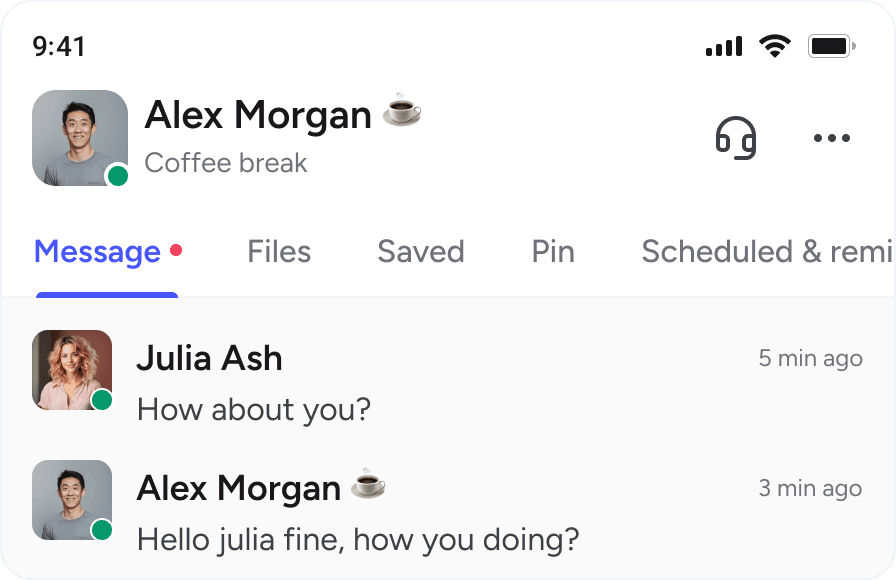
Canvas is where you facilitate. Map a value chain, run a prioritisation matrix, build the current state and future state on one infinite board with the client's team on live cursors. Then Tixio Connect and guest users let a client see their engagement project, their wiki space and their chat channel, without ever seeing another client's. Chat carries the day to day, with a channel per engagement and threads that keep the scope debate out of email.
How an engagement runs in Tixio
- The lead lands in the CRM add on, with the qualification call logged as an activity and the proposal drafted from a Wiki template.
- Won work becomes a project, created from your engagement template, with phases, milestones and custom fields already filled.
- The statement of work lives as a Wiki page linked to the project, so scope changes are edited in one place with version history instead of emailed as a new PDF.
- The team tracks time against tasks daily, and the partner checks the project report on Monday rather than on invoice day.
- Client interviews run in Meetings, get transcribed, and the summary becomes an interview note in the Wiki tagged to the engagement.
- Interim deliverables are shared through Connect, so the client comments on the actual document rather than on a copy of it.
- At close, the team spends thirty minutes turning the engagement wiki into a case study and a reusable methodology page, and the next proposal takes half as long.
What you can stop paying for
The usual consulting stack is a wiki tool, a project tool, a separate time tracker, a CRM, a whiteboard, a video tool and a chat app. Priced individually that lands somewhere between 60 and 90 dollars per person per month, and every one of them is a place where something can be filed and lost.
Tixio Team is 9 dollars per user per month, or 6.30 billed yearly, with the CRM add on at 5 dollars. For a twenty person firm on annual billing that is roughly 226 dollars a month for projects, wiki, chat, canvas, meetings, time tracking and pipeline. Guest users are included on Team, up to twenty, which covers client access without a per client licence conversation.
Who this is for
Boutique and mid sized consultancies, roughly 5 to 150 people. Strategy, management, operations, technology advisory, and the professional services firms that work the same way, including research, design and specialist engineering consultancies.
This is probably not for you if you need invoicing, resource forecasting or rate card management in the same tool. Tixio does none of those. A 400 person firm running staffing models and complex billing rules needs a full PSA platform, and Tixio will sit alongside it rather than replace it.
Getting started
Pick the engagement type you sell most often and write its methodology as one Wiki page. Phases, deliverables, the interview guide, the standard slide skeleton. That single page usually pays for the switch, because it is the thing your firm rebuilds every time.
Then create a project from it and run your next engagement inside it. Tixio gives you 14 days of full access, free, no credit card required.
Related reading: Tixio for agencies, Tixio for financial services, and Tixio vs Notion.