HR teams are supposed to take care of everyone else. But most run their own operations on a patchwork of spreadsheets, disconnected platforms, and manual processes that make people ops harder than it needs to be. Here is how Tixio gives HR and people ops teams the infrastructure their work actually deserves.
Meta title: Tixio for HR & People Ops Teams | One Workspace to Manage Your Entire Workforce
Meta description: From onboarding to offboarding, attendance to performance, Tixio gives HR and people ops teams one modular workspace to manage the full employee lifecycle without the tool sprawl. Starting at $2.80/person.
Excerpt: HR teams are supposed to take care of everyone else. But most run their own operations on a patchwork of spreadsheets, disconnected platforms, and manual processes that make people ops harder than it needs to be. Here is how Tixio gives HR and people ops teams the infrastructure their work actually deserves.
Tixio for HR & People Ops: One Workspace to Manage Your Entire Workforce
The Irony at the Heart of Most HR Teams
HR exists to support people. To make sure new hires feel set up for success from day one. To ensure every employee knows their leave balance without sending an email to ask. To make performance conversations structured and fair. To keep the company compliant with employment obligations without it consuming every Friday afternoon.
The irony is that the people responsible for building systems that support everyone else are often running the most fragmented, manual, and under-resourced internal operations in the building.
A spreadsheet for attendance. A shared drive for contracts that nobody has organised since 2021. An email chain for leave approvals that requires three follow-ups before anyone gets an answer. A separate HRIS platform that costs a significant portion of the HR budget and handles payroll well but nothing else. An onboarding process that gets rebuilt from scratch every time a new hire joins because nobody ever documented it in a place that is both structured and actually maintained.
This is not a people problem. Every HR team running on fragmented tools is disciplined, hardworking, and committed to doing their job well. The problem is structural. And it is costing HR teams time, costing organisations money, and costing new employees the experience they deserve on their first week.
What HR Teams Are Actually Doing All Day
Before talking about solutions, it is worth being honest about what HR and people ops work actually involves, because the gap between the perception and the reality is where most HR tools fail.
The perception is that HR handles hiring, contracts, and maybe a performance review cycle once a year. The reality is that HR and people ops teams are running a continuous operational machine that touches every department, every employee, and every stage of the employment lifecycle simultaneously.
On any given week, an HR team is managing active recruitment pipelines across multiple roles, onboarding new hires who started this week, processing leave requests from employees across departments, preparing for a performance review cycle that starts next month, handling a contract renewal for a contractor whose agreement expires in three weeks, maintaining compliance documentation for an upcoming audit, updating the employee handbook to reflect a policy change, coordinating with payroll on a new hire's first salary run, responding to a manager's request for guidance on a performance issue, and trying to find time to work on the culture and engagement initiatives that leadership keeps asking about.
Most of that work requires coordination, documentation, task management, and structured workflows. None of it is solved by an accounting system or a payroll platform. All of it suffers when the operational layer is fragmented across tools that were never designed to work together.
The Five Biggest Operational Failures in HR Teams
Onboarding that depends on whoever is available
In most organisations, the quality of a new hire's onboarding experience depends on three variables: how thorough the HR contact is, how available the hiring manager is, and whether the systems for IT access, equipment, and tool setup were organised before day one.
When the onboarding process is not documented in a structured, repeatable system, those three variables produce wildly different outcomes. One new hire gets a thorough first week with clear introductions, structured learning, and a sense of what success looks like in their role. The next gets a laptop and a Slack invite and spends their first three days figuring out who to ask for access to the tools they need.
The downstream cost of a poor onboarding experience is significant. Research consistently shows that employees who have a structured onboarding experience are more likely to stay past their first year, reach full productivity faster, and feel connected to the organisation earlier. For HR teams, fixing onboarding is not a nice-to-have. It is one of the highest-return investments they can make in employee retention.
The fix is not complicated. It is a structured onboarding checklist, documented in a system that assigns tasks automatically, tracks completion visibly, and works the same way every time regardless of which HR team member is running it.
Leave management that depends on one person's spreadsheet
Leave management should be one of the simplest administrative processes in an organisation. An employee requests leave. A manager approves or declines. The record is updated. The balance is adjusted. That is it.
In practice, most organisations manage leave through a process that involves an email to the manager, a separate email to HR, a manual update to a spreadsheet that one person maintains, and a reply to the employee that sometimes takes three days because the person who owns the spreadsheet was on leave themselves.
When that spreadsheet is the single source of truth for leave balances across the organisation, it is also a single point of failure. When the person who maintains it leaves the company, the organisation discovers that nobody else knows how it works.
A structured leave management system where requests, approvals, and records all exist in one workflow is not a luxury. It is a basic operational requirement that most HR teams are meeting with a workaround.
Contract and compliance documentation scattered across drives
Employment contracts, NDAs, policy acknowledgements, performance improvement plans, and compliance training records are documents that need to be stored, versioned, and accessible on demand. In an audit or a legal situation, the ability to produce the correct version of a document quickly is not optional.
Most organisations store these documents in a shared drive with a folder structure that made sense when someone created it and has been slowly undermined by three years of inconsistent filing conventions and nobody having time to reorganise it.
Tixio's Wiki and HR module create a structured documentation environment where contracts are stored in the system with version history, policies are maintained in one place with clear update records, and compliance documentation is findable in seconds rather than minutes.
Performance management that resets every cycle
Most performance management processes follow the same pattern. The cycle starts, someone rebuilds the review template, managers get a calendar invite, feedback gets collected in a form, notes get written in a Google Doc, outcomes get filed somewhere nobody will look for them, and the next cycle starts with no institutional memory of what happened in the last one.
The result is performance management that is disconnected from the ongoing development conversations that actually matter, that creates significant administrative burden every cycle, and that produces documentation that exists in five different places and connects to nothing.
A performance management process built inside a connected workspace means that review documentation links to the employee record, development goals become tracked tasks, and the history of feedback and growth is visible in one place across every cycle.
Knowledge that walks out the door with every departure
HR teams accumulate significant institutional knowledge. How the organisation handles a specific type of leave request. What the standard process is for a particular compliance obligation. How onboarding works for a specific department. What the company's approach is to a recurring people management challenge.
In most HR teams, that knowledge lives in the heads of experienced team members. When those team members leave, the knowledge leaves with them. The remaining team members spend weeks reconstructing processes that should have been documented and will now be reconstructed imperfectly.
A well-maintained HR wiki means that institutional knowledge survives turnover. New team members get productive faster. Processes are consistent regardless of who is running them.
How Tixio Works for HR and People Ops
The HR module
Tixio's HR module covers the operational core of people management. Attendance tracking that works for office staff, remote employees, and field workers simultaneously. Leave management where requests are submitted, approved, and recorded in one workflow without a spreadsheet in the loop. Contract storage with version history and access controls that keep sensitive documents visible to the right people and protected from everyone else. Onboarding workflows that are built once and run automatically for every new hire, with tasks assigned to IT, the hiring manager, the HR lead, and the new employee themselves, all tracked in one place, all visible to everyone responsible.
For teams currently running BambooHR, Rippling, or a spreadsheet-based HR system, Tixio's HR module covers the core of what those platforms do at a fraction of the cost, inside the same workspace as every other operational function.
The Wiki for HR knowledge management
Tixio's Wiki becomes the HR team's policy and process library. The employee handbook. Leave policies. Performance review frameworks and templates. Onboarding guides for each department. Benefits documentation. Compliance procedures. Disciplinary process documentation. Interview guides for hiring managers.
All of it structured, searchable, and maintained in one place. When a policy changes, it changes once and everyone sees the current version. When a manager asks how to handle a specific situation, the answer is in the wiki, not in someone's inbox.
When an HR team member leaves the organisation, their knowledge does not leave with them. It is documented, structured, and ready for whoever comes next.
Projects for HR workflows and initiatives
Not everything in HR is a record or a document. A significant portion of HR work is project work: running a hiring pipeline for multiple open roles, planning and executing a performance review cycle, organising a company offsite, rolling out a new benefits programme, implementing a culture survey and acting on the results, managing a restructure.
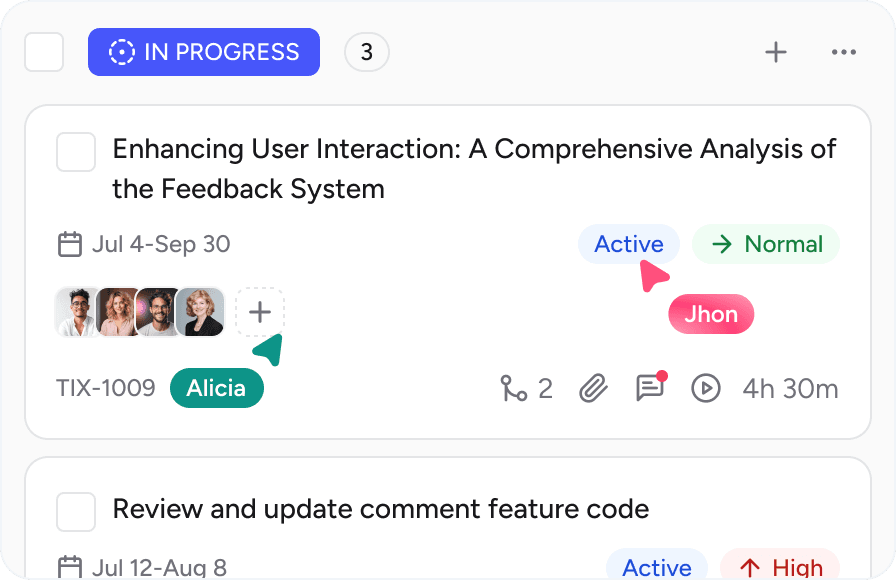
Tixio's Projects module gives HR teams a structured workflow for all of it. Hiring pipelines are projects with stages, tasks, and owners. Performance review cycles are projects with timelines, checklists, and completion tracking. Culture initiatives are projects with goals, milestones, and documented outcomes. Every HR project has one place where its status is visible, its tasks are assigned, and its history is recorded.
CRM for hiring pipeline management
For HR teams managing their own recruitment, Tixio's CRM module handles candidate pipeline management without the cost or complexity of a dedicated ATS. Every candidate has a record with their application history, interview notes, assessment outcomes, and communication log. Pipeline stages reflect your hiring process. Managers can see candidate status without requesting a briefing from HR. Offer management is tracked alongside the candidate record.
For growing teams hiring consistently across multiple roles, this replaces a spreadsheet or a basic ATS with a connected system that sits inside the same workspace as the rest of HR's work.
Chat for HR coordination
HR teams coordinate constantly with managers, leadership, IT, and employees across the organisation. When that coordination happens in a separate communication tool, the conversations about people management decisions are disconnected from the records and documents they relate to.
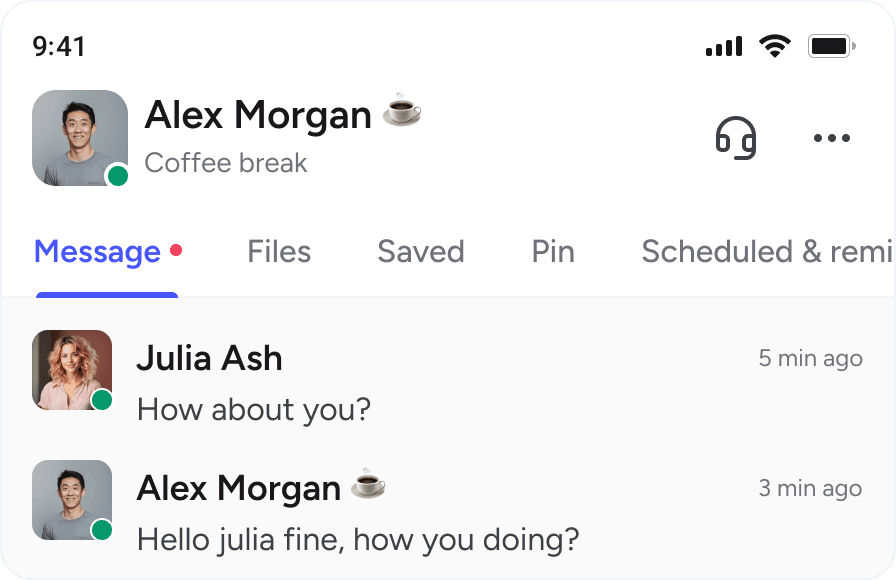
Tixio's Chat module keeps HR coordination connected to actual work. A conversation with a manager about a performance issue is linked to the relevant project and the relevant wiki page on the disciplinary process. An escalation to leadership about a compliance matter is connected to the compliance documentation it concerns. An onboarding question from a new hire is answered in context, with the relevant wiki page one click away.
For HR leaders, HRBPs, and CHROs
When your people ops team runs on Tixio, the nature of your week changes. The administrative recovery work that currently consumes a disproportionate share of HR's time, tracking down leave records, chasing onboarding task completion, rebuilding process documentation, answering the same policy questions repeatedly, decreases significantly. That time redirects toward the work that requires your expertise: building culture, developing managers, shaping the people strategy, and advising leadership on the decisions that only experienced HR professionals can make well.
You also build an HR function that scales without proportional increases in administrative overhead. Onboarding ten people at once is not ten times harder than onboarding one, because the process is documented and runs automatically. A compliance audit is not a crisis because the documentation is maintained and accessible. A key HR team member leaving is a transition, not an operational emergency, because the knowledge is in the system rather than in their head.
For HRBPs and generalists working across departments, Tixio means the context you need for every employee conversation is in one place. The performance history. The leave record. The onboarding notes. The development goals. The manager's feedback. All of it connected, all of it accessible, without opening four different systems before a 1:1.
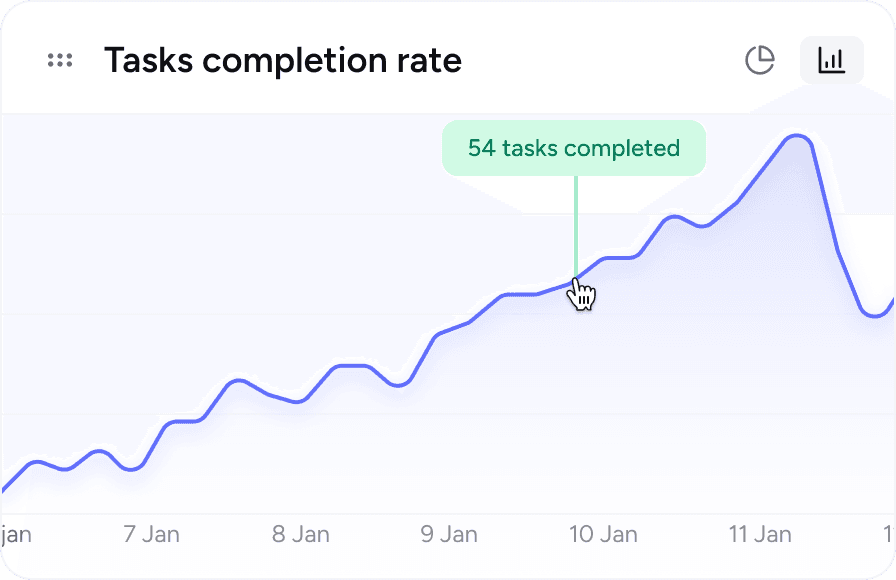
For CHROs and HR directors, Tixio gives you the visibility that strategic HR leadership requires. Headcount by department. Open roles and hiring pipeline status. Onboarding completion rates across the organisation. Leave patterns and attendance records. Performance cycle progress. All of it in one workspace, updated in real time, reportable on demand.
The Cost Argument for HR Teams
The tool cost comparison is straightforward. A 30-person organisation running BambooHR for HR management, a project tool for HR initiatives, Slack for communication, and Notion for the HR wiki is spending between $300 and $500 per month on tools that each handle one part of the people ops workflow. Tixio replaces all of that for $84 per month with every module included and free onboarding to get the HR team set up correctly from day one.
The more important cost argument is the one that does not appear on a SaaS invoice. The cost of a poor onboarding experience that contributes to an early departure. The cost of a compliance documentation gap discovered during an audit. The cost of a performance management process that produces no institutional memory and no development continuity. The cost of an experienced HR team member leaving and taking three years of process knowledge with them because nobody ever built the system to capture it.
Tixio does not just reduce HR's tool costs. It reduces the operational risk that fragmented, manual HR systems create and the organisations running on them rarely measure until something goes wrong.
Getting Your HR Team onto Tixio
Setup takes less than a day. You import existing employee records and documentation, build out your HR wiki with the policies and processes your team already has, activate the HR module for attendance and leave management, set up your onboarding workflow as a reusable project template, and book a free onboarding session where Tixio walks your HR lead through the configuration that fits your organisation's specific needs.
Your leave management workflow is running by end of day one. Your onboarding checklist is built and ready for your next new hire by day two. Your HR wiki is structured and searchable by the end of the week. Your hiring pipeline is in the CRM before the next role opens.
No migration consultant. No six-week implementation. No IT project required to add a new team member or update a policy.
One workspace. Every employee. Every process. Every record, in one place, running the way your people ops team always wished it could.
FAQs
Does Tixio have HR features? Yes. Tixio's HR module covers attendance tracking, leave management, contract storage, and onboarding workflows natively. It is built for teams that want to manage their workforce without a separate HR platform.
Can Tixio replace BambooHR or Rippling? For most small to mid-sized teams, yes. Tixio's HR module covers the core people management workflows that BambooHR and Rippling handle, at a significantly lower cost, inside the same workspace as your projects, wiki, and communication tools.
Does Tixio have onboarding features? Yes. Tixio allows HR teams to build structured onboarding workflows as reusable project templates. Tasks are assigned automatically to IT, the hiring manager, the HR lead, and the new employee, tracked in one place, visible to everyone responsible.
Is Tixio good for small HR teams? Yes. Tixio is designed for small to mid-sized teams that need real HR functionality without the complexity or cost of enterprise HR platforms. Free onboarding is included on every plan.
Can Tixio manage leave requests? Yes. Leave requests are submitted, approved, and recorded in one workflow inside Tixio's HR module. No spreadsheet required.
How does Tixio help with HR compliance documentation? Tixio's Wiki stores contracts, policies, and compliance documentation in a structured, searchable, versioned system. Documents are accessible on demand with a full version history, making audit preparation significantly faster than a shared drive with inconsistent filing conventions.
What does Tixio cost for an HR team? Tixio starts at $2.80 per person per month with all modules included. A 20-person organisation pays $56 per month for HR management, project tracking, wiki, chat, and CRM, replacing the multiple tools most HR teams currently run separately.