A paid media team can lose a launch day to one missing banner size.
The media plan says the campaign goes live Monday. The 300x250 came back approved, the 728x90 never came back at all, and the request is buried somewhere in a reply chain.
Advertising operations run on artefacts: the campaign brief, the media plan, the creative matrix, the ad copy approval round, the launch checklist, the weekly pacing report and the post campaign wrap. Tixio keeps all of them in one workspace.
Why campaign operations break down
- The media plan lives in a spreadsheet with no owner. Flight dates, budgets and channel splits change three times before launch, and the version sitting in the client inbox is never the current one.
- Creative versioning multiplies quietly. Four channels, six sizes and three messages is seventy two assets before anyone asks for a second market, and the naming convention holds for about a week.
- Ad copy approval happens in email. Edits arrive as replies, two stakeholders disagree in separate threads, and the line that ships is whichever one the trafficker had open at the time.
- Brand and legal rules are tribal knowledge. Claim substantiation, mandatory disclaimers, competitor mentions and logo clearance live in the head of whoever has been on the account longest.
- Pacing checks are remembered rather than scheduled. Underdelivery gets spotted in week three of a four week flight, when there is no room left to fix it.
- The wrap report starts from nothing. Nobody logged the mid flight creative swap, so the post campaign wrap turns into archaeology instead of analysis.
What Tixio does for advertising services teams
One workspace holds the plan, the assets under review, the approvals and the client conversation. These are the parts that do the actual work.
Tixio Projects: the campaign is the project
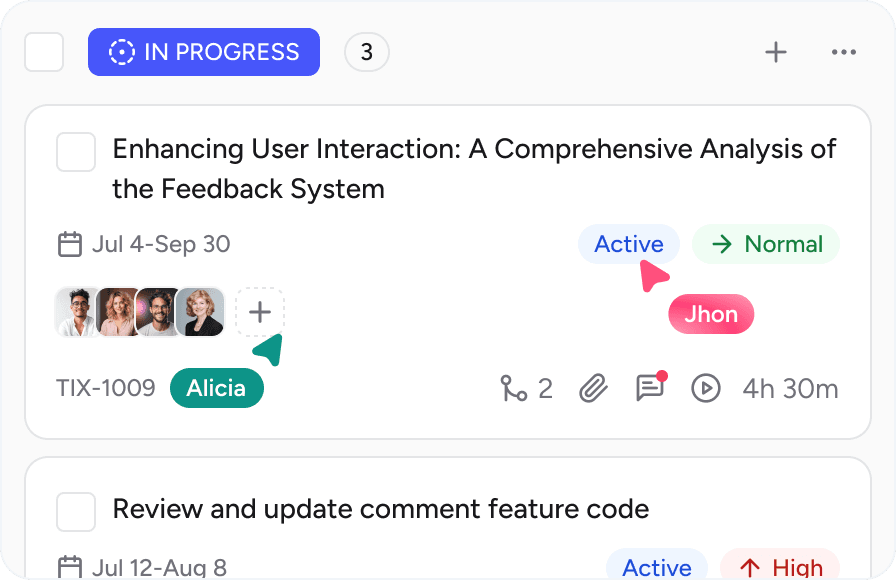
Every campaign gets its own project. Production tasks, creative versions, trafficking steps and reporting sit in one place with owners and dates.
Calendar view maps flight dates, so you can see that three campaigns already go live on the first of the month before you promise a fourth.
Custom fields carry what media teams actually filter on: channel, placement, budget, client, market and creative format. Filter by channel to see everything running on paid social this quarter.
Recurring tasks handle the rhythm. The weekly pacing check, the Monday budget review and the Friday client update repeat on their own rather than depending on somebody remembering.
Time tracking: prove the hours against the retainer
Time logs against tasks, so the retainer conversation becomes a report instead of an argument. When a client asks why the third round of creative revisions cost what it did, you can show hours by task and by campaign. Project reports roll it up at the end of the month.
Tixio Wiki: brand rules and channel playbooks that outlive staff turnover
Client brand and legal guidelines go in nested Wiki pages: tone, claim substantiation, disclaimer wording, logo rules, competitor policy. Page level permissions keep sensitive client legal notes away from people who do not need them.
Channel playbooks sit next to them. How you structure a Performance Max campaign, the UTM naming convention, the pre launch checks for a paid social buy. New hires read the playbook instead of shadowing someone for six weeks.
Canvas: concepting and funnel mapping before anything gets built
Canvas is the infinite whiteboard for the messy half of a campaign. Map the funnel from prospecting through retargeting, sketch the message ladder per audience, and lay out the creative matrix of sizes and variants so everyone can see the real production load.
Live cursors and share links keep the concept round to one session.
Chat: a channel per campaign
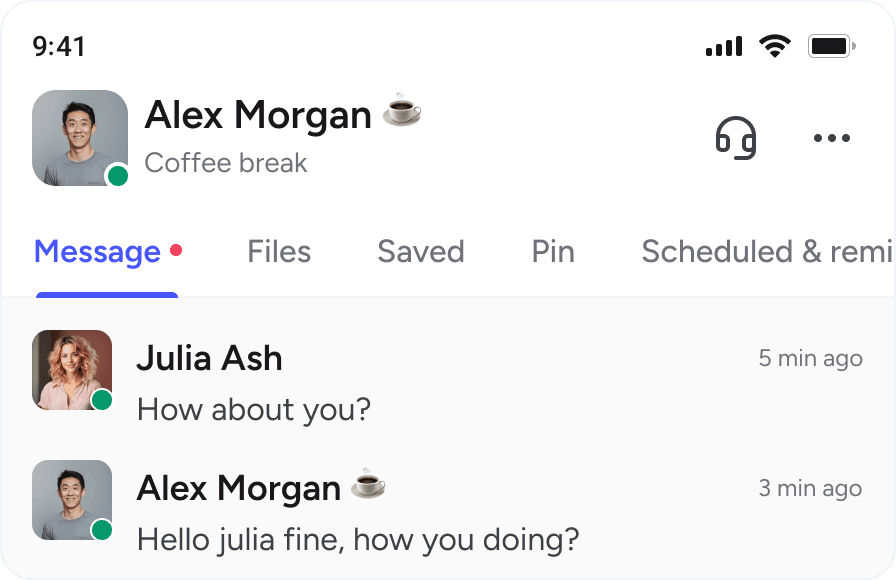
Give each campaign its own channel. Launch questions, asset requests and mid flight decisions stay attached to the campaign instead of scattering across DMs.
Threads keep the copy debate readable, and scheduled messages queue the Monday pacing nudge on Friday afternoon.
Tixio Connect and guest users: client sign off without a full seat
Share one project or one Wiki page with the client through Tixio Connect, or bring them in as a guest user. They review ad copy, comment on the creative matrix and approve the launch checklist without seeing your other clients, your margins or your internal channels.
The Team plan includes up to 20 guest users. Enterprise removes the cap.
How a campaign runs in Tixio
- Brief. The campaign brief goes in as a Wiki page linked to a new project: objective, audience, budget, flight dates, mandatories, success measure.
- Plan. The media plan becomes tasks with custom fields for channel and budget. Calendar view shows the flight against everything else already in market.
- Concept. The team maps the funnel and the message ladder on a Canvas, then agrees the creative matrix of sizes and variants.
- Produce. Each asset is a task with subtasks for design, copy and internal QA. Time is logged as the work happens, not reconstructed on Friday.
- Approve. Copy and creative go to the client through Connect or a guest seat. Comments land on the task, and the approved version is the one marked approved.
- Launch. The launch checklist runs as a task list: tracking applied, naming convention checked, budgets set, geo and dayparting confirmed, conversion event firing, day one owner named.
- Pace and wrap. A recurring weekly task produces the pacing report. At the end of the flight the wrap page is written from notes that already exist.
What you can stop paying for
A ten person advertising team usually pays for a project tool at around 15 dollars a user, a wiki at 10, a whiteboard at 8, a chat tool at 8 and a time tracker at 9. That is roughly 50 dollars per user per month, about 6,000 dollars a year, before anyone counts a separate proofing tool.
Tixio Team is 9 dollars per user per month, or 6.30 dollars per user per month billed yearly. Ten people on the annual plan is around 756 dollars a year. The saving is real, but the better outcome is that the brief, the assets under review and the approval finally live in the same place.
Who this is for
Good fit: in house paid media teams, media buying and advertising services shops, performance marketing teams inside brands, and anyone running several campaigns at once where flight dates and approvals matter more than headcount.
Now the honest part, because it saves everyone a demo call.
- Tixio does not buy media. No bidding, no placements, no insertion orders executed on your behalf.
- Tixio does not connect to Google Ads, Meta or DV360 for reporting. Pacing numbers are pulled from the platforms and recorded in Tixio, not pulled by Tixio. If you want automated cross channel dashboards, you still need a reporting tool.
- Tixio is not an ad server and not a digital asset management system. Master files stay where they are today. Tixio holds the plan, the tasks, the versions in review and the decisions.
This is probably not for you if your main problem is bid management or media mix modelling. That is a different category of software and we are not going to pretend otherwise.
Getting started
Start with your next campaign rather than your current mess. Create one project, load the media plan as tasks with channel and budget custom fields, put the brief in a Wiki page, and set the weekly pacing check as a recurring task. That takes about an hour, which is enough to judge the fit.
Every plan starts with 14 days of full access, free, no credit card required.
Related reading: Tixio for agencies for the wider creative and digital agency picture, Tixio for teams managing multiple clients, and Tixio vs Asana.