Most freelancers do not have a workload problem. They have a scattering problem.
Client A briefs you in email. Client B sends voice notes on WhatsApp. The contract sits in Google Drive, the invoice in a spreadsheet, the actual work in Figma, and the deadline in your head. Nothing is broken, exactly. It just leaks.
Tixio pulls all of it into one workspace, so the admin side of freelancing stops eating the hours you actually get paid for.
Why freelance admin quietly eats your margin
Freelancers lose money in the gaps between tools, not on the work itself. The common pattern looks like this.
- You re-explain the same context. Client asks where something stands, and you go dig through three apps to answer a two-line question.
- You lose the paper trail. Six months later a client disputes scope, and the approval that saved you was in a chat thread that has since scrolled into the void.
- You underprice because you cannot see time. Without a real record of hours per client, every quote is a guess dressed up as a rate.
- You pay for a stack you barely use. A task app, a note app, a chat app, a time tracker. Four subscriptions to do one job.
What Tixio gives a freelancer
Tixio is an all in one workspace that replaces the task app, the wiki, the chat tool, the whiteboard and the time tracker with a single tool. Here is how each piece maps to freelance work.
Projects: one board per client
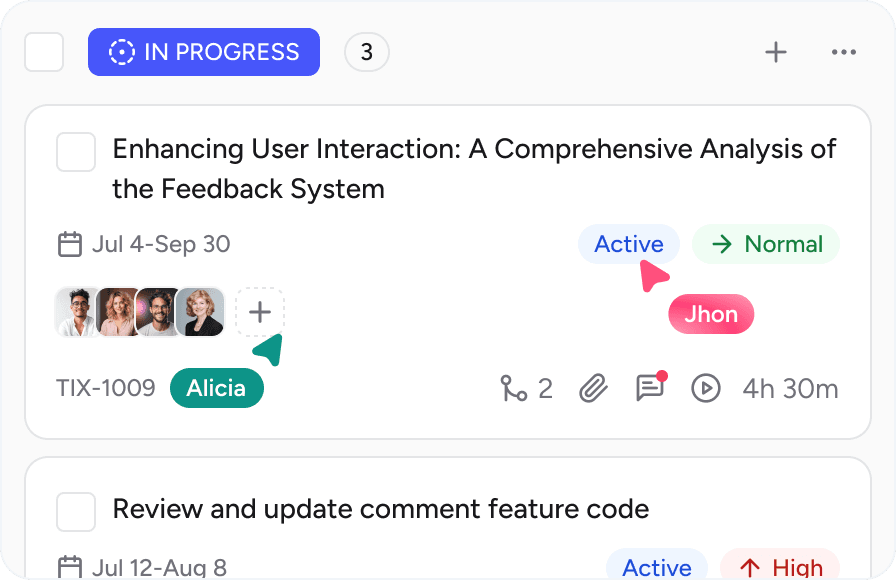
Every client gets their own project. Use List view for a simple to do queue, Kanban when you are juggling stages like draft, review and delivered, and Calendar or Roadmap view when a client wants to see the plan. Subtasks, custom fields and recurring tasks handle the repeat work like monthly reports and retainers.
Time tracking: know your real hourly rate
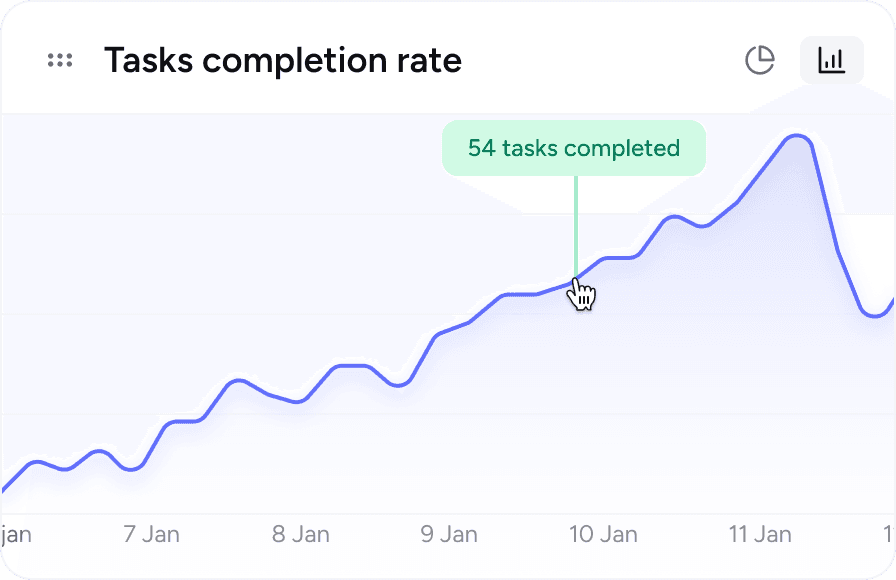
Track time against tasks as you work. At the end of the month you can see which client actually pays well and which one is quietly a charity case. This is the single fastest way for a freelancer to raise prices with evidence instead of nerves.
Wiki: your reusable brain
Keep proposal templates, onboarding questionnaires, brand guidelines, pricing tiers and your standard scope language in Tixio Wiki. Write it once, reuse it on every pitch. Nested pages and global search mean you find the right version in seconds.
Boards: your daily start page
A Tixio Board is your command centre. Pin client links, bookmarks, notes, to dos and calendar widgets on one canvas so you open one tab instead of eleven.
Canvas: think before you build
Sketch site maps, campaign flows and content structures on Canvas, then share a link with the client. It beats describing a layout in a paragraph and hoping they picture the same thing.
Chat and Connect: keep clients out of your inbox
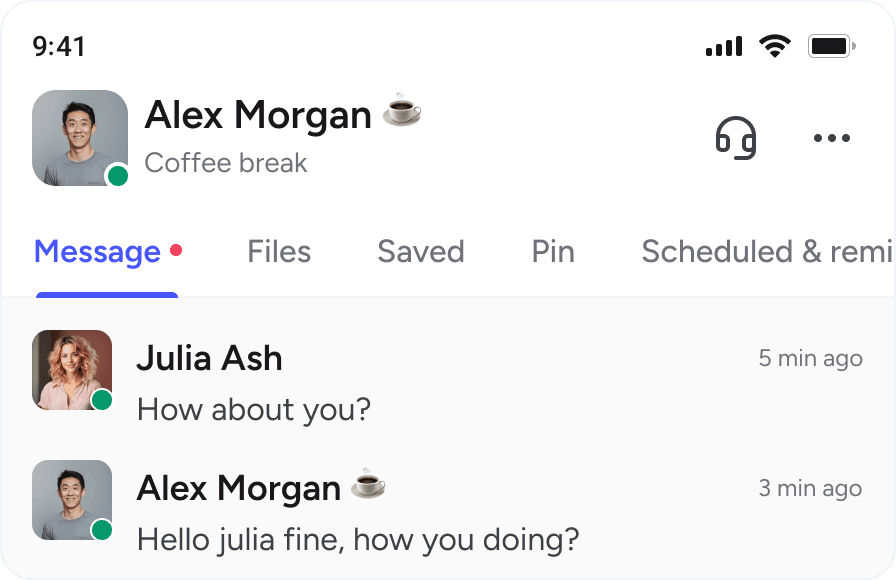
Run client conversations in dedicated channels instead of email chains. With Tixio Connect you can share a specific project, wiki page or board with a client in another workspace without giving them the keys to everything else.
How a freelance workflow runs in Tixio
- New enquiry. Create the client project from a template you already built once.
- Scope and quote. Pull your standard scope page from Wiki, adjust it, share the link.
- Kickoff. Share the project board with the client through Connect so they see progress without asking.
- Delivery. Work through tasks, track time as you go, keep files and feedback attached to the task.
- Invoice. Open the time report, see exact hours per client, bill without guessing.
- Close out. Archive the project. Everything stays searchable for the next dispute, testimonial or repeat brief.
Mistakes freelancers make when setting this up
The most common one is building a beautiful system before you have a single client in it. Do not spend a Saturday designing custom fields. Move one live client in, work for two weeks, then adjust what actually annoyed you.
- Too many projects. One project per client, not one per deliverable. You will drown in boards otherwise.
- Time tracking you abandon in week two. Track only billable work at first. Perfect data you stop collecting is worth less than rough data you keep.
- No templates. If you have written the same onboarding email three times, it belongs in Wiki. That is the whole trick.
- Giving clients full access. Use Connect or guest access and share only the project they are paying for.
What it actually changes
The honest version is that Tixio does not make you a better designer or writer. It removes the tax you pay for being the only person running your business. Fewer places to look, one record of what was agreed, and a real number for hours per client at the end of the month.
For most freelancers the first visible win is the invoice conversation. You stop guessing at hours and start sending a report. Clients argue with estimates. They rarely argue with a log.
What you can stop paying for
Most solo freelancers run some version of Notion plus Trello plus Toggl plus Slack. That is roughly four subscriptions to manage one person. Tixio Starter is 2.80 dollars per user per month billed yearly and covers unlimited boards, unlimited wikis, project management, time tracking and chat. For a freelancer, that is usually a straight cut in software spend and one less login to remember.
Who this is for
Tixio for freelancers fits independent designers, developers, writers, marketers, consultants, video editors and virtual assistants who run more than one client at a time. If you have exactly one client and one deadline, you probably do not need this. If you have four clients, two retainers and a proposal due Thursday, you do.
Getting started
Start with one client. Create a project, move that client's open work into it, and track time for two weeks. If the picture of where your hours actually go does not change how you price, nothing lost. Tixio offers 14 days of full access with no credit card required.
Related reading: Tixio for agencies, Tixio for remote teams managing multiple clients, Tixio vs Notion.