Agency work breaks at the client boundary.
Every account needs its own space, its own brand rules and its own approval trail, and no client should ever catch a glimpse of another one.
Most agencies hold that line with folder naming conventions and good intentions.
It works right up until a freelancer pastes the wrong link into the wrong channel.
Why agency operations break down
- Every client lives in five places. The creative brief sits in a doc, feedback arrives by email, assets sit in a drive, the timeline is a spreadsheet, and the real decisions happen in a chat thread nobody will ever find again.
- You cannot safely let clients in. Adding a client to your workspace usually means exposing your other accounts, so you fall back to emailing PDFs and versioning files by hand.
- Rounds of revisions have no edge. Round three quietly becomes round six because nobody wrote down what round three actually covered, and the extra work gets absorbed.
- Utilisation is a guess until it hurts. You sold a 40 hour retainer and find out in month four that the account is eating 62, usually the week before you renew at the same rate.
- Brand rules live in someone's head. Tone of voice, logo clear space and the correct hex values exist in a PDF from 2023 that the two new freelancers have never opened.
- New business competes with delivery. The pitch deck gets built at 11pm on a Tuesday because the pipeline lives in one founder's inbox.
What Tixio does for agencies
Tixio gives each client a bounded space and gives your team one place to run all of them. Six parts matter most.
Tixio Projects: one project per client, with time on every task
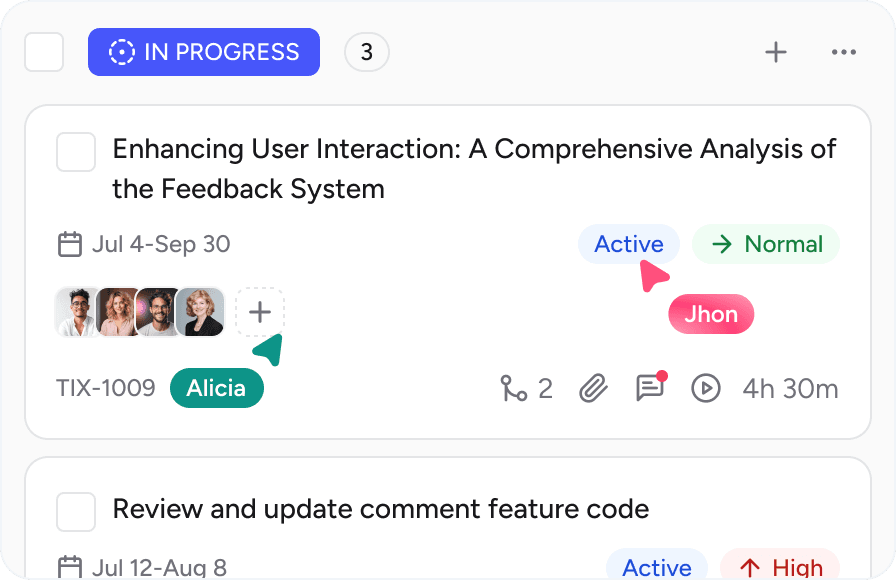
Each client gets a project with List, Kanban, Calendar and Roadmap views, so the account lead can watch deadlines while a designer sees only their queue. Subtasks carry the round structure: concept, round one, round two, final files. Custom fields hold what agencies actually track, like deliverable type, channel and approval status. Recurring tasks cover the monthly retainer report that always arrives faster than expected. Time tracking runs on the task itself, so hours land against the client that generated them instead of a timesheet reconstructed on Friday from memory. Tixio Projects
Tixio Wiki: brand guidelines per client, findable by anyone
Give each client a nested page holding tone of voice, colour values, logo usage, approved photography and the list of things their legal team will not sign off. Page level permissions keep your internal account notes apart from what a contractor sees. Global search means a new freelancer finds the guideline in ten seconds instead of asking in chat and waiting an hour. Inline comments let the brand lead correct a rule without booking a meeting about it. Tixio Wiki
Tixio Connect: let a client in without letting them see everything else
Connect shares a single Project, Wiki page, Canvas, Board or Chat with people in another workspace. The client reviews the round, comments on the deliverable and approves it, and sees nothing else you run. Guest users on the Team plan cover the lighter cases, up to 20 of them, with unlimited guests on Enterprise. The idea is deliberately boring: client isolation by default rather than by discipline. Tixio Connect
Canvas: the pitch and the concept round in one place
Canvas is a collaborative infinite whiteboard with live cursors, so a strategist and an art director build the territory map together instead of trading screenshots at midnight. Use it for the pitch narrative before it hardens into a deck, for journey maps, and for the moodboard round where a client wants to point at things rather than describe them. Share links let you show a working canvas without adding anyone to your workspace. Canvas
Chat: an account channel that outlives the account manager
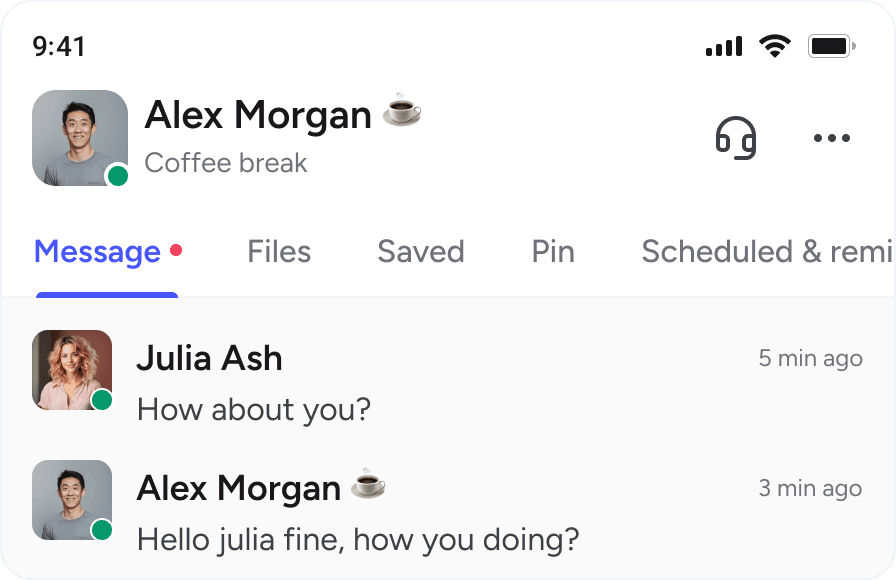
Channels per client, threads per deliverable, DMs for everything else. File sharing and voice messages keep the quick question about moving the shoot attached to the client instead of disappearing into somebody's phone. Scheduled messages handle the Monday status note you actually wrote on Friday afternoon. Chat
Tixio CRM: new business sitting next to delivery
The CRM add on gives you a leads list, a Kanban pipeline, activity tracking and email sent from inside the record, for 5 dollars per user per month. Pitches stop living in one inbox, and you can see whether new business is landing fast enough to justify the next hire. Tixio CRM
How an agency week runs in Tixio
- Monday morning the account lead opens the client project in Calendar view, checks what is due, and reassigns whatever the delayed shoot pushed into next week.
- The creative brief goes into that client's Wiki page and links straight to the project, so the brief and the tasks are one click apart rather than one email search apart.
- Design work starts as tasks with the timer running, tagged by deliverable type in a custom field, which is what makes the utilisation number real later.
- The concept round happens on Canvas, then goes to the client through Connect with a due date on the approval, so silence has a deadline attached to it.
- Round two feedback arrives as comments on the shared project. When an ask sits outside the brief, the account lead logs it as a scope change task and links back to the brief page, which turns an awkward conversation into a short one.
- Thursday the final assets are attached to the handover task, the client approves in the shared view, and the task closes with its hours already on it.
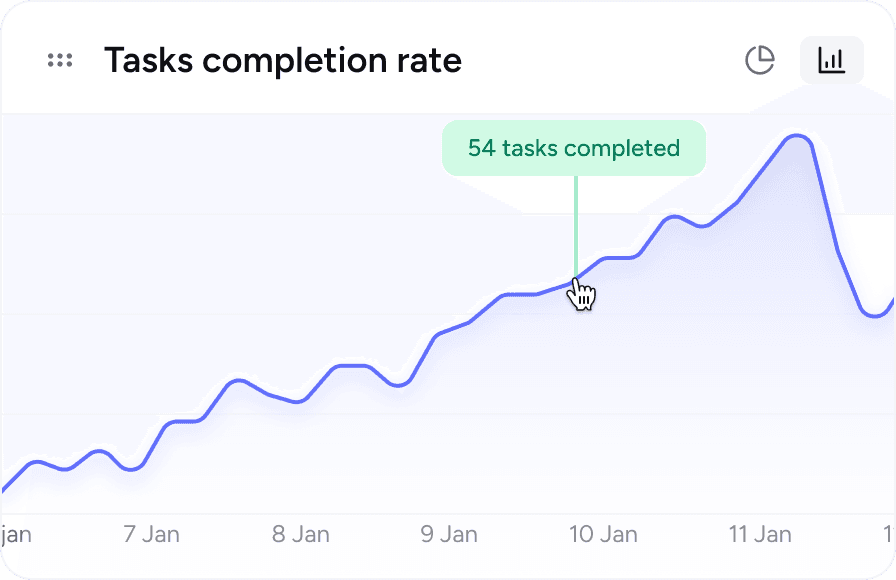
- End of month the project report shows hours per client against the retainer. That is the number that decides whether you renegotiate or renew quietly.
What you can stop paying for
A twelve person agency usually pays for a project tool, a docs tool, a chat tool, a whiteboard, a time tracker and often a client portal on top. Totalled honestly that lands somewhere around 40 to 50 dollars per person per month, so roughly 500 to 600 dollars before anyone has opened a brief.
Tixio Team is 9 dollars per user per month, or 6.30 billed yearly, and covers projects with all views, unlimited Canvas, unlimited chat groups, guest users, role based access control, automations and time tracking. Add Tixio CRM for 5 dollars per user if new business needs a home.
For twelve people on yearly billing with CRM that is about 136 dollars a month. The money matters, but the bigger win is that a freelancer joining on Monday needs one login and one place to look. See pricing
Who this is for
Tixio fits creative, digital and advertising agencies between roughly 5 and 150 people who run several clients at once and need those clients kept apart. It suits shops with freelancers cycling in and out, because onboarding becomes a wiki page and a project invite instead of six separate tool accounts and a licence you forget to cancel.
This is probably not for you if you want invoicing, media buying or ad platform reporting in the same tool. Tixio does not raise invoices, does not connect to ad accounts and will not reconcile media spend. You keep your finance tool and your buying platforms, and Tixio runs the work around them.
It is also the wrong call if your agency is already deep in one specialised system and nobody wants to move. Software only pays off when people open it.
Getting started
Take your messiest client account and rebuild only that one in Tixio: one project, one wiki page for brand guidelines, one Connect share for the client. Two weeks later, compare the hours logged against what you assumed the account cost you.
Every plan starts with 14 days of full access, free, no credit card required.
Related reading: Tixio for freelancers, Tixio for remote teams managing multiple clients and Tixio vs ClickUp.