A client onboarding file sits half finished because the KYC documents went to one inbox and the approval went to another.
Nobody is certain which version of the review procedure is current.
Then the auditor asks for evidence of the quarterly review and three people start searching their email at once.
Financial services firms rarely have a work problem. They have an evidence problem.
Why financial services operations break down
- The procedure document is three versions old. Someone updated the client onboarding pack in a file on a shared drive, emailed it around, and now four versions are in circulation with no way to tell which one is live.
- Approvals live in inboxes. A compliance sign off sitting in an unread email thread is not an approval. It is a gap with a timestamp on it.
- Onboarding steps get skipped quietly. When the KYC checklist is a personal habit rather than a workflow, the step that gets missed is the one nobody notices until an audit request lands.
- Recurring work depends on memory. The month end close checklist and the quarterly client review happen because one person remembers, and that person eventually takes a holiday.
- Client context is scattered. The pipeline sits in a spreadsheet, the relationship history sits in email, and the file notes sit in a folder named after whoever opened the account in 2019.
- The audit request list becomes a fire drill. Producing evidence takes a week because nothing recorded who did what, or when they finished it.
What Tixio does for financial services teams
Tixio is one workspace for procedures, workflows, client records and internal communication. The point is not fewer browser tabs. The point is that work leaves a trail without anyone doing extra admin to create one.
Tixio Wiki: procedures with a version history and real permissions
Tixio Wiki holds the client onboarding pack, the KYC checklist, suitability guidance and internal control descriptions as nested pages instead of files. Page level permissions mean the general procedure manual is readable by everyone while remediation notes stay restricted to the people who should see them. Inline comments keep the discussion next to the clause it relates to, and global search finds the paragraph rather than the folder it was buried in.
Tixio Projects: onboarding and review as repeatable workflows
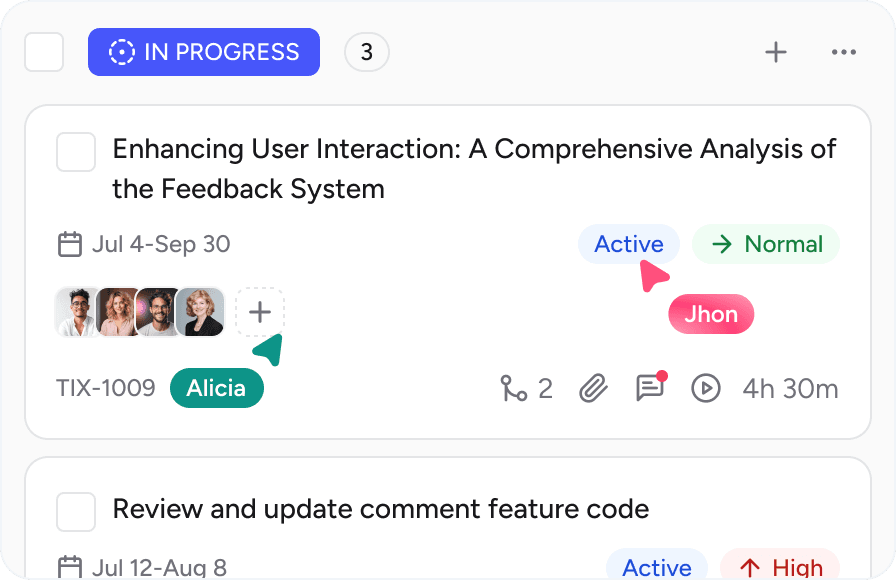
Tixio Projects turns the onboarding pack into a task template with subtasks, named owners and due dates. Recurring tasks cover the work that comes back on a schedule: the month end close checklist, the quarterly portfolio review, the annual client refresh. Custom fields carry the account reference, risk rating and jurisdiction, so a filtered view answers the question "which onboardings are stuck at document collection" in one click. Automations move work forward when a step is actually completed rather than when someone remembers to chase it.
Tixio CRM: the client pipeline in one place
Tixio CRM is a paid add on at 5 dollars per user per month. It gives you a leads list, a Kanban pipeline for prospective clients, activity tracking on every contact, and contacts and companies directories, so relationship history stops living inside one adviser's mailbox. You can send email from the CRM and build custom reports on conversion by source or by adviser.
Chat: fewer decisions buried in threads
Chat gives you channels per team or per client, threads, file sharing and scheduled messages. One caveat, stated plainly: if your firm operates under communication archiving or supervision mandates, treat Tixio Chat as internal coordination and keep regulated client communication in whatever system your obligations require. Do not move regulated comms into any new tool without checking the requirement first.
Tixio Meetings: the review call that leaves a record
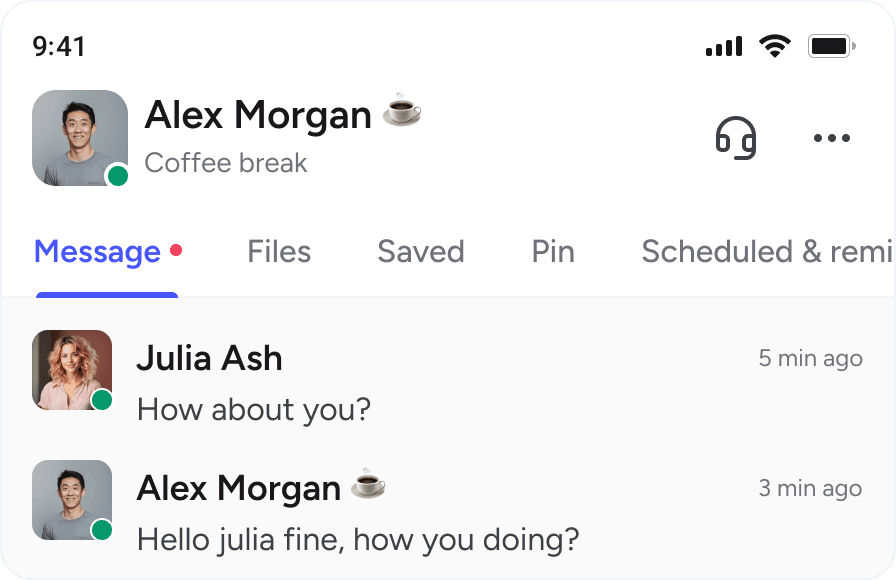
Tixio Meetings runs native video with screen share, recording, AI transcription and summaries, plus notes and action items that sync into tasks. The quarterly client review then produces a summary and a set of assigned follow ups, rather than a page of handwriting that never gets typed up.
How a compliance and operations week runs in Tixio
- Monday starts on a Board showing open onboardings, tasks due this week and the compliance channel, so nobody opens four tools to find out what is late.
- A new client is marked won in the CRM pipeline, and the onboarding project is created from the template with all of its steps and owners already attached.
- Document collection runs as subtasks. The KYC file counts as complete when the checklist is complete, not when someone says it looked fine.
- Compliance review sits as a task with a named approver and a due date, so the approval is recorded against the client, not inside a reply to a reply.
- Midweek, the recurring quarterly review task opens for the accounts due this quarter, each linked to the client wiki page and the previous review summary.
- At month end the close checklist appears on schedule with the same steps as last month, including the reassignments made last time.
- When an audit request arrives, you filter the project by date range and pull a report of what was done, by whom, and when it was completed.
What you can stop paying for
Count what a 25 person firm typically runs: a document or wiki tool at 8 to 10 dollars per user, a project tool at 10 to 13 dollars, a chat tool at 7 to 8 dollars, a meeting tool at 12 to 15 dollars, and a small CRM on top. That is around 40 dollars per user per month before anything specialist.
Tixio Team is 9 dollars per user per month, or 6.30 dollars billed yearly, and includes unlimited projects, Kanban, Roadmap and Calendar views, automations, unlimited chat groups, guest users, role based access control and advanced sharing. Add Tixio CRM for 5 dollars. For 25 people that is roughly 350 dollars a month against roughly 1,000 for the stack it replaces. Exact numbers are on the pricing page.
Who this is for
Tixio fits advisory firms, accountancy practices, brokerages, lending teams, fund administrators and in house finance departments that need internal operations to be consistent and traceable.
On controls, here is what is accurate and nothing more. Tixio supports page level permissions and role based access control on the Team plan, and SSO/SAML plus audit logs on Enterprise. We make no claim to SOC 2, FINRA or any similar certification on this page, and you should be suspicious of any vendor page that does so casually.
This is probably not for you if you need a certified archiving regime, supervised communication review, or a regulator mandated retention product. If your firm operates under specific archiving or retention requirements, take your requirement list to Tixio Enterprise and check it against what we actually offer before you move anything.
Getting started
Pick your worst recurring process, which is usually client onboarding, and build it once in Tixio Projects as a template with every step and owner named. Run the next three clients through it. That one change tends to surface exactly which steps people were quietly skipping.
You get 14 days of full access, free, with no credit card required. There is no free forever plan, so treat the trial as a genuine pilot with real client files rather than a look around.
Related reading: Tixio for legal and compliance teams, Tixio for consulting firms and Tixio vs Notion.