Your best CSM resigns on a Tuesday. By Friday you work out that most of what she knew about her twelve accounts was never written down anywhere.
The renewal date, the escalation that nearly cost you the account last spring, the fact that the champion hates being copied on anything technical. It lived in her head and in a DM thread nobody else can open.
Tixio is a work OS that puts account context somewhere it survives turnover.
Why customer success knowledge walks out the door
- The sales to CS handover is verbal. The deal closes, someone talks for twenty minutes on a call, and the promises made during the sales cycle are never written down.
- Every onboarding is rebuilt from scratch. The same fourteen steps get retyped into a fresh checklist because last quarter's plan is buried in somebody's downloads folder.
- The QBR deck lives on one laptop. Nobody can find last quarter's version, so the new CSM presents numbers with no context for why the account was worried in March.
- Escalations get raised in the wrong place. The customer emails the CSM, the CSM messages an engineer directly, and there is no record of what was promised or when.
- Renewal dates sit in a spreadsheet. Nobody opens it until week eleven of a twelve week notice period, which is roughly when the customer has already decided.
- The churn post mortem is written once and never read. The same three failure patterns repeat because the document was filed somewhere nobody searches.
What Tixio does for customer success teams
Tixio replaces the pile of separate tools a CS team usually stitches together. Six parts of it carry most of the weight.
Tixio Projects: one onboarding project per account
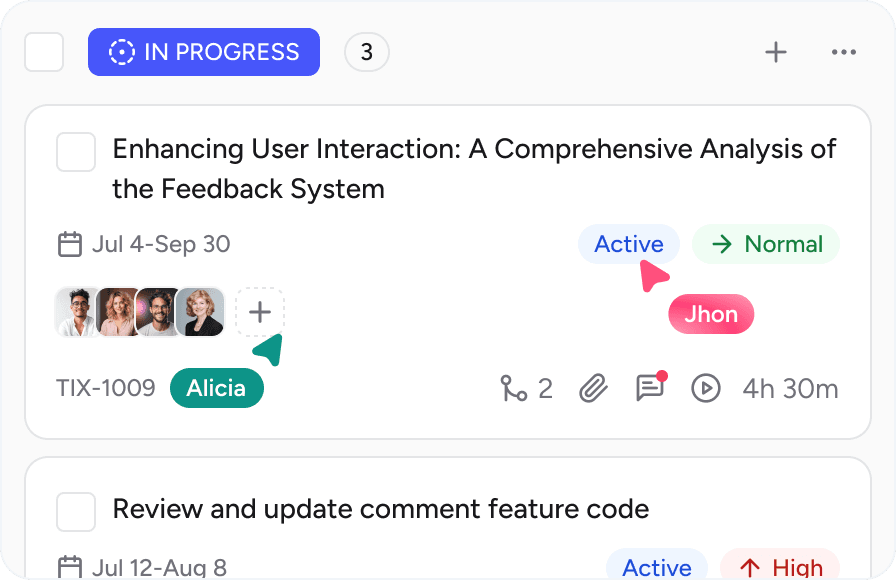
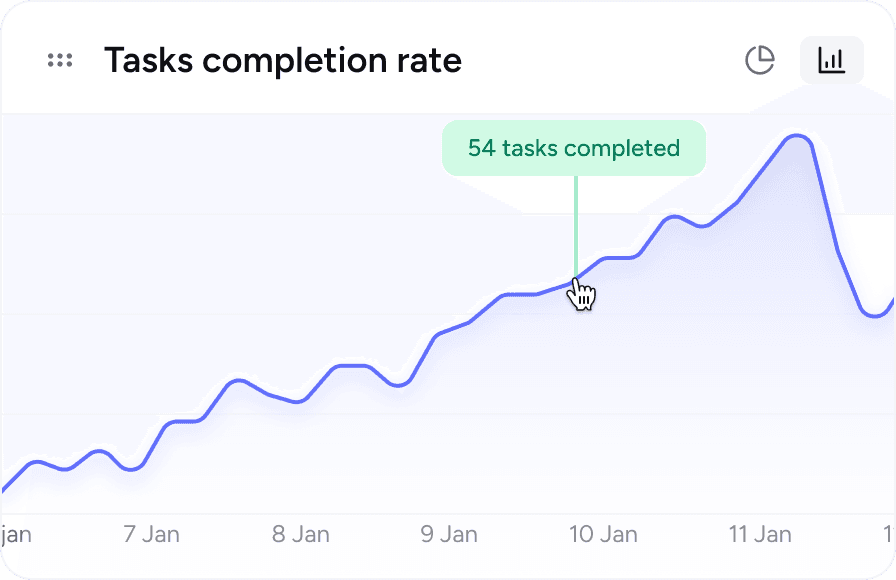
Every account gets its own project built from the same template. List, Kanban, Calendar and Roadmap views, subtasks, custom fields for plan tier and contract value, and a named owner on every step. Recurring tasks handle the quarterly health check and the ninety day renewal reminder, so nothing depends on a person remembering. Project reports show which onboardings are behind and by how much.
Tixio Wiki: the account playbook a CSM can search mid call
The Wiki holds one page per account plus the internal knowledge base. Nested pages, real time co-editing and global search mean the answer arrives during the call rather than in a follow up email. Page level permissions keep commercial notes away from people who should not see them. Templates turn the handover note from sales into a form that gets filled in instead of a conversation that gets forgotten.
Tixio CRM: account and contact records that keep their history
The CRM add on stores companies, contacts and activity tracking, so every logged touch on an account is visible without asking anyone. You can send email from the CRM, import existing records, and build custom reports on renewals and pipeline. It costs 5 dollars per user per month on top of your plan.
Chat: an escalation channel with product already in it
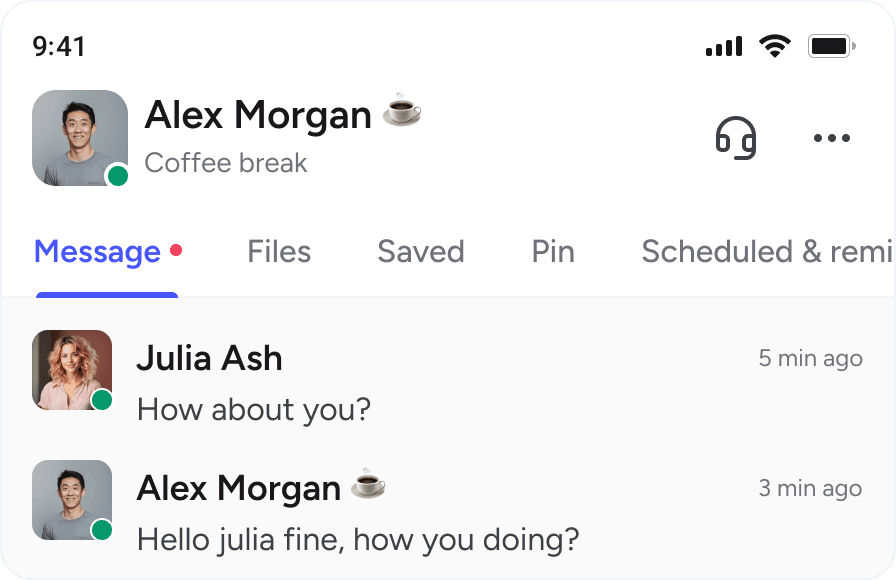
Escalations move faster when the product team sits in the same tool. Channels, threads, file sharing and scheduled reminders turn an escalation into a thread with a history rather than a DM someone half remembers. When the CSM who opened it leaves, the thread stays where the next person can read it.
Tixio Meetings: QBRs you can go back to
Meetings gives you native video, screen share and recording with AI transcription and summaries. Record the QBR, and the summary and action items land as tasks. Six months later the next CSM reads what the customer actually said rather than guessing from a deck.
Tixio Connect: share the rollout with the customer
Connect lets you share a Project, Wiki, Board, Canvas or Chat with people in another workspace. Give the customer access to their own onboarding board so they can see what is done, what is waiting on them, and what comes next. That replaces the weekly status email nobody enjoys writing.
How a CSM week runs in Tixio
- Monday, open the Projects Calendar view and see every onboarding milestone, health check and renewal date falling in the next thirty days.
- A deal closes, so you duplicate the onboarding template into a new project and fill in the handover fields sales completed.
- Before kickoff you search the Wiki for the account playbook and the two closest comparable accounts, including one that churned.
- Kickoff runs in Meetings with recording on, and the AI summary plus action items go straight into the onboarding project.
- A bug blocks go live, so you raise it in the escalation channel where the product engineers already are, and link the thread to the task.
- You share the onboarding project through Connect, and the customer stops emailing to ask where things stand.
- Friday, the recurring quarterly health check fires on the accounts due, with last quarter's notes already on the page.
What you can stop paying for
Most CS teams pay for five things at once: a project tracker, a wiki, a team chat tool, a video tool with recording, and a CRM seat. Bought separately that commonly lands somewhere between 50 and 70 dollars per user per month.
Tixio Team is 9 dollars per user per month, or 6.30 billed yearly, and the CRM add on is 5. For a ten person CS team on annual billing that is about 113 dollars a month for the whole set. The saving matters less than the fact that account history stops being split across five products that do not talk to each other.
Who this is for
This is for customer success and account management teams of roughly three to fifty people who own onboarding and renewals, and who have already paid the cost of one person leaving. Over 1,000 companies have onboarded onto Tixio, a fair number of them small CS and account teams.
This is probably not for you if your day is inbound tickets. Tixio is not a support ticketing desk like Zendesk, with queues, SLA timers and per ticket CSAT surveys. Keep the desk you have and use Tixio for the account side. Tixio also does not read product usage telemetry, so it will not calculate a health score from login data. A health check here is a recurring task and a written page, not an automatic number.
Getting started
Start with one account rather than a migration. Build a single onboarding project for the next customer that signs, write their playbook page in the Wiki, then reuse both templates on the account after that. If it holds up twice, roll it across the book.
Every plan comes with 14 days of full access, free, no credit card required.
Related reading: Tixio for leadership, Tixio for product managers and Tixio vs Notion.