Team Collaboration Tools: How to Build Real Accountability and Task Ownership
Here is a scenario that probably sounds familiar. Your team has a project management tool, a messaging app, a shared document drive, and maybe a video call platform. You have all the tools. And yet, tasks still fall through the cracks. Deadlines slip. People assume someone else handled something. A project stalls and nobody quite knows who owns what.
That is not a technology problem. That is an accountability problem. And the right team collaboration tools, used with intention, can actually solve it.
I have seen this pattern play out in early-stage startups and in teams of fifty people. The tool is rarely the issue. How you use it, and whether it creates clear task ownership, is everything. This blog is about that gap between having tools and actually building a culture of accountability through them.
Why Accountability Breaks Down in Remote and Hybrid Teams
Before we talk about solutions, it is worth understanding why accountability falls apart in the first place. When teams were co-located, accountability was partly enforced by proximity. You could glance across the room and see if someone was working on their task. You could catch someone at their desk for a quick update. That ambient awareness kept people honest in ways that were invisible until it disappeared.
Remote and hybrid work removed that ambient layer. And most teams replaced it with more meetings, not better systems. According to a 2023 report by Atlassian, employees spend an average of 31 hours per month in unproductive meetings, with a significant portion of those meetings being status updates that could have been handled asynchronously through the right task collaboration software.
When accountability structures are weak, you get:
- Tasks assigned to the team rather than to an individual
- No clear deadlines or milestones visible to everyone
- Updates that live in someone's head or in private messages
- No record of who committed to what and when
- Blame that gets distributed evenly when things go wrong
The root problem is ambiguity. Accountability needs specificity. It needs a name attached to a task, a date attached to a deliverable, and visibility for the whole team to see progress.
What Good Team Collaboration Tools Actually Need to Do
Not all collaboration tools are built for accountability. Some are built for communication. Some are built for file sharing. Some are built to look impressive in a sales demo. The ones that actually improve accountability share a few critical characteristics.
1. Clear Task Ownership at the Individual Level
This sounds obvious, but many teams use tools that allow tasks to float without a clear owner. A task assigned to a channel, a group, or a project without a named individual is not really assigned at all. It is a wish.
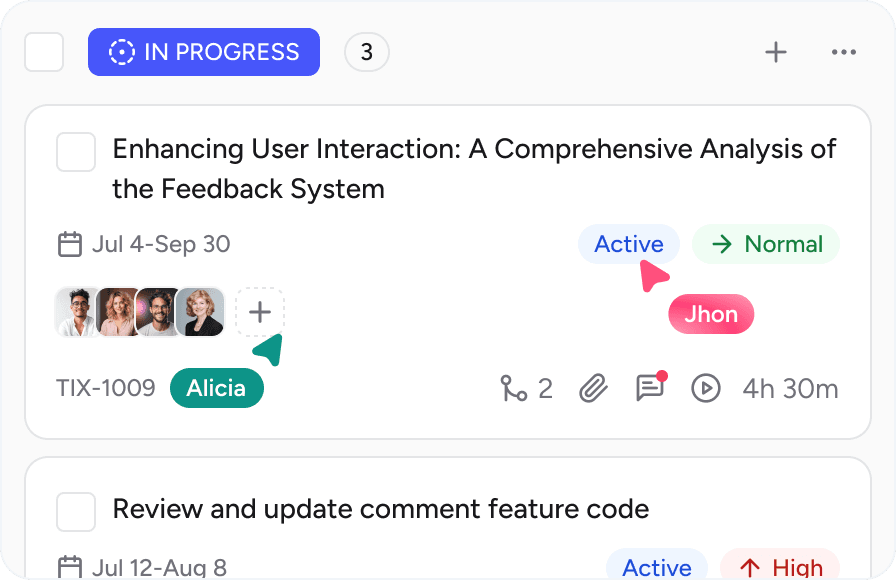
Effective team task management tools force you to assign a task to a specific person. Not a team. Not a department. A person. That single behavior change has a measurable impact. Research from the Harvard Business Review found that when responsibility is diffused across a group, individual accountability drops significantly due to what psychologists call the diffusion of responsibility effect.
2. Deadline Visibility for the Whole Team
Accountability is a social mechanism. When everyone can see your deadline, you are far more likely to meet it. This is not about surveillance. It is about creating the same social pressure that co-located work once provided naturally.
Tools that surface deadlines in shared views, team dashboards, and automated reminders do this well. When a deadline is only visible to the person responsible, it loses half its power.
3. Progress Tracking Without Micromanagement
There is a meaningful difference between a manager checking in constantly and a system that shows progress automatically. The first is exhausting and demotivating. The second gives everyone, including the person doing the work, a clear sense of where things stand.
Good task collaboration software shows task status in real time. Teammates do not have to ask for updates. Managers do not have to schedule check-in calls. The tool surfaces the information on its own.
4. History and Audit Trails
Accountability also means being able to look back and understand what happened. Who changed a deadline? Who marked a task complete? Who reassigned a deliverable? Tools with clear activity logs create a record that makes retrospectives more honest and prevents revisionist history.
The Best Team Collaboration Tools for Accountability in 2026
Let me walk through some of the tools that genuinely move the needle on accountability and task ownership, rather than just adding another notification to your stack.
Asana
Asana is one of the strongest task collaboration software options for teams that need clear ownership structures. Every task has a single assignee. Every project has a timeline view. Subtasks can be delegated with their own owners and deadlines, which means you can break a large deliverable into accountable pieces without losing track of the parent goal.
What sets Asana apart for accountability is its portfolio view and workload features, which let managers see who owns what across multiple projects at once. There is no hiding. If someone is overloaded, you can see it. If a task has no owner, the system shows that clearly too.
Monday.com
Monday.com is particularly good for teams that are visual and need a flexible structure. Its strength from an accountability standpoint is its status columns and automations. You can build workflows that automatically notify a task owner when a dependency is complete, or that escalate a task to a manager if it has not been updated in a certain number of days.
These automations replace the need for manual follow-up, which is one of the biggest time sinks in team management. According to Monday.com's own data, teams using automated workflows report a 35 percent reduction in time spent on status updates.
ClickUp
ClickUp positions itself as an all-in-one productivity platform, and for teams that want task collaboration software combined with docs, goals, and time tracking, it delivers. The goals feature is particularly relevant for accountability. You can tie individual tasks to team-wide objectives, so every person can see how their work connects to the bigger picture.
The time tracking integration also adds an accountability layer that pure project tools often miss. When someone logs time against a task, it creates a natural record of effort alongside outcome.
Notion
Notion is more of a knowledge management tool than a traditional task management platform, but for teams that work heavily in documentation and strategy, it can create strong accountability structures. Database views with assignees, status properties, and due dates give teams a flexible but structured way to manage ownership.
The limitation with Notion is that it requires discipline. The tool does not enforce accountability the way more rigid task management platforms do. But for teams with strong operating discipline, it works well.
Linear
For product and engineering teams specifically, Linear has become a favorite for a reason. It is fast, opinionated, and built around cycles and priorities. Every issue has a clear owner. Every cycle has a defined scope. There is no ambiguity about what someone is responsible for delivering in a given sprint.
The cycle retrospective feature also makes accountability retrospective, not just prospective. Teams review what was completed, what was carried over, and why, which builds a continuous improvement loop around ownership and delivery.
How to Actually Build Accountability with Team Task Management Tools
Having the right tool is maybe forty percent of the solution. The other sixty percent is how you use it. Here are the practices that separate teams that use team task management tools effectively from those that just pay for another subscription.
Make One Person the Owner of Every Task, No Exceptions
This is the most important rule. If a task cannot be assigned to a single person, it needs to be broken down further until it can be. Shared ownership is often a polite way of saying nobody owns it.
This does not mean collaboration cannot happen on a task. Multiple people can contribute. But one person is accountable for the outcome. That person's name is on it. That clarity changes behavior.
Set Deadlines That Are Real, Not Aspirational
A deadline that nobody expects to be met is not a deadline. It is a suggestion. When teams develop a culture of floating deadlines, the entire accountability infrastructure collapses because nobody believes the dates actually mean anything.
If your team regularly misses deadlines without consequence or discussion, start there. Use your team task management tools to track deadline adherence over time. Review it in retrospectives. Make it a data point, not just a feeling.
Use Weekly Reviews to Surface What Is Stuck
Most agile methodologies build this in through standups and sprint reviews, but you do not have to follow a formal methodology to benefit from the practice. A weekly fifteen-minute team review of open tasks, their owners, and their status catches problems before they become crises.
Task collaboration software makes this easy. Pull up the team dashboard, look at what is overdue or at risk, and have a brief conversation about blockers. The tool does the preparation. The team does the problem solving.
Create Templates for Recurring Workflows
One of the hidden benefits of structured team task management tools is the ability to templatize recurring processes. If your team runs a monthly report, a client onboarding, or a product launch, building a task template with pre-assigned owners and standard deadlines removes the ambiguity from each new cycle.
Templates also make onboarding new team members easier. They learn how work flows, who owns what, and what the standards are by working within a system that already has those expectations built in.
Integrate Your Communication Tools with Your Task Tools
One of the biggest accountability killers is when decisions made in Slack or Teams never make it back into the task management system. Someone says they will handle something in a message thread, and it never gets logged as a formal task with a deadline.
The fix is integration. Most major team collaboration tools connect with Slack, Microsoft Teams, and email. You can turn a message into a task directly. You can get task reminders in your messaging app. These integrations close the loop between where conversations happen and where work gets tracked.
The Cost of Poor Accountability: Why This Actually Matters
It is tempting to treat accountability as a soft issue, a culture thing, separate from the hard metrics of the business. But the data tells a different story.
A study by the American Society of Training and Development found that people have a 65 percent chance of completing a goal if they commit to someone. That number jumps to 95 percent when they have a specific accountability appointment with that person. That is a thirty-point swing based entirely on accountability structures, not skills or effort.
On the business side, project failure rates remain stubbornly high. The Project Management Institute reported that organizations waste 11.4 percent of every dollar due to poor project performance. For a team with a modest annual project budget of one million dollars, that is $114,000 in wasted resources. A significant portion of that waste traces back to unclear ownership and poor task tracking.
Task collaboration software that enforces ownership and visibility is not a nice-to-have. For teams that take execution seriously, it is a competitive advantage.
Building a Culture of Ownership That the Tools Can Support
Tools amplify what already exists in your culture. If your team has a blame culture, tools will just make the blame more visible. If your team has a learning culture, tools will make growth more visible. The goal is to build a culture where ownership is valued, not punished.
That means a few things at the leadership level:
- Celebrate tasks completed on time and on scope, not just big wins
- When something slips, focus on the system failure before the individual failure
- Be transparent about your own tasks and deadlines in the same tools your team uses
- Avoid creating workaround habits like managing critical work in private DMs outside the shared system
- Give people the context they need to own their work, not just the instructions
When leaders model ownership, teams follow. When leaders bypass the system, teams find workarounds. The tool only works as well as the cultural foundation it sits on.
Choosing the Right Tool for Your Team Size and Stage
There is no single best team collaboration tool for everyone. The right choice depends on your team size, workflow complexity, and the nature of the work.
For small teams of two to ten people, simpler tools like Trello, Notion, or even a well-structured spreadsheet can work. The overhead of enterprise tools often outweighs the benefit at this stage. Focus on the fundamentals: one owner per task, visible deadlines, regular reviews.
For teams of ten to fifty people, tools like Asana, Monday.com, or ClickUp provide the structure you need without becoming bureaucratic. The investment in setup pays back quickly through reduced status meetings and fewer dropped deliverables.
For teams above fifty, or for companies running multiple simultaneous projects across departments, more sophisticated platforms with portfolio management, resource planning, and reporting become worth the investment. Jira, Wrike, or Smartsheet work well at this scale.
The common thread at every stage is the same: the tool must support clear ownership, deadline visibility, and progress transparency. Everything else is secondary.
Final Thoughts
Team collaboration tools have never been more capable or more affordable. And yet, teams still struggle with accountability and ownership. The issue is almost never the tool itself. It is the habits, expectations, and cultural norms that surround it.
If you want your team to take ownership seriously, you have to build systems that make ownership unavoidable. One name on every task. Real deadlines. Shared visibility. Regular reviews. These are not complicated ideas. But they require consistency to take hold.
Start with the tool that fits your team today. Set up your ownership rules. Build the review habits. And use the data your task collaboration software generates to have honest conversations about where accountability is strong and where it is not.
That is how tools stop being a subscription and start being a system that actually changes how your team works.