Team Collaboration Tools: How to Build Accountability and Real Task Ownership
Here is the honest truth about most teams: they have more collaboration tools than ever, and less clarity about who is responsible for what than ever before. Slack messages get missed. Tasks sit in a shared doc with three people assigned to them, which means no one actually owns them. Deadlines slip because everyone assumed someone else was handling it.
This is not a people problem. It is a systems problem. And the right team collaboration tools, used with intention, can fix it.
I have spent years watching teams grow from five people to fifty, and the pattern is consistent. The bottleneck is rarely talent. It is accountability. Specifically, the absence of clear task ownership backed by a system that makes responsibility visible and impossible to ignore.
This guide covers what team collaboration tools actually do when used well, how task collaboration software creates the conditions for ownership, and what team task management tools you should consider depending on where your team is right now.
Why Accountability Breaks Down in Modern Teams
Before we talk tools, we need to talk about why accountability fails in the first place. According to a study by Gallup, only 14 percent of employees strongly agree that performance reviews inspire them to improve. Separate research from Harvard Business Review found that 46 percent of employees are unclear about what they are expected to accomplish at work on any given week.
That is not a motivation crisis. That is a clarity crisis.
When teams scale, communication gets distributed across too many channels. Decisions happen in meetings that do not get documented. Tasks get assigned verbally or buried in long threads. The result is a team that is technically collaborating, but not in a way that produces accountability.
The Three Accountability Gaps Most Teams Face
- Ownership ambiguity: Tasks assigned to groups or teams rather than individuals, so no single person feels responsible.
- Visibility gaps: Work happening in silos, with no shared view of who is doing what by when.
- Follow-through failure: No structured way to check in, flag blockers, or escalate when deadlines are at risk.
The right team collaboration tools address all three of these gaps, but only if you use them with accountability built into the workflow from the start.
What Team Collaboration Tools Actually Do
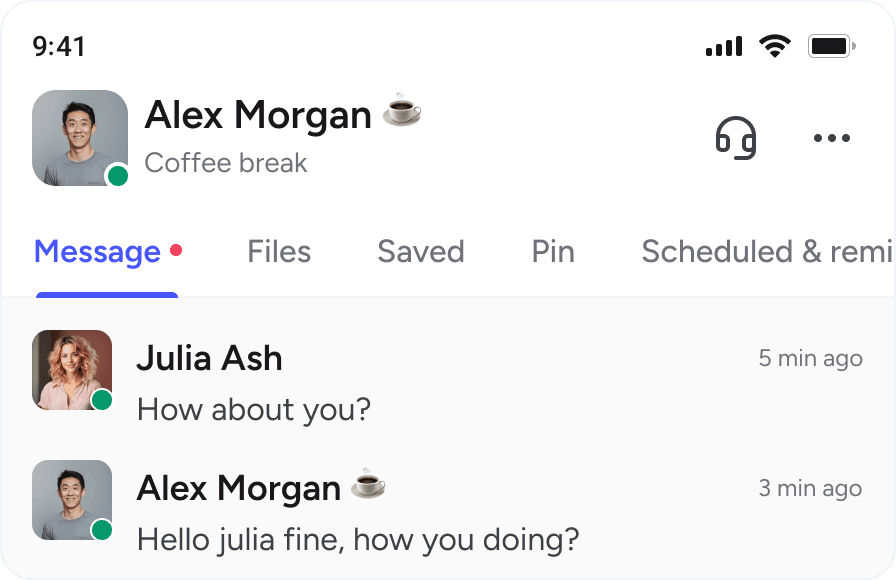
Team collaboration tools is a broad category. It includes everything from communication platforms like Slack and Microsoft Teams to project management suites like Asana, Monday.com, ClickUp, and Notion. The best implementations combine several types of tools into a coherent system.
At their core, effective team collaboration tools do four things:
- Centralize communication so nothing important gets lost
- Create a shared view of work in progress
- Assign clear ownership to tasks and deliverables
- Surface blockers and delays before they become crises
According to McKinsey, productivity improves by 20 to 25 percent in organizations where employees are connected by social and collaborative tools. But that number assumes the tools are being used well, not just adopted and then ignored after the first month.
Communication Tools vs. Task Management Tools: Understanding the Difference
One mistake teams make is treating communication tools as task management tools. Slack is not a project tracker. Email is not a task list. When you use a messaging platform to assign work, you are creating a system where accountability depends on someone scrolling back through a conversation to find what they were asked to do.
Real accountability requires a different layer: dedicated team task management tools where every task has an owner, a due date, and a status that everyone can see.
Think of it this way. Communication tools are where the conversation happens. Task management tools are where the commitment lives.
Team Task Management Tools: The Backbone of Accountability
Team task management tools are purpose-built to solve the accountability problem. They turn conversations and decisions into trackable, assignable, completable units of work.
The best ones share a few common features:
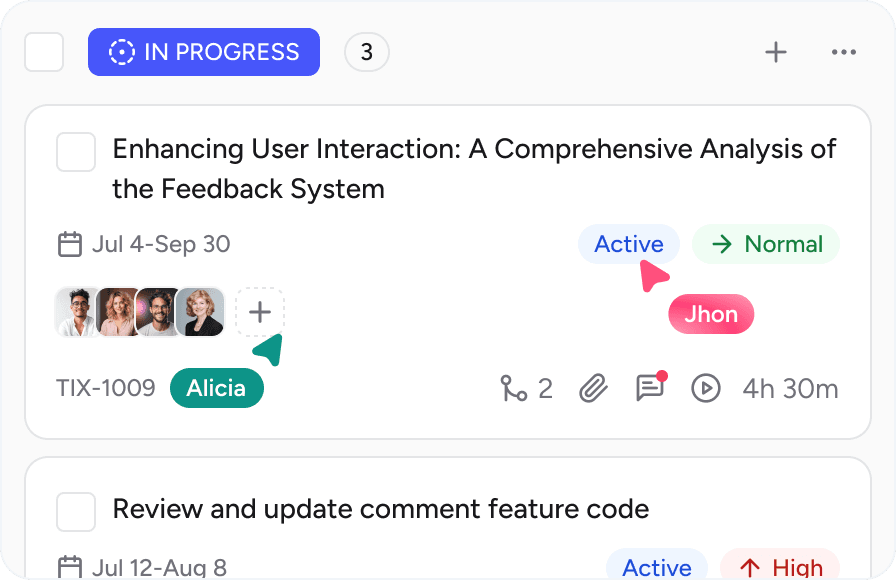
- Single owner per task: Every task has one person responsible for it, not a group.
- Due dates and priority levels: Time-bound tasks with clear urgency signals.
- Status tracking: A visible record of whether work is not started, in progress, blocked, or complete.
- Dependency mapping: The ability to connect tasks so teams understand how one deliverable feeds another.
- Notification and reminder systems: Automated nudges that keep owners on track without requiring a manager to chase people.
Popular Team Task Management Tools Worth Knowing
Asana is one of the most widely used team task management tools, particularly among marketing and operations teams. Its timeline view makes dependencies visible, and the workload feature helps managers spot when someone is overcommitted before it becomes a problem.
ClickUp has gained significant traction because it tries to consolidate multiple tools into one platform. You can manage tasks, docs, goals, and time tracking in a single workspace. For teams that are tired of context switching, this is a real advantage.
Monday.com offers a highly visual interface that works well for teams who want a board-style overview of work. Its automations are strong, allowing teams to set rules like automatically notifying a manager when a task is marked overdue.
Linear is popular with engineering teams for its speed and minimal interface. It is built around cycles and priorities, which maps well to how development teams actually work.
Notion sits somewhere between a knowledge management tool and a task manager. It is flexible but requires more setup to function as a true accountability system.
The right tool depends on your team size, workflow complexity, and how much setup bandwidth you have. But the choice of tool matters less than how consistently you use it.
Task Collaboration Software: Where Ownership Gets Real
Task collaboration software goes a step beyond basic task management. It is built for teams where multiple people need to contribute to a single piece of work, with clear visibility into who is doing what and where things stand.
Think of a product launch. Multiple teams are involved: marketing, engineering, design, customer success. Each team has its own tasks, but those tasks are interconnected. Task collaboration software creates a shared workspace where all of that work is visible in context, not siloed in separate team tools.
Key Features to Look For in Task Collaboration Software
- Cross-team visibility: The ability to see work happening across departments without needing access to every individual team's internal tools.
- Comment and feedback threads at the task level: So context lives with the work, not in a separate Slack channel.
- File attachments and version history: So the assets related to a task are always accessible in one place.
- Approval workflows: Structured steps that route work through the right reviewers before it is marked complete.
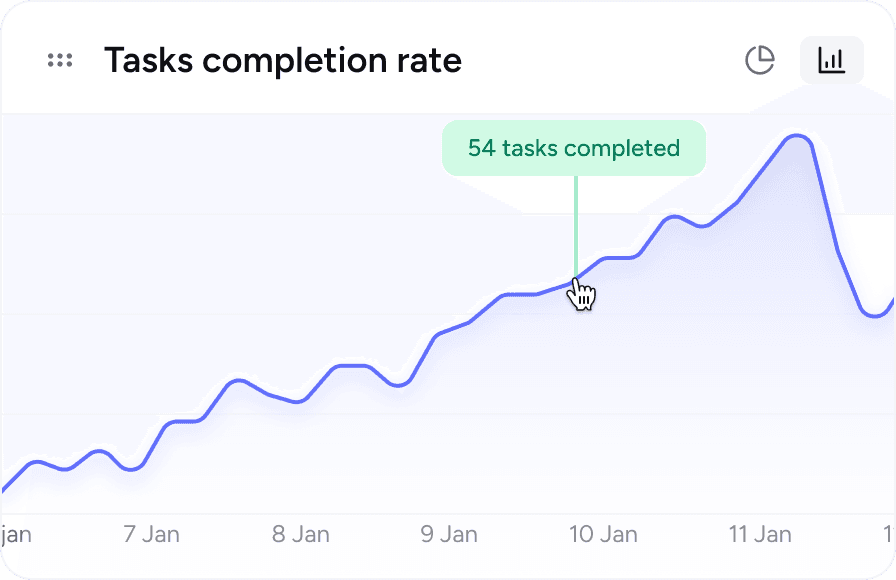
- Reporting and dashboards: High-level views that tell leadership where things stand without requiring manual status updates.
According to Forrester Research, teams that use integrated task collaboration software see a 30 percent reduction in time spent on status meetings. That is time that goes back into actual work.
A Real Example of Task Collaboration Software in Practice
Consider a content team at a 40-person SaaS company. Before adopting dedicated task collaboration software, their process looked like this: a content brief would be emailed to a writer, the draft would come back in Google Drive, feedback would happen in the document comments, and final approval would happen over Slack with a thumbs-up emoji.
The problem? There was no single place where anyone could see the status of every piece of content in production. The head of content spent two hours every Monday morning chasing updates. Writers were unclear on priorities. Deadlines slipped regularly.
After moving to a structured task collaboration setup in ClickUp, every piece of content had a task with a single owner, a due date, a checklist of steps from brief to published, and a defined reviewer. The Monday morning status meeting was replaced by a five-minute dashboard review. Time to publish dropped by 35 percent in the first quarter.
This is what task collaboration software is supposed to do. Not just organize work, but make accountability automatic.
Building a Culture of Ownership with Collaboration Tools
Tools are not enough on their own. You can implement the best team collaboration tools in the world and still have a team where accountability is weak, if the culture does not reinforce ownership.
Here is what I have seen work consistently.
1. One Owner, Always
Make it a non-negotiable rule: every task has exactly one owner. Not a team. Not two people. One person who is responsible for the outcome, even if multiple people contribute to the work. This does not mean that person does everything themselves. It means they are the one accountable for making sure it gets done.
2. Make Work Visible by Default
Accountability requires visibility. If work is happening in private messages, personal to-do lists, or undocumented conversations, it cannot be tracked or supported. Build a norm where all work lives in the shared system. Not to surveil people, but to create a shared reality about what is in progress.
3. Use Status Updates as a Communication Tool
Encourage your team to update task statuses in real time, not just when something is complete. A task marked as blocked is valuable information. It tells the team that someone needs help, before the deadline passes. When status updates become a habit, your team task management tools become a live picture of how the work is progressing.
4. Review Accountability in Retrospectives
Build a habit of reviewing task completion rates and ownership patterns in team retrospectives. Not to shame anyone, but to learn. If certain types of tasks consistently slip, that is a signal about resourcing, clarity, or process, not just individual performance.
5. Connect Tasks to Outcomes
Accountability is stronger when people understand why their task matters. When you create tasks in your team task management tools, include a brief note about the goal it supports. A task called write landing page copy is weaker than write landing page copy to support the Q2 product launch targeting enterprise buyers. Context drives ownership.
Common Mistakes Teams Make with Collaboration Tools
After watching dozens of teams implement and then abandon collaboration tools, the failure patterns are consistent.
- Too many tools running in parallel: When work is split across five different platforms, no one knows where to look and nothing gets maintained. Consolidate ruthlessly.
- No onboarding to the system: Dropping a new tool on a team without training on how it maps to their actual workflow guarantees low adoption.
- Using the tool for communication instead of commitment: If your project management tool is filled with comments and chat threads instead of tasks and status updates, it has become a second inbox, not an accountability system.
- No regular review cadence: Tools only work if someone is looking at them. Build a weekly ritual where the team reviews open tasks, updates statuses, and flags risks.
- Treating the tool as optional: If some team members use the system and others do not, the shared visibility breaks down. Tool adoption needs to be a team standard, not a personal preference.
How to Choose the Right Team Collaboration Tools for Your Team
Choosing the right tools is less about finding the best software in the abstract and more about finding the best fit for your team's specific situation.
Consider These Questions Before Deciding
- How many people will use this tool, and how technically comfortable are they?
- Do we need cross-team visibility or is this for a single team?
- How complex are our projects? Do we need dependencies, timelines, and resource management, or do we mostly need simple task lists?
- What tools are we already using, and how well does this integrate with them?
- What is our budget, and does the pricing scale reasonably as we grow?
For small teams under 15 people with relatively simple workflows, a tool like Notion or Trello may be sufficient. For teams managing complex cross-functional projects, a more robust option like Asana, Monday.com, or ClickUp will give you the visibility and structure you need.
The goal is to find a tool that your team will actually use consistently, not the most feature-rich option that requires a project manager just to maintain it.
The ROI of Getting Collaboration and Accountability Right
This is not just about team experience, though that matters. There is a real business case for getting your collaboration tools and accountability systems right.
Research from the Project Management Institute shows that organizations with mature project management practices waste 28 times less money than their peers, because more of their strategic initiatives actually succeed. Poor task management and unclear accountability are among the leading causes of project failure.
When every team member knows what they own, can see how their work connects to the bigger picture, and has a system that surfaces blockers early, execution improves. Decisions get made faster. Launches happen on time. People feel less stressed because they are not operating in a fog of unclear expectations.
That is the real value of team collaboration tools used well. Not just efficiency, but the kind of clarity that lets good people do their best work.
Final Thoughts
If I had to summarize the key insight from everything I have seen about team collaboration tools and accountability, it would be this: the best tool is the one your team uses consistently, with clear norms around ownership and visibility built into how you use it.
Accountability is not a personality trait. It is a system. Build the system, reinforce the norms, and the right team task management tools will do the rest.