Team Collaboration Tools for Async-First Distributed Teams
Let me tell you something most productivity consultants will not say out loud: the biggest threat to your distributed team is not bad tooling. It is the assumption that remote work should look like office work, just done from home.
When you try to replicate the office experience across time zones, you end up with a calendar full of meetings that could have been documents, a Slack workspace that feels like a fire alarm that never stops, and a team that is always available but rarely productive.
The solution is not more tools. It is the right tools paired with an async-first mindset. And that is exactly what this guide is about.
We are going to walk through the most effective team collaboration tools for distributed teams, explain why async team tools are the backbone of high-performing remote organizations, and give you a practical framework for building a workflow your team will actually use.
Why Async-First Is Not Just a Trend
The shift toward asynchronous collaboration is not a pandemic-era experiment that overstayed its welcome. It is a structural response to how knowledge work actually happens.
According to a 2023 report by Asana, 58% of workers say they lose a significant amount of time to unnecessary meetings and interruptions. Meanwhile, research from Microsoft found that the average employee spends 57% of their time communicating rather than doing focused work.
That is a serious productivity leak, and it is largely self-inflicted.
When you go async-first, you flip the default. Instead of assuming that all communication needs to happen in real time, you build systems where work moves forward without requiring everyone to be online at the same time. Real-time communication becomes a deliberate choice, not the default setting.
For distributed teams especially, this is not optional. If your team spans five time zones, you cannot afford to make progress contingent on a 9am standup that works for only half the team.
What Async-First Actually Means in Practice
Async-first does not mean you never have meetings. It means you only have meetings when synchronous communication genuinely produces better outcomes than written communication. Here is what that looks like on the ground:
- Decisions are documented before they are discussed, not after
- Project updates are written, not spoken in a daily standup
- Feedback is given in context, directly on the work rather than in a separate meeting
- People have defined windows when they are reachable, rather than being always-on
- Tools are chosen based on how well they support written, threaded, searchable communication
This approach requires intentional tool selection. Not every collaboration platform is built for async work, and using the wrong tools will actively work against the culture you are trying to build.
The Core Categories of Team Collaboration Tools
Before we dive into specific tools, it helps to understand the categories. Most distributed teams need a stack that covers these five areas:
1. Project and Task Management
This is the operational layer of your team. It is where work is assigned, tracked, and completed. Good async team tools in this category make it easy to understand project status without asking anyone directly.
Tools like Linear, Asana, ClickUp, and Notion all serve this function, though they approach it differently. Linear is particularly popular with engineering teams because of its speed and clean interface. Asana works well for cross-functional teams with complex dependencies. ClickUp tries to be everything in one place, which is either a feature or a liability depending on your team.
What you want from a task management tool in an async setup:
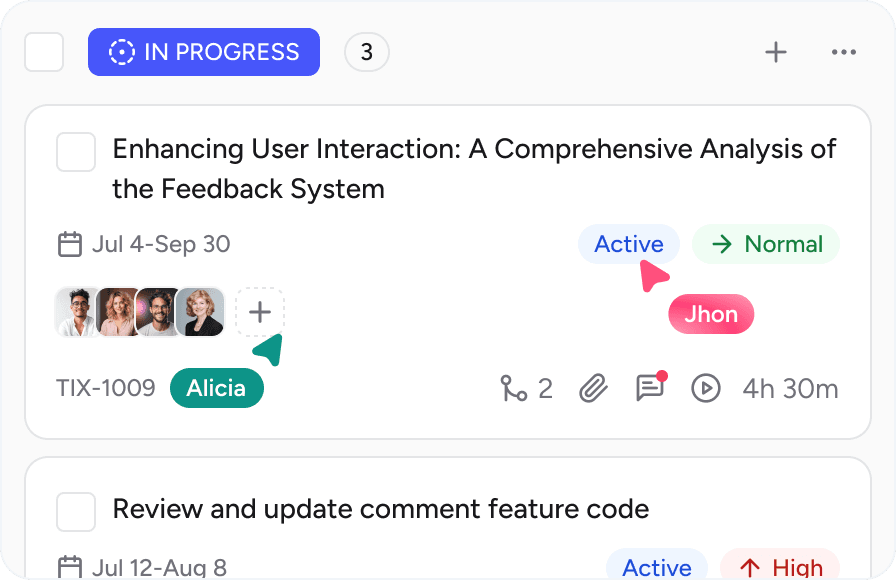
- Clear ownership for every task
- Visible due dates and priority levels
- Comment threads attached directly to tasks
- Status updates that do not require follow-up conversations
- Integration with your documentation and communication tools
2. Documentation and Knowledge Management
This is the most underrated layer of any async-first stack. If your team cannot find information without asking someone, you have a documentation problem disguised as a communication problem.
Strong asynchronous collaboration tools for documentation include Notion, Confluence, Coda, and Slab. Each has its strengths. Notion is flexible and popular with startups. Confluence integrates deeply with Jira and works well for larger engineering organizations. Slab is purpose-built for company wikis and has strong search functionality.
According to McKinsey, employees spend an average of 1.8 hours every day searching for and gathering information. A well-maintained knowledge base can claw a significant portion of that time back.
The goal here is not to write documentation for its own sake. It is to make sure the information your team needs to do their jobs is findable, current, and written clearly enough that it does not require a follow-up conversation to understand.
3. Asynchronous Communication Tools
This is where a lot of teams get it wrong. They use Slack as their primary collaboration tool and wonder why everyone feels overwhelmed. Slack is a synchronous tool dressed up as an async one. Messages feel urgent. Threads get buried. Context is constantly lost.
For genuinely asynchronous communication, look at tools like:
- Loom: Video messaging that lets you record and share screen walkthroughs, feedback, and updates without scheduling a meeting
- Twist: A team messaging app built specifically for async communication, with a thread-first structure that reduces the pressure to respond immediately
- Basecamp: Combines messaging, task management, and file sharing with async principles baked in
- Guru: A knowledge management tool that surfaces information in context so people do not have to go hunting for it
Loom deserves a special mention here. For distributed teams, the ability to record a quick walkthrough and share it instead of jumping on a screen share call is genuinely transformative. Loom reports that users save an average of 4 hours per week compared to scheduling and attending equivalent meetings.
4. Real-Time Collaboration Tools
Even async-first teams need some real-time capability. The key is using these tools intentionally, for things that actually benefit from synchronous interaction.
Whiteboarding and brainstorming tools like Miro and FigJam work well for sessions where visual thinking and rapid iteration genuinely require everyone in the same virtual space. Video conferencing tools like Zoom and Google Meet remain necessary for relationship building, sensitive conversations, and complex problem-solving sessions where back-and-forth matters.
The distinction to make here is intentional vs. habitual real-time communication. A weekly team retrospective on Zoom is intentional. A daily standup that could easily be a written update in your project management tool is habitual.
5. File Storage and Sharing
Often overlooked but critical. Your team needs a shared file system that is organized, searchable, and consistently maintained. Google Workspace and Microsoft 365 are the dominant players here, and for most teams, one of these two is already in the stack.
The async consideration for file storage is less about which tool you choose and more about how you organize it. Folders should reflect how people look for information, not how information was created. Naming conventions matter. Access permissions should be set to share by default, not restricted by default.
Building an Async-First Stack That Actually Works
Having good tools is not enough. The way you assemble and use them matters just as much as the tools themselves.
Start With a Communication Charter
Before you add or replace any tool, document how your team communicates. A communication charter answers questions like:
- What kinds of messages belong in which channels?
- What is the expected response time for different types of communication?
- When is it appropriate to schedule a meeting vs. send a message vs. write a document?
- How do we handle urgent situations that genuinely require real-time response?
Without this foundation, even the best async team tools will be used in ways that create the same problems you are trying to solve. You will still have people pinging each other on Loom when a written comment in Notion would have worked just as well.
Reduce Your Tool Count Before Adding New Ones
The average knowledge worker uses 10 or more applications every day, according to data from Okta. Tool sprawl is a real problem. Every new tool your team adopts adds cognitive overhead, creates potential information silos, and requires onboarding time.
Before you add another asynchronous collaboration tool to your stack, ask whether an existing tool can be configured to serve the same purpose. Most teams could eliminate two or three tools by getting more deliberate about how they use the ones they already have.
Document Everything at the Point of Decision
One of the core disciplines of async-first work is writing things down at the moment they are decided, not after the fact. This means:
- Decision logs attached to the relevant project or task
- Meeting notes published immediately after the meeting ends
- Context added to tasks when they are created, not when someone asks about them
- Feedback given directly on the work with specific, actionable comments
This is a habit, not a tool feature. But the right tools make it easier to build. Notion and Coda both make it straightforward to embed decision logs and meeting notes directly alongside the work they relate to, so context lives in one place rather than scattered across emails and Slack threads.
Set Response Time Norms, Not Always-On Expectations
Async-first does not mean you never respond. It means you respond thoughtfully within a defined window. Most distributed teams find that a 24-hour response norm for non-urgent communication works well. Urgent issues should have a clearly defined escalation path, whether that is a specific Slack channel, a phone call policy, or on-call rotation.
GitLab, one of the most well-known fully remote companies in the world with over 1,500 employees across 65 countries, has built its entire operating model around async-first principles. Their public handbook explicitly states that bias toward asynchronous communication is a core value, and they document everything from how to run a meeting to how to write a good issue comment.
The Real Cost of Getting This Wrong
If you are still on the fence about investing in a proper async-first tool stack and culture, consider what the alternative actually costs.
A 2022 study by Reclaim.ai found that meeting overload costs the US economy approximately $37 billion per year in lost productivity. For a 50-person company, unnecessary meetings can consume upward of 15,000 hours annually, which is the equivalent of seven full-time employees doing nothing but sitting in meetings.
Beyond the financial cost, there is the talent cost. Burnout driven by always-on communication expectations is one of the top reasons remote workers leave their jobs. A Buffer survey found that 22% of remote workers cite communication and collaboration issues as their biggest struggle, ahead of loneliness and time zone differences.
When you build an async-first culture backed by the right team collaboration tools, you are not just improving productivity. You are building a team environment where people can do focused work, trust that information will be available when they need it, and feel respected for their time and attention.
Specific Tool Recommendations by Team Size
Early-Stage Startups (1 to 15 people)
Keep it simple. You do not need a complex stack at this stage.
- Task management: Linear or Notion
- Documentation: Notion
- Communication: Slack (used with discipline) plus Loom for longer updates
- Video calls: Zoom or Google Meet for weekly syncs
- File storage: Google Workspace
Growth-Stage Companies (15 to 100 people)
At this scale, information silos start to form and documentation becomes critical.
- Task management: Asana, Linear, or ClickUp
- Documentation: Notion, Slab, or Confluence
- Communication: Twist or Slack with clear channel guidelines, plus Loom
- Video calls: Zoom with recorded sessions uploaded to your knowledge base
- File storage: Google Workspace or Microsoft 365
Scaling Organizations (100 plus people)
At this stage, you need tools that integrate well and support more complex workflows without requiring constant IT intervention.
- Task management: Asana or ClickUp with deep integration into your documentation layer
- Documentation: Confluence integrated with Jira, or Notion at scale
- Communication: Slack with a strict channel taxonomy, plus Loom for training and walkthroughs
- Video calls: Zoom with live captioning and transcription enabled by default
- File storage: Google Workspace or Microsoft 365 with enforced naming conventions
Common Mistakes Async-First Teams Make
Even teams that understand the value of asynchronous collaboration tools tend to make a few consistent mistakes.
Over-Documenting Without Structure
Writing everything down is only useful if people can find what they are looking for. A Notion workspace with 400 pages and no clear navigation is worse than no documentation at all, because it creates the false impression that information exists while making it practically unfindable.
Build your knowledge base around how people look for information, not around how you created it. Use tags, databases, and clear top-level navigation. Audit it regularly and archive anything that is outdated.
Using Async Tools With a Sync Mindset
This is the most common failure mode. A team adopts Loom but uses it to record five-minute videos that could have been a bullet-point comment. Or they use Notion but still schedule a meeting every time a decision needs to be made, then paste the decision into Notion afterward.
The tool does not change the behavior. The behavior has to change first, and then the tool reinforces it.
Ignoring Onboarding
Every new team member joins with assumptions about how work should flow. If you do not deliberately onboard them into your async-first culture and tool stack, they will default to what they know, which is usually more meetings and more Slack messages.
Build an async onboarding experience that models the behavior you want. Use Loom videos to explain context that would otherwise require a meeting. Point new hires to your documentation before scheduling a call. Show them what good async communication looks like by example.
Looking Ahead: Where Async Collaboration Is Going
The tooling landscape for asynchronous collaboration is evolving fast. A few trends worth watching:
- AI-powered meeting summaries and transcripts are making it easier to extract async value from synchronous sessions. Tools like Otter.ai, Fireflies, and the built-in transcription in Zoom and Teams mean that even your real-time meetings can become searchable, shareable async artifacts.
- Ambient collaboration tools like Liveblocks and similar products are making it possible to work alongside teammates in shared digital spaces without the pressure of a live call.
- Voice and video commenting is becoming more common inside project management tools, blurring the line between Loom-style video messaging and in-context feedback.
The direction of travel is clear. The best team collaboration tools of the next five years will be the ones that make async the path of least resistance, not the exception that requires extra effort.
If you build your stack and your culture around that principle now, you will be ahead of the curve, and your team will thank you for it.