Team Collaboration Tools for Agencies in 2026: What Actually Works for Client Management
If you run an agency, you already know the feeling. A client sends feedback on the wrong version of a deliverable. A designer is waiting on copy that a copywriter thought was already approved. A project manager is chasing status updates across three different platforms. Meanwhile, your team is burnt out, and the client is quietly losing confidence in your operation.
This is not a people problem. This is a systems problem.
In 2026, the market for team collaboration tools has matured significantly. According to a report by Grand View Research, the global collaboration software market is projected to surpass $48 billion by 2026, growing at a CAGR of 13.2% from 2021. Agencies are a significant driver of this growth, largely because the nature of agency work, managing multiple clients, rotating creative teams, and shifting deadlines, demands more sophisticated infrastructure than most other business types.
This post is for agency founders, operations leads, and project managers who are tired of duct-tape solutions and want to understand what team collaboration tools for agencies actually look like when they work. We will cover the core categories, specific tools worth your attention, how to think about agency client management within your tool stack, and how to evaluate agency project tools without wasting three months on a failed rollout.
Why Most Agencies Struggle with Collaboration in 2026
Before we talk about solutions, it is worth understanding the problem clearly. Most agencies do not fail at collaboration because of bad intentions. They fail because of structural misalignment between how their work is organized and how their tools are set up.
Here are the three most common breakdowns we see:
- Tool sprawl: The average agency in 2026 uses between 8 and 12 different software tools. When these tools do not talk to each other, information gets siloed and context gets lost.
- Client-team separation: Many agencies still manage internal work in one place and client communication in another, which creates duplication and miscommunication.
- No single source of truth: When assets, approvals, timelines, and feedback live in different places, teams spend more time finding information than acting on it.
A 2025 study by Asana found that knowledge workers spend roughly 58% of their workday on work about work, meaning status updates, searching for files, and attending meetings that could have been a shared document. For agencies, that number trends even higher because of the client-facing layer added on top of internal coordination.
The good news is that fixing this is very achievable. It just requires a deliberate approach to choosing and integrating your tools.
The Core Categories of Team Collaboration Tools for Agencies
When we talk about team collaboration tools for agencies, we are really talking about several distinct functions that need to work together. Here is how to think about the categories:
1. Project and Task Management
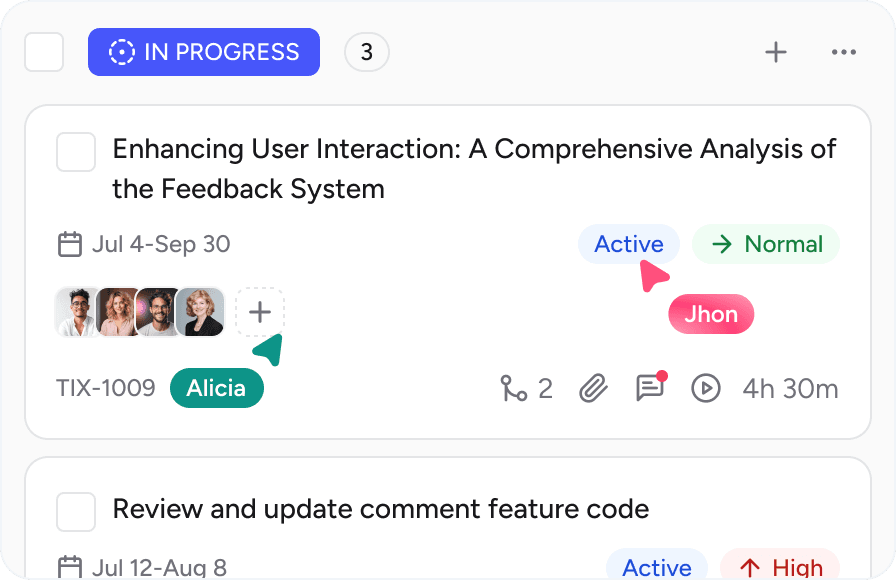
This is the backbone of your agency operation. Project and task management tools help you assign work, set deadlines, track progress, and keep every team member accountable. In an agency context, these tools need to support multiple client workspaces, recurring task templates, and clear ownership structures.
Top tools in this category in 2026 include:
- Asana: Strong for agencies that manage complex multi-phase projects with detailed dependencies. Its timeline view and workload management features have improved considerably over the last two years.
- Monday.com: Popular for agencies that want high visual flexibility. The board-based interface is intuitive for creative teams and the automation builder is genuinely useful.
- ClickUp: Arguably the most feature-dense option available. It works well for agencies that want to consolidate task management, docs, and reporting in one place, though the learning curve is real.
- Notion: Better suited for documentation-heavy agencies or those in early stages. It has evolved into a workable project tool but still lacks some of the structured workflow features that larger agency teams need.
2. Communication and Messaging
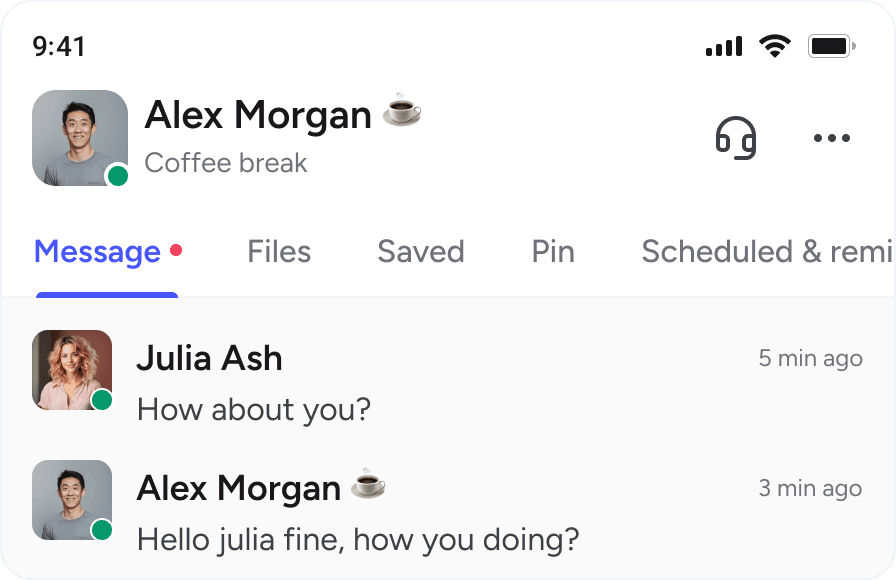
Real-time communication tools are essential for keeping teams aligned without defaulting to endless email chains. The key consideration here is not just internal team messaging but also how these platforms integrate with your client-facing communication.
- Slack: Still the market leader for team messaging in agency environments. In 2026, Slack's AI-powered summarization features have made it easier to catch up on channel activity without reading every message.
- Microsoft Teams: Gaining more ground in agencies that operate within enterprise client ecosystems. If your clients are primarily large corporations already using Microsoft 365, Teams reduces the friction of cross-organizational communication.
3. File Storage and Asset Management
For creative agencies, this category is critical. You need a place where assets live that is organized, searchable, and accessible to both internal teams and clients.
- Google Drive: Still widely used for its simplicity and integration with the Google Workspace ecosystem. Works best for document-heavy agencies rather than those managing large creative files.
- Dropbox: Remains a solid option for agencies dealing with large file sizes. The Dropbox Replay feature, which allows frame-accurate video feedback, has been a quiet game-changer for video production agencies.
- Bynder or Canto: Digital asset management platforms that make more sense for larger agencies managing brand assets across multiple client accounts at scale.
4. Client Collaboration and Approval Platforms
This is the category that most directly addresses agency client management. These tools are specifically designed to bring clients into the workflow in a structured, controlled way without giving them access to your entire internal system.
- Loom: Asynchronous video messaging that has become a staple for agencies delivering feedback walkthroughs and project updates without scheduling calls.
- Zight (formerly CloudApp): Screen recording and annotation tool that speeds up feedback loops on visual deliverables.
- Pastel or Markup.io: Website and design annotation tools that allow clients to leave comments directly on web pages or mockups, eliminating the vague feedback problem.
- AgencyAnalytics: Reporting and client dashboard tool used widely by digital marketing agencies. In 2026, its white-label capabilities and automated reporting have made it a standard part of the agency tech stack.
5. Time Tracking and Resource Management
Profitability is a collaboration issue. When your team is not tracking time accurately, you cannot scope future projects well, and you end up underpricing your work.
- Harvest: Clean, focused time tracking with invoicing built in. Integrates well with Asana, Basecamp, and other project tools.
- Toggl Track: Popular with agencies that want lightweight time tracking without a complex setup. The reporting features have improved significantly.
- Productive.io: Built specifically for agencies and combines time tracking, project management, budgeting, and utilization reporting in one platform. Worth serious consideration if you want to reduce tool sprawl.
How to Think About Agency Client Management Within Your Tool Stack
One of the biggest mistakes agencies make when building their collaboration stack is treating client management as a separate function from project management. In reality, these two things need to be deeply connected.
Think about what happens when they are not connected. A client sends an email with new feedback. That feedback gets copy-pasted into Slack, which gets mentioned in a task comment, which then gets interpreted differently by two different team members. By the time the work is done, no one is quite sure what was actually requested, and the client sees something that does not match what they meant.
The agencies that run the tightest operations in 2026 have built what we call a connected workflow. Here is what that looks like in practice:
- Clients have a dedicated portal or shared workspace where they can see project status, review deliverables, and leave feedback in context.
- Client feedback flows directly into the task management system, either through automation or through a disciplined intake process managed by a project manager.
- Every piece of client communication is logged or linked in the project record, so anyone on the team can get context without asking the account manager.
- Approvals are tracked formally, not just via email, so there is a clear paper trail if disputes arise.
Tools like Teamwork.com have been specifically built around this model. It is designed for agencies and includes both internal project management and client-facing features in one platform. For agencies managing 10 or more active client accounts, this kind of unified approach is worth the investment.
Another option is using a dedicated client portal tool like HoneyBook, Dubsado, or Portal.io alongside your primary project management tool. This gives clients a clean, branded experience while keeping your internal operations in the system your team already knows.
Building Your Agency Project Tools Stack: A Practical Framework
Choosing the right agency project tools is not just about picking the best-reviewed software. It is about choosing tools that fit your team size, your client type, your delivery model, and your budget.
Here is a framework for evaluating and building your stack:
Step 1: Audit What You Are Already Using
Before adding anything new, document every tool your team currently uses, what it is used for, how many people use it, and what it costs. You will often find significant overlap. Many agencies are paying for three tools that each do 60% of the same thing.
Step 2: Define Your Core Workflows
Map out the three to five core workflows that drive your agency. For most, this includes project kickoff, content or creative production, client review and approval, revision management, and project closeout. For each workflow, identify where the handoffs are and where things currently break down.
Step 3: Prioritize Integration Over Features
A tool with 10 features that integrates cleanly with your existing stack is more valuable than a tool with 50 features that requires manual data entry to stay current. In 2026, most major collaboration tools offer native integrations or connect through platforms like Zapier, Make, or native API connections. Prioritize integration capacity when evaluating new tools.
Step 4: Run a Real Pilot, Not a Demo
Demos are designed to show you a tool working perfectly. Pilots show you what it is like to use a tool when things do not go perfectly. Run any new tool with one real client project for 30 to 45 days before making a decision. Involve the people who will actually use it daily, not just leadership.
Step 5: Create a Governance Model
Tools fail when there is no one responsible for maintaining them. Designate someone on your team as the owner of each core tool. This person is responsible for ensuring it is set up correctly, that naming conventions are followed, that integrations are working, and that new team members are trained on it properly.
Real Examples: How Agencies Are Using Collaboration Tools in 2026
Example 1: A Mid-Size Digital Marketing Agency
A 35-person digital marketing agency based in Austin was struggling with client reporting and internal task management. They were using Google Sheets for project tracking, email for client communication, and a separate tool for reporting. After an audit, they consolidated onto ClickUp for internal project management, AgencyAnalytics for client reporting, and Slack for team communication. They created a standard operating procedure for how client feedback was received and converted into tasks. Within 90 days, they reported a 30% reduction in time spent on internal status update meetings.
Example 2: A Boutique Creative Agency
A 12-person creative agency in London was losing clients due to chaotic revision cycles. Clients were emailing feedback in unstructured formats, revisions were being missed, and projects were consistently going over scope. They implemented Markup.io for design feedback, Notion for project documentation, and Harvest for time tracking. They also created a formal revision request process using a Typeform intake form that fed directly into their project management system. Within two quarters, their average project overrun dropped from 22% to 7%.
Common Mistakes to Avoid When Implementing Agency Collaboration Tools
- Implementing too many tools at once: Change management is hard. Introducing more than two new tools in a single quarter usually leads to adoption failure on all of them.
- Choosing tools based on price alone: The cheapest tool that your team does not use costs more than a slightly more expensive tool that actually improves output.
- Not training clients on the tools: If your client portal or approval tool requires clients to create an account and learn a new interface, many of them will ignore it and default to email. Invest in a brief onboarding walkthrough for clients.
- Ignoring mobile usability: In 2026, a significant portion of client interactions happen on mobile. Make sure any client-facing tools you use are mobile-friendly.
- Skipping documentation: Every tool should have a one-page internal guide explaining how your agency uses it. Without this, team members default to their own interpretations, and the system breaks down.
What to Look for in Team Collaboration Tools for Agencies in 2026
The market has evolved. Here are the capabilities that matter most for agency-specific use cases right now:
- AI-assisted task creation and summarization: Tools that can convert a meeting transcript or a client email into structured tasks are saving agencies significant time in 2026.
- White-label client portals: The ability to present a branded client experience without requiring clients to understand your internal tool structure.
- Real-time utilization visibility: Knowing which team members are over-allocated before a deadline gets missed, not after.
- Automated reporting: Clients expect regular, consistent updates. Tools that automate reporting reduce the manual burden on account managers significantly.
- Granular permission controls: You need to be able to share specific information with specific clients without exposing other client data or internal team conversations.
The agencies that thrive in 2026 are not necessarily the ones with the most sophisticated tools. They are the ones that have made intentional choices about which tools to use and have built consistent habits around those tools across their entire team.
Your collaboration stack is not just a collection of software subscriptions. It is the operating system of your agency. Treat it like one.