Most leadership teams learn what is happening inside their own company through a filter. Status meetings, forwarded threads, and slides somebody assembled by hand on Thursday afternoon.
By the time the deck is ready, the number in it is a week old, and the person who actually knows the answer is not in the room.
Tixio removes the assembly step. The work and the report are the same object.
Why leadership visibility breaks down
- The weekly leadership meeting runs on recall. Each department head talks for six minutes about what they remember, and the meeting becomes an audio version of a status report nobody would have read anyway.
- The board pack is hand assembled. Somebody spends two days pulling numbers out of six tools into slides, and half of it is stale before the meeting starts.
- The quarterly OKR review has no source of truth. Progress is self reported, which means it is optimistic, which means the end of the quarter is a surprise.
- Decisions are never written down. The same argument about pricing or headcount happens three times, because nobody can find the thread where it was settled.
- Action items die in meeting notes. They get typed into a doc, the doc gets closed, and the item reappears next quarter as a complaint.
- Leaders ask for summaries instead of looking. Every request for a summary creates work for the team and hands you a filtered version of something you could have read directly.
What Tixio does for leadership teams
This is not another dashboard bolted on top of your tools. It is the same workspace your teams already work in, viewed from the top.
Boards: a leadership start page
Build one board that is the first thing you open in the morning. Live project widgets, links to the finance sheet and the analytics tool, this week's notes, the checklist of what you owe people. Bookmarks in groups, so you stop hunting through forty browser tabs for the hiring plan.
Projects: read the work instead of requesting a report
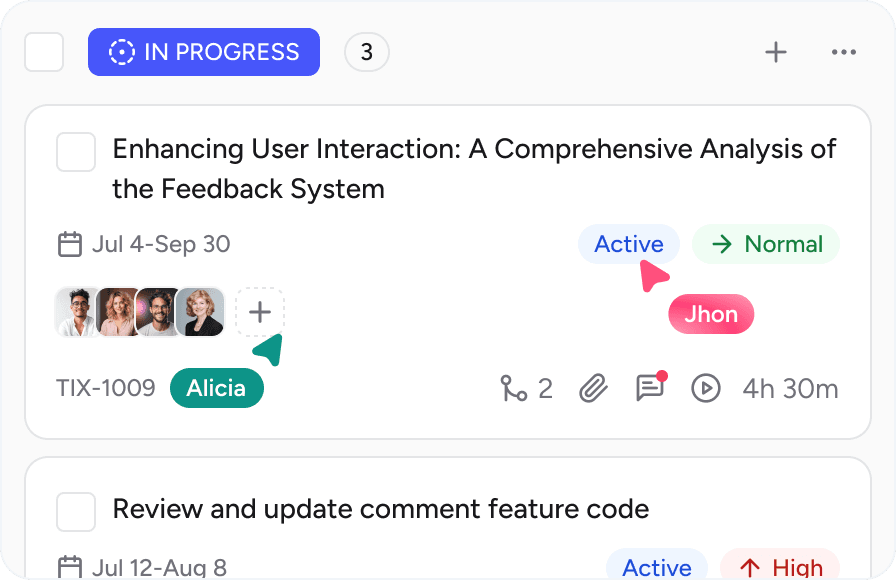
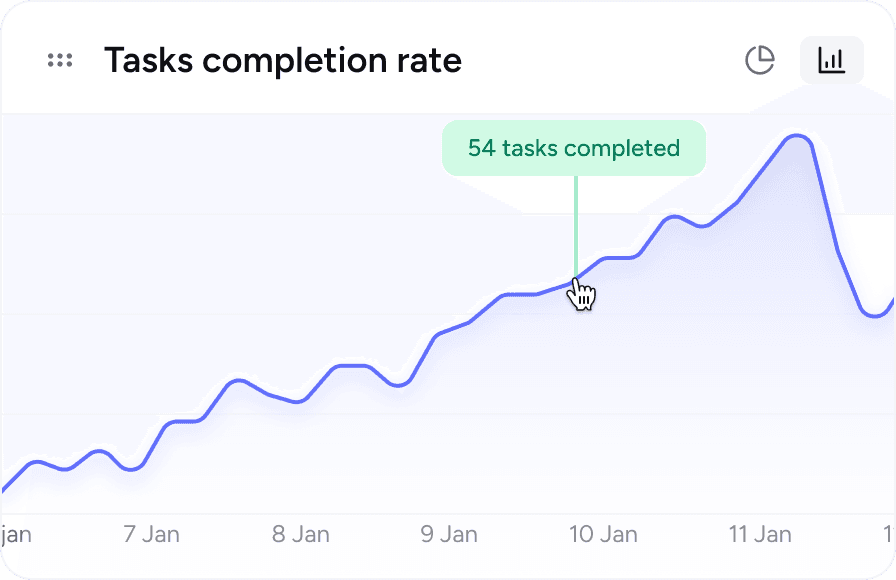
Every department runs its work in Tixio Projects, with List, Kanban, Calendar and Roadmap views. Project reports show what shipped, what slipped and where the time went, generated from the actual tasks rather than from someone's memory of them. You open the roadmap instead of asking a person to describe it.
Wiki: the decision log that ends the repeat argument
Keep one nested page per decision. What we chose, when, who decided, and what would have to change for us to revisit it. Add the strategy docs, the operating model, the department charters. Global search in Tixio Wiki means the answer takes ten seconds to find instead of living in a chat thread from March.
Meetings: decisions that survive the call
Tixio Meetings gives you native video with recording, AI transcription and summaries. Action items sync to tasks, so a commitment made at 10:40 on Tuesday becomes a tracked item with an owner rather than a line in somebody's notebook. The one to one agenda works the same way. Last time's items are already sitting there when you open it.
Chat: the fast lane, kept separate
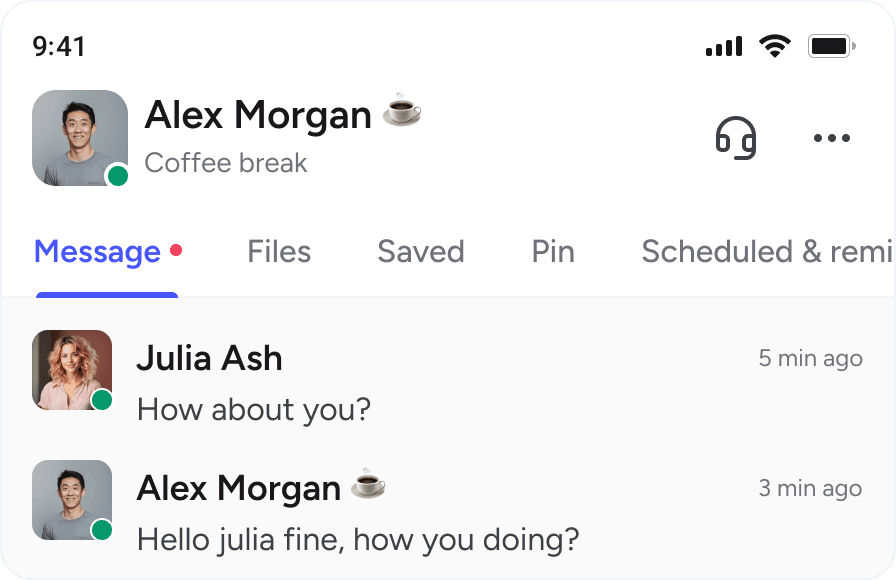
Channels, DMs and threads for the quick question, plus scheduled messages for the Monday note you write on Sunday. Because Projects and Wiki hold the durable material, Chat can stay disposable, which is the only thing chat is genuinely good at.
How a leadership week runs in Tixio
- Monday morning: open your Board. Project widgets show current status without anybody having prepared anything.
- Monday leadership meeting: run the agenda from a Wiki page with the roadmap open beside it. No slides.
- Tuesday: comment directly on the two projects that look off track. The owner replies inside the task, in context.
- Wednesday one to ones: open last session's meeting summary. The action items are already listed with their current status.
- Thursday: add the week's decisions to the decision log. Two lines each. This is the step everyone skips and later regrets.
- Month end: build the board pack from project reports and the OKR wiki page instead of rebuilding the numbers by hand.
- Quarterly: the OKR review reads the same data the teams have been working against all quarter, so nothing is a revelation.
Nobody spends Thursday making a status deck, because there is nothing left to assemble.
What you can stop paying for
A typical leadership stack is a project tool, a docs tool, a chat tool, a meeting recorder with AI notes, and a whiteboard. Per user, that usually lands somewhere between 45 and 70 dollars per person per month, and a good share of that spend goes on keeping the tools agreeing with each other.
Tixio Team is 9 dollars per user per month, or 6.30 dollars billed yearly. For a 40 person company that is about 3,024 dollars a year against roughly 25,000 for the separate stack. Enterprise adds SSO and SAML, audit logs, advanced analytics and API access. Full detail is on pricing.
The licence fee is the smaller saving. The larger one is the day a week your teams currently spend translating their work into reports for you.
Who this is for
Leadership teams at companies of roughly 10 to 500 people, where department heads already run their work in a tool and the real problem is that you cannot see it without asking. More than 1,000 companies run on Tixio today, most of them in that range.
This is probably not for you if what you want is a BI tool. Tixio will not replace your data warehouse or your financial reporting, and revenue, margin and cohort analysis belong somewhere built for them. Tixio covers the operational half: what people are doing, what was decided, and what is late.
It also will not fix a leadership team that does not want to be visible to itself. No software makes somebody log a decision they would rather leave vague.
Getting started
Start with the decision log. Create one Wiki page, write down the last five decisions your team has argued about more than once, and link it from the leadership meeting agenda. It takes about twenty minutes and it pays back faster than anything else here.
Then build the leadership board and put the three projects you worry about most on it as live widgets.
Tixio gives you 14 days of full access, free, no credit card required. Use it on your actual leadership meeting rather than a test project, because the point is not the tool, it is whether Thursday changes.
Related reading: Tixio for startups, Tixio for product managers, and Tixio vs Notion.