A grant report is due Friday, and the staff member who ran that programme left in March. Her notes live in an inbox nobody can open and a spreadsheet called final_v3.
Nonprofit teams lose more hours to reconstructing what happened than to running the work itself.
Tixio puts programme documentation, delivery, field communication and funder reporting in one workspace, starting at 2.80 dollars per person per month billed yearly.
Why nonprofit and NGO operations break down
- Institutional memory leaves with the staff. When a programme officer resigns, the reasoning behind the intervention design, the donor commitments and the local contacts usually go with them.
- Volunteer turnover is constant and unbudgeted. You onboard the same knowledge five times a year, and nobody is paid to write the onboarding down.
- Reporting turns into archaeology. The grant report is due, so somebody spends three evenings mining chat threads and email for numbers that should have been logged as they happened.
- Every tool costs restricted money. A 35 dollar per seat stack is not a licence decision in this sector, it is a line item a funder will ask about.
- Field and head office run on different systems. The field team check in happens on a phone, the programme log lives on a laptop, and the two never meet.
- Stakeholders need slices, not seats. A funder wants to see one programme and a partner org wants one workstream. Neither should get your whole workspace.
What Tixio does for nonprofits and NGOs
Six modules cover most of what a small mission driven organisation actually runs on.
Wiki: institutional memory that outlives the staff
Tixio Wiki holds the programme log, the M and E data collection protocol, the safeguarding policy and the donor commitments in nested pages with global search. When someone leaves, the handover becomes a link instead of a two hour meeting that covers a third of what mattered.
Page level permissions keep HR and safeguarding closed while the rest of the wiki stays open to volunteers.
Projects: programme delivery against grant deadlines
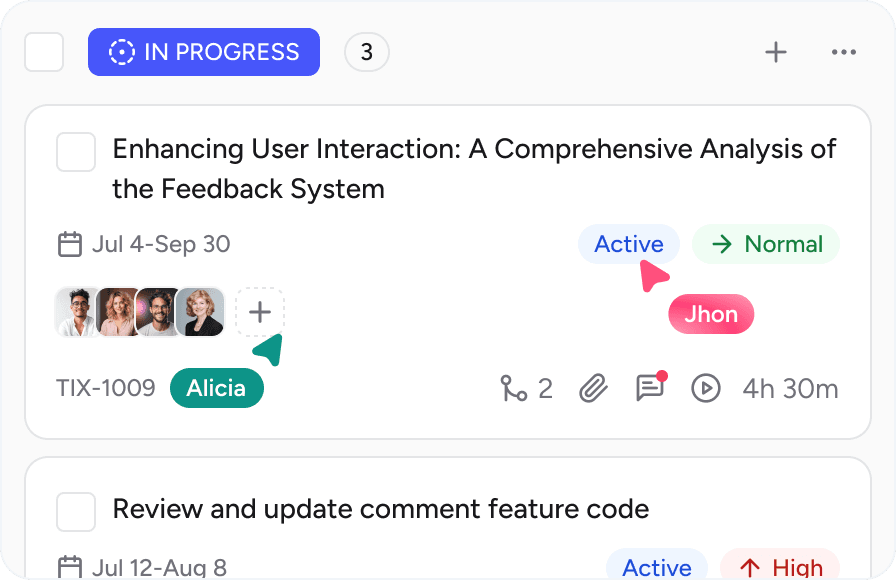
Tixio Projects runs delivery in List, Kanban, Calendar or Roadmap views. Recurring tasks carry the quarterly donor update and the monthly programme log review, so the reporting calendar exists whether or not anyone remembers it.
Custom fields let you tag every task to a grant code, which is the tag that matters when a funder asks what their money bought.
Chat: field teams and volunteers without another app
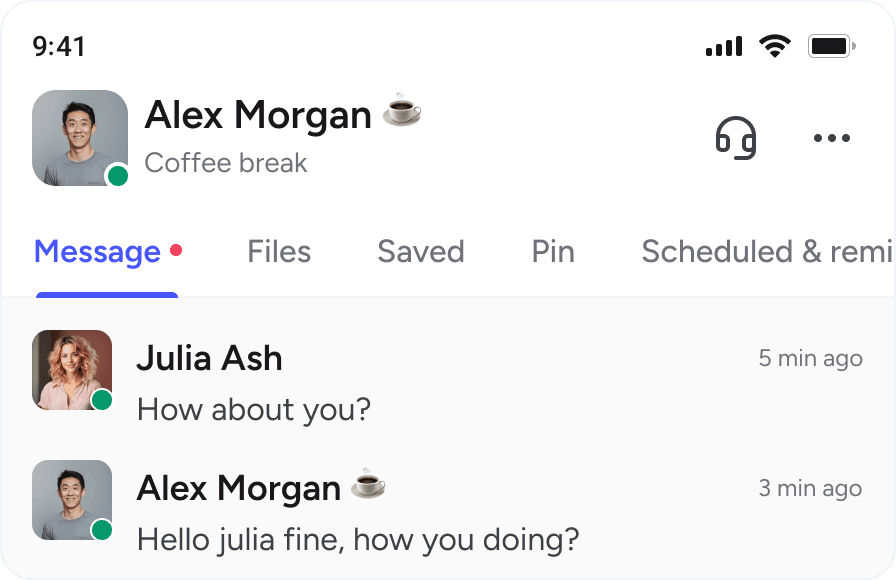
Chat gives each programme a channel, each site a channel, and volunteers somewhere to ask the question they would otherwise ask nobody. Voice messages suit the field team check in, where typing on a phone in bright sun is a losing game.
Scheduled messages handle the Monday volunteer rota reminder.
Boards: a start page a new volunteer can use on day one
Boards is a shared dashboard on an infinite canvas. Put the volunteer rota, the shift checklist, the safeguarding one pager, the expenses form and the three links people always ask for on a single board, then make it the start page.
New volunteers stop asking where things are, which is most of what onboarding actually is.
Canvas: theory of change and programme mapping
Canvas is a collaborative whiteboard for work that refuses to fit a task list. Map the theory of change, the stakeholder landscape or the referral pathway, with live cursors so a distributed team can build it in one session.
Export the result and it becomes a page in the board pack.
Connect: show a funder one programme, not your workspace
Tixio Connect shares a single Project, Wiki, Board, Canvas or Chat with people in another workspace. A funder can follow the programme board. A partner org can work inside the shared delivery project. Neither sees payroll, board minutes or your other eleven grants.
How a programme manager week runs in Tixio
- Monday morning: open the programme board, check the rota widget and the tasks due this week across three grants.
- Monday: post priorities in the programme channel, scheduled to land at 8am so the field team reads it before travelling.
- Tuesday: the field team check in arrives as voice notes and photos in the site channel, and the M and E numbers go into the data collection form linked from the wiki.
- Wednesday: a recurring task opens the monthly programme log review, written as a wiki page rather than buried in an email.
- Thursday: the donor update task pulls from that programme log, so writing it takes 40 minutes instead of a day.
- Friday: two new volunteers arrive, get the board link, and read the same onboarding page as everyone before them.
- Quarter end: the board pack is assembled from the project report and wiki pages that already exist.
What you can stop paying for
A typical small NGO stack is a wiki tool at 8 dollars, a project tool at 10, a chat tool at 7 and a whiteboard at 8. Call it 33 dollars per person per month, plus the hour a week each person loses moving between them.
Tixio Starter is 2.80 dollars per user per month billed yearly, or 4 dollars monthly. Team is 6.30 billed yearly and adds unlimited projects, Kanban, Roadmap and Calendar views, automations, unlimited Canvas and up to 20 guest users.
For a 15 person organisation on Team billed yearly that is roughly 1,134 dollars a year against about 5,940 for the separate stack. In restricted funding terms the difference is a part time field officer.
Who this is for
Tixio suits registered charities, NGOs, foundations and community organisations between 5 and 200 people who deliver programmes, manage volunteers and report to funders.
This is probably not for you if you need a donor CRM. Tixio does not handle donation processing, gift aid, legacy giving or supporter journeys, and we are not going to pretend otherwise. The Tixio CRM add on at 5 dollars per user is built for sales pipelines, so it is shaped around deals rather than donors. Small organisations do use it to track funders and partner orgs, and it works well enough for that, but if fundraising is your core operation you will keep a dedicated platform and run everything around it in Tixio.
Large international NGOs with strict data residency requirements should talk to us about Enterprise before committing.
Getting started
Pick your worst institutional memory problem, usually the programme only one person understands, and write it up as a wiki page this week. That single page is the argument for everything else.
Then take the 14 day trial with full access, no credit card required.
Related reading: Tixio for remote teams managing multiple clients, Tixio for education and edtech and Tixio vs Notion.