We build Tixio inside Tixio. Not as a marketing line, as the actual operating condition. There is no internal Slack, no separate Notion, no second project tool that the team quietly prefers. If something is broken in Tixio, we feel it before you do, usually on a Monday morning, usually in front of everyone.
This post is the honest version of what that looks like. Real numbers pulled from our own workspace we use everyday.
What our workspace looks like!
Tixio is our shared workspace, the one the whole group works in every day. These are live counts pulled from it, not a demo environment and not a rounded up marketing figure.
- 12 people in one workspace, we're a lean team
- 20 project boards
- 1400+ tasks and 2,300+ subtasks live in the system.
- 10 automations doing the repetitive parts nobody wants to own.
- 363 wiki pages across 63 folders.
- 12 chat channels.
- 25 boards used as daily start pages.
- 12 people on the HR module, every seat occupied.
- 3 seats on CRM
None of that was built for a screenshot. It accumulated because this is where the work happens.
Why we ended up dogfooding this hard
The uncomfortable truth is that we did not start out disciplined about it. Early on we used Tixio for some things and other tools for the rest, the way most companies do. It felt reasonable. It was also the fastest way to never find our own bugs.
The turning point was a specific realisation. We were building a product whose entire promise is that you should not need seven tools, while running the company on seven tools. That is not a strategy problem, it is a credibility problem. So we moved everything in and set one rule.
If we need something Tixio cannot do, we either build it or we change how we work. We do not go buy a second tool.
That rule has been uncomfortable more than once. It has also been the single most useful product input we have.
What using it daily catches that testing does not
A test suite checks whether a feature works. Daily use checks whether a feature is worth using. Those are different questions and only one of them gets answered by QA.
The pattern of what dogfooding surfaces is remarkably consistent, and it is almost never dramatic.
- Friction that only appears at volume. A feature that is pleasant with 12 tasks becomes tiring at 900. You do not find that in a test environment, you find it in month four when someone quietly stops using the view you were proud of.
- The step nobody mentions in feedback. Customers report the bug that blocks them. They do not report the extra click they do forty times a day, because they have stopped noticing it. We notice it, because we are also doing it forty times a day.
- Defaults that are wrong for real teams. Almost every default we have changed was changed because our own team kept overriding it. If your own people configure around a default, the default is wrong.
- Features that sound good and get used twice. Being your own customer makes it hard to lie to yourself about adoption. The usage data for our own workspace sits right next to the roadmap.
The uncomfortable side of this is that it also makes us defensive about the things we personally use. A team that lives in its own product can mistake its own habits for universal ones. We try to correct for it by weighting customer interviews above internal opinion when the two disagree, and we do not always get that balance right.
How we use it?
PRD (Product Requirement Documents)
We use Tixio wiki to create our PRDs, and honestly we don't remember last time we used Google docs or any other platform. It has now become a habit. We create wikis, connect the links easily to a task in a sprint, so developers can find them easily. It doesn't require us to copy the link and paste it in Jira anymore, saving a mammoth time everyday.

Managing Sprint for Product Development
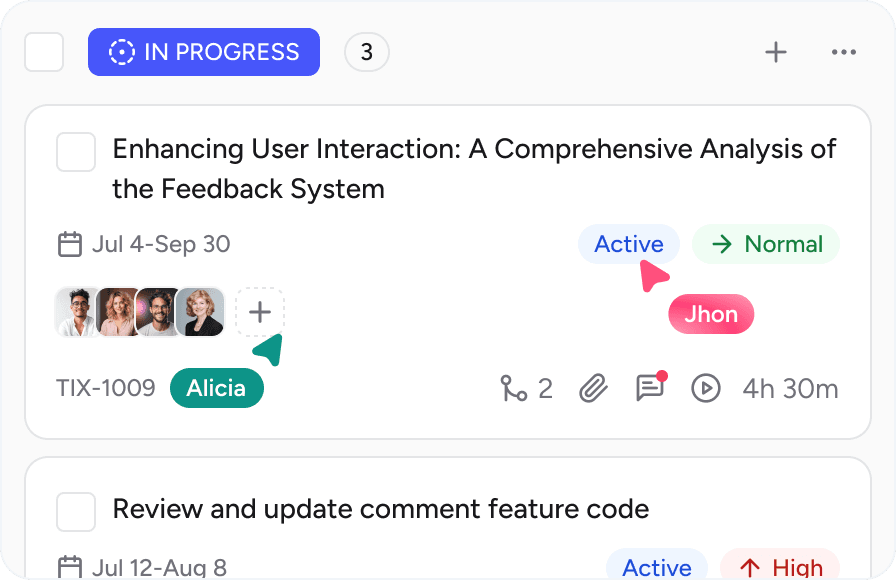
Our team follows Agile methodologies for product management. So we manage our sprint inside Tixio. It's easy to manage - backlog items can be dragged easily. Sprint reports give us quick overview on burndown, velocity and productivity.
For our ease of work we go further down batching tasks relevant to a big releases we plan next - for example - HR, CRM add-ons, mobile app release etc.

Planning & Wireframing
Planning is a big part of product requirement. Every feature we deliver starts with a simple planning- which eventually grows big along the time and input from all members. We use Tixio Canvas to doodle the idea - then over time, more and more ideas come through wireframes, product flow charts, RICE matrix, it becomes our ultimate whiteboard to go to whenever we have something in mind.

Roadmap
The entire product roadmap sits inside Tixio - easy for management to see what we're planning next, without having to ask for update each week. The roadmap defines how each item is shipped across the next quarter through easy to understand Gantt chart.

Chat
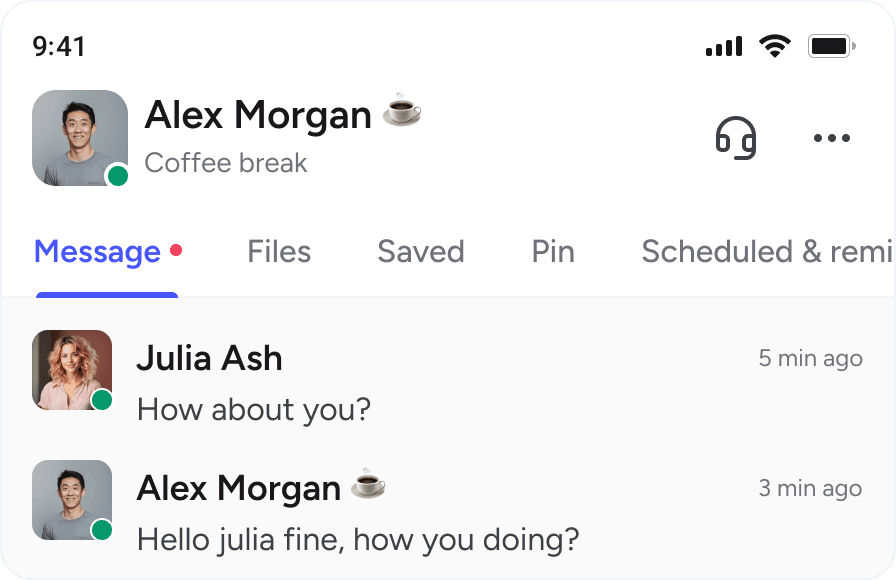
We don't use Slack anymore! Save a lot of money honestly, because why using another tool rather than our own. It happened after Slack started charging us to find our own chat history. As a software development team, some of the discussions often gets buried in chat groups 6 months ago. But it hurts when you have to pay for it. That's the time our entire team cancelled Slack subscription and moved to Tixio. It's all the same - feature wise as well as experience wise - plus you don't need to pay to access older chat histories. We have channels for each team, global channel for announcements, bug report & feedback channel for product team and many more!
Meetings
We recently launched meetings, and heavily using it. We run our weekly calls, daily stand-ups, stakeholder meetings in Tixio. Why? Because our meeting details, recordings and notes no longer sits in somebody elses Google drive. We all have access to it and at any point of time we can go back and see when we made a decision or had a discussion about something crucial.
Marketing and content
The content calendar is a project in Calendar view. Each piece is a task with custom fields for channel, target keyword, owner and publish date. The brief sits on the task. The draft sits on the task. The three rounds of feedback sit on the task. Nothing lives in an email thread.
Our brand guidelines, tone rules, keyword map and competitor notes are wiki pages. When a freelance writer joins for a project, onboarding is a link, not a call.
Boards do more work here than people expect. The marketing board has the analytics links, the publishing queue, the current campaign checklist and a notes widget, all on one canvas. It is the first tab of the day for that team.

Sales
Sales runs on the CRM add on, 16 people using it daily. Leads come in, move through the pipeline in Kanban, and every call and email is logged against the contact.
The part that only works because it is one platform: when a deal needs a technical answer, the salesperson does not forward an email to engineering and wait. They tag the person in a channel that already exists, and the answer lands next to the deal. Cross department context is the entire argument for consolidation, and sales is where you feel it first.

Customer support and success
Support keeps a wiki section that is effectively our internal answer bank. When the same question arrives three times, it becomes a page. When a page gets long, it becomes a help centre article on the public help guide.
Escalations run as tasks in a shared project that both support and engineering can see. There is no ticket handoff into a black box. The support person who raised it watches it move.

HR and people operations
All 41 HR seats are occupied, which makes this the module we stress test hardest without meaning to. Attendance, leave requests, contracts with version history, onboarding checklists and the org chart all run in Tixio HR.
The onboarding checklist is the piece we would defend loudest. A new person gets a project with their first two weeks already mapped, the accounts they need, the wiki pages they should read in order and the people they should meet. Nobody has to remember to set it up, because it is a template.

Leadership
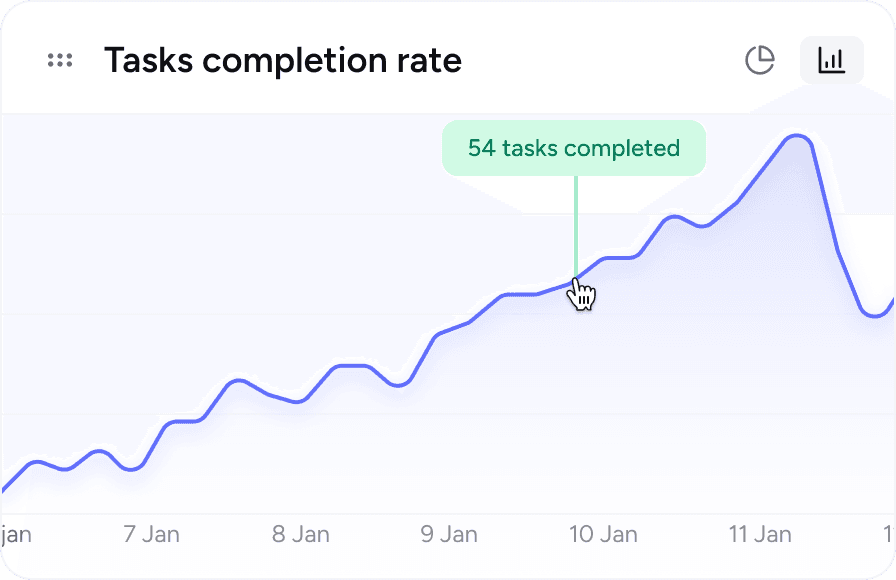
Leadership does not get a special dashboard, and that is deliberate. They look at the same project reports the teams work in.
The effect is that nobody spends Thursday afternoon building a status deck for Friday. The work and the report are the same object. If a leader wants to know where something stands, they open the project instead of asking a person to summarise it, which means the person keeps their afternoon.
Decisions get written down as wiki pages with dates. This is boring and it is the highest leverage habit we have. It stops the same argument from happening three times in six months.
What working across companies taught us
Tixio is not individualistic. We need to share ideas, proposals, guidelines with our B2B clients, and since all of them has a Tixio workspace, it is where Tixio Connect came from. We needed to share a specific project or wiki page with a partner organisation without giving them access to everything, and no amount of clever permission setup solved it properly.
So we built cross workspace sharing, because we were the ones being annoyed by its absence. That is what dogfooding actually produces. Not big visionary features, but the unglamorous ones that remove a daily friction you have stopped noticing you have.
Revolutionizing our process with Tixio MCP
The moment we launched our MCP on Claude and ChatGPT, it became a game changer. Not only for customers, more for ourselves. We never belived in the traditional method tools are using AI for - creating meeting summary, creating a document or using for search or summary across workspace data. That's not the rwal use case for AI, it could do more. So we built our MCP that operates right from your own AI system.
From automation to generating work inside the workspace, updating project boards, documents in fact getting custom reports from projects - which previously required a month of developer work- now done in seconds through MCP. All we need to do is connect and ask! The possibilities are endless, depends on how creatively you can use it.
What this costs us
If we ran this team on a typical stack, it would be a chat tool, a docs tool, a project tool, a whiteboard, an HR system and a CRM. For our team, that is comfortably past 80 dollars per seat per month once you add the modules everyone eventually needs.
Our actual stack is one platform at 6.30 dollars per user per month on the annual Team plan, plus 5 dollars each for HR and CRM on the seats that use them. The software line is not the main saving though. The main saving is that nobody maintains six sets of permissions, six invite flows and six onboarding checklists.
Should you do this
If you are running four or more tools that all claim to be your team's home base, probably yes, but not all at once. Move one thing first. We would suggest documentation, because a wiki is the lowest risk migration and the highest immediate relief. Then move projects. Chat moves last, because chat is habit and habits move slowly.
And if you try it and find something Tixio cannot do, tell us. There is a reasonable chance we are already annoyed by the same thing, because we are in here every day too.
You can start with 14 days of full access, no credit card required, or book a demo and we will show you our actual workspace rather than a staged one.