An accreditation self study runs for eighteen months and lives in a shared drive nobody can navigate. The admissions cycle runs on a spreadsheet and a mail folder. The staff handbook has four live versions and three of them are wrong.
Education runs genuinely complex operations on tools that were built for something else.
Tixio is one workspace for how an institution runs itself. Not for how students learn.
Why education operations break down
- The document of record keeps moving. Curriculum maps, the safeguarding policy and the staff handbook get emailed as attachments, so nobody is sure which version an inspector would actually see.
- Everything is on a term cycle, but nothing is set up that way. Timetable checks, module reviews and re-enrolment reminders get rebuilt from scratch every term because last term's plan lived in someone's inbox.
- Permissions are all or nothing. Governance minutes, salary bands and disciplinary notes sit in the same drive as the shared lesson planning folder, so admin either locks the whole thing or opens it to everyone.
- Staff turn over every academic year. Adjuncts, teaching assistants and visiting lecturers arrive in September and leave in June, and their onboarding is a folder someone rebuilds by hand each time.
- Admissions is a pipeline that nobody calls a pipeline. Enquiry, open day, application, offer, deposit, all tracked in a colour coded spreadsheet that one person understands.
- The stack grew department by department. Finance bought one tool, the faculty bought another, marketing bought a third, and no two of them talk.
What Tixio does for education and EdTech teams
Six modules cover most of what an institution actually runs on. You do not need all of them on day one.
Tixio Wiki: the policy library that stays current
Tixio Wiki holds the staff handbook, the assessment policy, the curriculum documentation and the accreditation evidence in nested pages with real search. Page level permissions matter here more than anywhere else. The academic team sees the curriculum library. Only senior leadership sees the governance minutes and the HR policy set. Same workspace, different view, no second drive.
Tixio Projects: admissions, accreditation and term planning
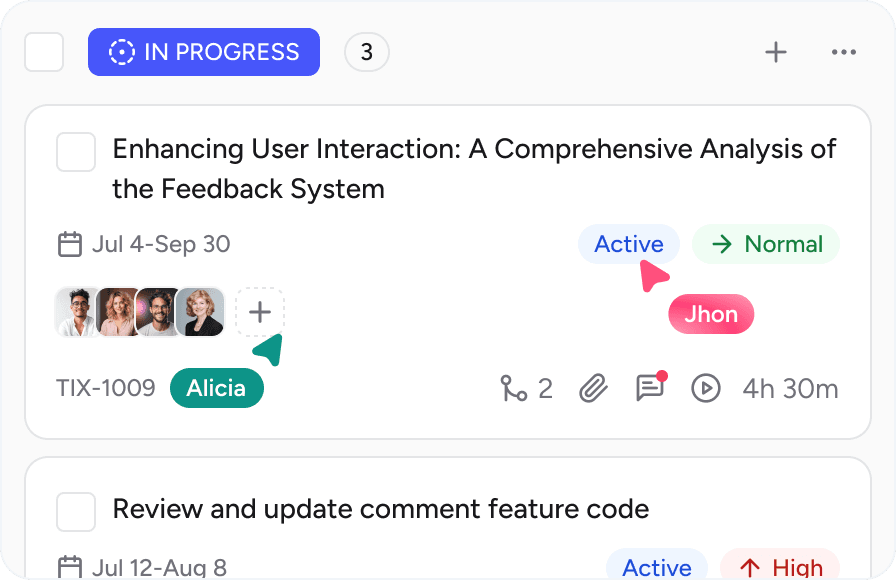
Tixio Projects handles the work that runs on a calendar. Admissions intake moves through a Kanban board from enquiry to enrolled. Accreditation prep gets a roadmap view with every standard as a task and a named owner. Recurring tasks cover the things that come back every term, so the timetable audit and the module review reappear without anyone remembering to create them.
Chat: department channels instead of a staff room group thread
Chat gives each department, campus and committee its own channel, with threads so the timetable argument does not bury the fire drill notice. Scheduled messages are useful for term start announcements you write in August and send in September.
Tixio Meetings: faculty meetings with a record
Tixio Meetings records faculty and department meetings with AI transcription and summaries, and action items sync straight to tasks. The person who normally takes minutes gets to participate instead. The summary lands in the Wiki page for that committee.
Canvas: curriculum mapping and programme design
Canvas is where a new programme gets drawn before it gets written up. Map modules against learning outcomes, work out prerequisites, plot a three year progression, all on an infinite whiteboard with live cursors so the whole design group can be in it at once.
Boards: a start page per department
Boards gives each department one page with the term calendar, the links people actually use, the current to do list and an embedded view of whatever system they check daily. New staff get a starting point instead of a list of URLs in a welcome email.
Tixio HR: for a workforce that changes every September
Tixio HR is a paid add on at 5 dollars per user per month. It holds staff records, contracts with version history, leave management and onboarding checklists. For an institution that hires a cohort of adjuncts each academic year and offboards them nine months later, the checklist is the whole point.
How an academic term runs in Tixio
- Before term starts, the term planning project opens from a template. Recurring tasks for the timetable audit, room allocation and module review are already there with owners and dates.
- New teaching staff hit the onboarding checklist in Tixio HR. Contract, equipment, system access, handbook acknowledgement, all tracked in one place instead of four.
- Each department Board is refreshed with the term calendar and the current documents, so anyone landing on it sees the state of play.
- Admissions runs its own project. Applications move through the pipeline, and each applicant record carries the custom fields the registrar cares about.
- Faculty meetings run in Tixio Meetings. The summary and action items post to the department Wiki page, and the actions become tasks.
- Policy changes are edited in the Wiki with comments in the margin, so the revision history is the audit trail. No document called handbook_final_v3_REVISED.
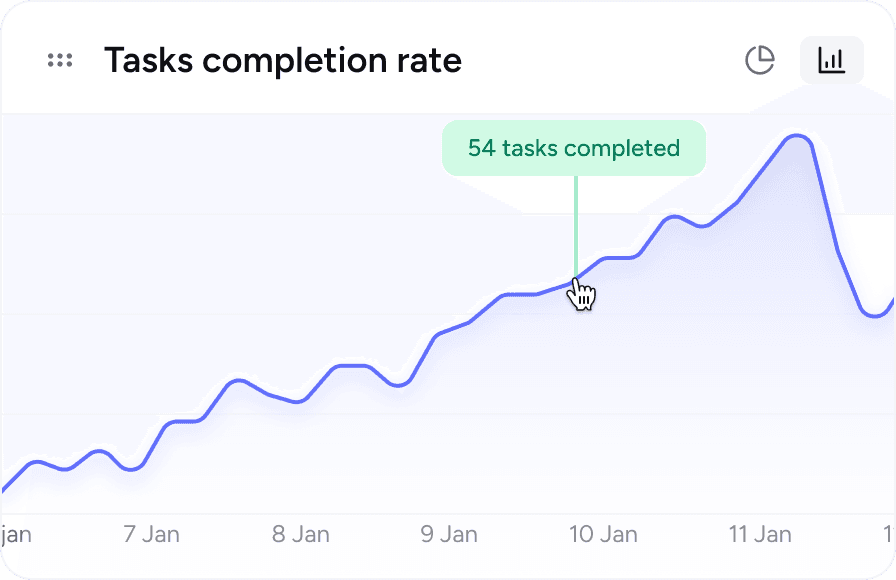
- At term end, the project report shows what shipped, what slipped and what to change before next term.
What you can stop paying for
Most institutions we talk to run a wiki tool, a project tool, a chat tool, a video tool, a whiteboard tool and an HR system. Bought separately at list price, that combination usually lands somewhere between 40 and 60 dollars per user per month.
Tixio Team is 9 dollars per user per month, or 6.30 billed yearly. Add HR at 5 dollars and CRM at 5 dollars if you need them.
For a 40 person administrative and teaching team on annual billing with the HR add on, that is roughly 452 dollars a month for the lot. Full pricing is on the pricing page. There is no free forever plan. There is 14 days of full access with no card required.
Who this is for
Tixio fits schools, colleges, universities, training providers and EdTech companies that need to run their own operations properly: the admissions cycle, the accreditation file, the policy library, the department calendar, the staff records.
Now the honest part. Tixio is not an LMS and it is not a student information system. It does not do grading, enrolment records, transcripts, attendance registers or student assessment. If you are looking to replace Canvas LMS, Moodle, Blackboard, PowerSchool or Banner, this is the wrong tool and we would rather you knew that now.
This is probably not for you if your main problem is student facing. It is for you if your main problem is that thirty staff cannot find the current version of a document.
Getting started
Start with the Wiki. Move the staff handbook and the policy library in first, set page level permissions so leadership content is separated from general staff content, and see whether people stop asking where things are. That answer usually arrives inside a week.
Then open one project. Admissions or accreditation, whichever is currently causing the most email.
Every plan comes with 14 days of full access, free, no credit card needed.
Related reading: Tixio for HR ops, Tixio for NGOs and nonprofits, and Tixio vs Notion.