A restaurant group's operating manual usually lives in three places: a binder in the back office, a WhatsApp group, and the head of whoever has worked there longest.
Two of those leave when the person does. You train someone properly, they hand in notice four months later, and the next hire learns the prep for your best selling dish from whoever is standing nearest the pass.
Tixio gives a multi site food and beverage group one place for the spec cards, the opening and closing checklists, the food safety logs, the rota and the training material, so the version being used at site four is the version head office actually wrote.
Why multi site hospitality operations drift
- Turnover erases the training. You invest two weeks in a new starter, they move on within the year, and the knowledge leaves with them because it was never written down anywhere findable.
- The spec card and the plate stop matching. Site one garnishes it one way, site three does it another, and nobody notices until a guest posts the photo.
- Compliance sits on paper. Fridge temperature logs, cleaning schedules and allergen matrices get filled in on clipboards, then sit in a drawer no area manager can check without driving over.
- Managers are on the floor, not at a desk. A general manager during service is not opening a laptop, so the shift handover note gets said out loud and forgotten.
- Menu changes roll out at nine different speeds. Head office sends a PDF on Monday, two sites read it, one prints the old version, and the supplier order goes in wrong.
- Everything is visible to everyone, or to nobody. Gross margin per dish ends up in the same shared folder as the cleaning rota, so the folder gets locked and the team stops opening it.
What Tixio does for hospitality and restaurant groups
Six parts of Tixio do most of the work for a food and beverage group. Ignore the rest until you need it.
Tixio Wiki: the recipe book that stays current
Wiki holds recipes, spec cards, brand standards, allergen information and training material as nested pages with real time co-editing and global search. Page level permissions mean head office sees margin and supplier pricing while site teams see the method, the plating photo and the allergen note. Change the sauce once and every site sees the new version on the next shift. A new starter gets pointed at a page, not a binder.
Tixio Projects: menu launches, site openings and the checklists that repeat
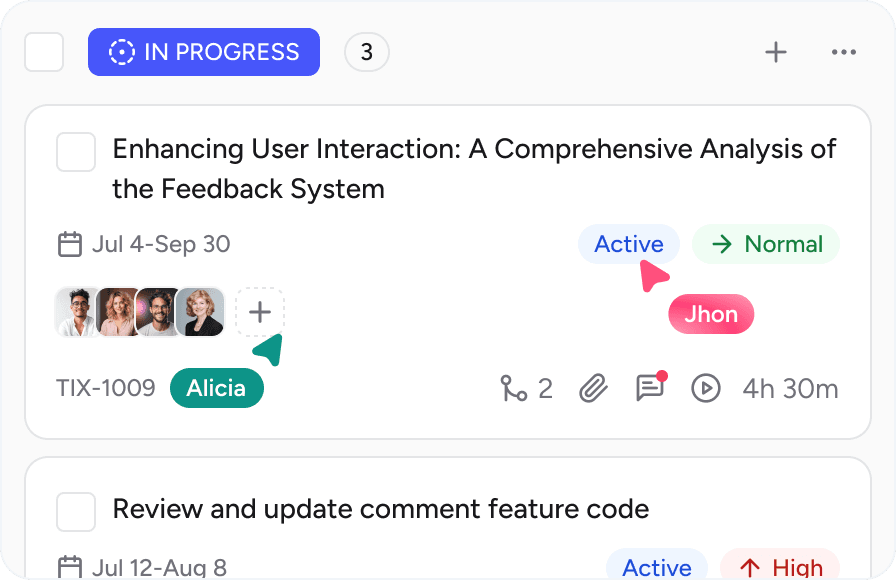
Projects runs the work with a deadline and the work that happens every day. A menu launch gets tasting, costing, print, photography and staff briefing as tasks with owners and dates. A new site opening gets a roadmap from lease signature to soft launch. Opening checks, closing checks and weekly deep cleans become recurring tasks that reappear on the right day at the right site, with custom fields for the temperature reading and who signed it off.
Tixio HR: attendance, leave and onboarding for an industry that churns
Tixio HR is the heaviest lift here, and it is a paid add on at 5 dollars per user per month. It covers attendance and time tracking, leave requests and approvals, contracts with version history, equipment, and onboarding and offboarding checklists. When you hire forty people a year across six sites, the same onboarding checklist firing for every starter is the difference between real training and a shrug.
Chat: for people who are holding a tray
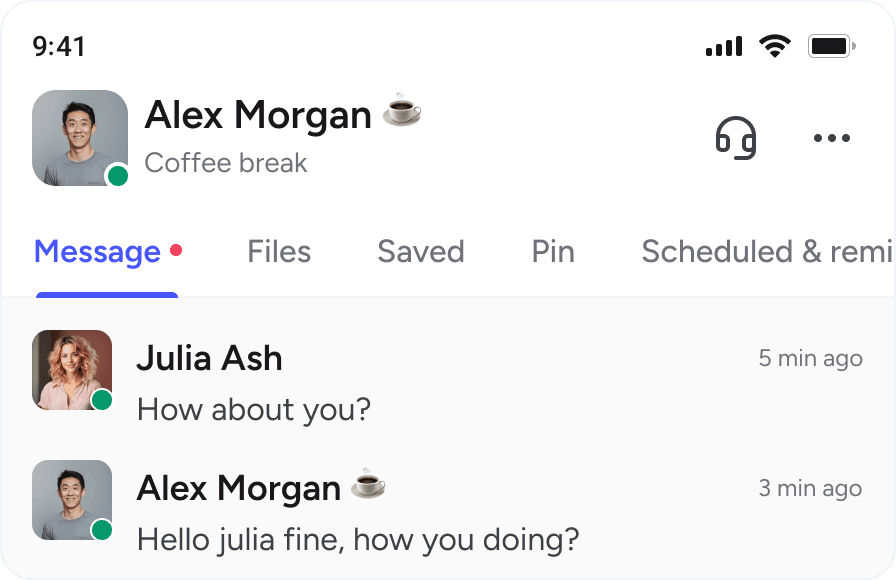
Chat gives you channels per site, a group for general managers, DMs, threads, file sharing and voice messages, on iOS and Android. A duty manager records a fifteen second voice note about the walk in fridge instead of typing it. Scheduled messages let head office write the Friday briefing on Wednesday and have it land when the team reads it.
Boards: the shift start page
Boards is the dashboard your team opens at the start of a shift. Today's checklist, the current promotion, the rota, a link to the supplier ordering portal and a notes widget for the handover, on one canvas per site. It replaces the printout taped by the till.
Tixio Meetings: the weekly ops call that leaves a trail
Meetings gives you native video with recording, AI transcription and summaries, plus notes and action items that sync to tasks. The Monday area manager call stops being six people reading numbers aloud and starts producing five assigned actions with dates.
How a multi site ops week runs in Tixio
- Monday, each site opens its Board and works the opening checklist as a recurring task, logging fridge temperatures in a custom field.
- The area manager runs the weekly ops call in Meetings, and action items land in Projects with owners before anyone leaves.
- A menu change is drafted in Wiki, the spec card and allergen note are updated on the existing page, and the old version stays in history.
- The rollout project fires tasks to every site: print, brief, order, update the display. Head office sees which sites have ticked which task.
- New starters get an onboarding checklist in Tixio HR and the training section of the Wiki, so day one is the same at every site.
- Supplier orders and stock counts run as recurring tasks with a due day, so nobody remembers the order at eleven at night.
- Friday, the handover note goes in the site channel in Chat, and the week's compliance checklists are already visible to the area manager without a site visit.
What you can stop paying for
The typical group runs a documentation tool, a task tool, a chat tool, a checklist app, an HR or rota tool and a shared drive nobody trusts. That is easily 30 to 45 dollars per user per month, and six logins for a bar supervisor who wanted one.
Tixio Team is 9 dollars per user per month, or 6.30 dollars billed yearly, and covers Wiki, Projects, Boards, Chat, Canvas and Meetings. Add Tixio HR for 5 dollars. For a 40 person group on yearly billing that is roughly 452 dollars a month for the whole stack.
Who this is for
Tixio fits independent restaurant groups, cafe and bar chains, hotel food and beverage teams and franchise operators running two to fifty sites, where head office writes the standard and sites follow it.
This is probably not for you if you want a POS, a reservation or booking system, a food safety certification platform or payroll processing. Tixio is none of those. It stores contracts and salary records, it does not run payroll or file anything with a tax authority, and it does not talk to your till. It is the operations layer above those tools. If you run one site with four staff, a shared note is enough.
Getting started
Start with one thing: put your ten highest volume recipes and one opening checklist into Wiki, give one site access, and watch what they ask for. That surfaces every gap in your documentation within a week.
Tixio gives you 14 days of full access, free, no credit card required. Set up one site, not all of them.
Related reading: Tixio for HR ops, Tixio for construction and Tixio vs Notion.