The maintenance technician who knows why line 3 drifts out of tolerance after a wet week has been here 31 years. He retires in March. None of it is written down.
Manufacturers usually run production on solid systems and run everything around production on paper, spreadsheets and memory.
Tixio is the documentation and coordination layer next to your ERP and MES, where the work instructions, the changeover steps, the shift handovers and the audit evidence actually live.
Why the gap between shop floor and office keeps costing you
- Work instructions exist in three versions. One laminated at the station, one in a shared drive folder, one in somebody's email, and nobody is sure which is current.
- Changeover knowledge is tribal. The procedure that takes 90 minutes with the right operator and four hours with the wrong one lives in one head.
- Preventive maintenance drifts. The schedule is a spreadsheet somebody built in 2019 and the reminder is whoever happens to remember.
- Non conformance reports stall. An NCR gets raised on the floor, photographed on a phone, emailed to quality, then sits there while the containment decision waits on a reply.
- Shift handover is verbal. What actually happened on nights reaches days as one sentence in the car park.
- Audit evidence gets rebuilt from scratch. Every ISO 9001 surveillance visit turns into two weeks of hunting for training records and revision history that should have been one click.
- Improvement ideas never get logged. The operator who fixed a recurring jam with a piece of shim stock tells three people and it dies there.
What Tixio does for manufacturing and industrial teams
Pick the modules that match how the plant actually runs. Most sites start with two.
Tixio Wiki: one current version of every work instruction
This is the highest value use here, because tribal knowledge is the real risk. Work instructions, standard operating procedures, changeover steps and setup sheets live as nested pages with version history, so you can see who changed a torque spec and when.
Page level permissions keep the quality manual read only for the floor and editable by the people who own it. Global search on mobile means an operator finds the right procedure in seconds instead of walking to a binder.
Tixio Projects: maintenance, corrective actions and new product introduction
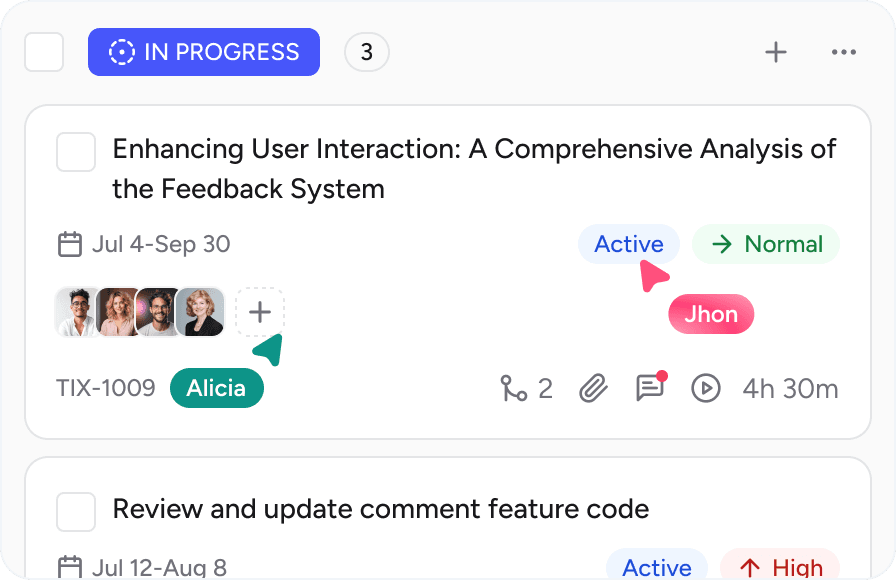
Preventive maintenance becomes recurring tasks with owners and due dates instead of a spreadsheet nobody opens. Corrective actions from an NCR get tracked to closure with custom fields for root cause and verification.
NPI runs as a project with a roadmap view, so tooling, first article and sample approval dates are visible to everyone. Audit prep becomes a checklist you run rather than a fire drill.
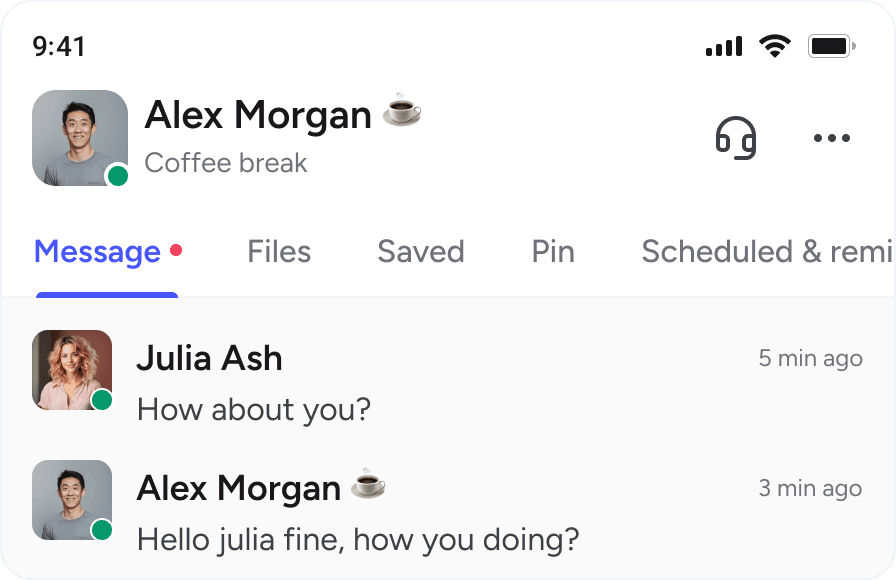
Chat: shift handover that survives the shift
Channels per line or per shift keep handover written down. A voice message from the floor takes ten seconds when typing with gloves on does not work, and a photo of the actual defect beats a paragraph describing it. Threads keep one problem in one place.
Canvas: process and value stream mapping
Map the process on an infinite whiteboard with the people who run it, not in a diagramming tool only engineering can open. Value stream maps, layout changes and problem solving sessions stay editable and stay linked from the Wiki page they belong to.
Tixio HR: attendance, shift patterns and the skills matrix
The paid HR add on covers attendance and time tracking against shift patterns, plus skills tracking and training records. That last part matters more than it sounds. When an auditor asks for evidence that the operator running the press was trained on the current revision, you want a record, not a memory.
Boards and Meetings: the daily production meeting
A Board gives each area a start page with the day's priorities, open NCRs, downtime notes and the links people actually use. Meetings covers the daily stand up across sites with recording, AI transcription and action items that become tasks instead of a notebook page nobody reads again.
How a week runs for a production manager
- Monday morning, open the plant Board and review weekend downtime notes and open corrective actions before the production meeting.
- Run the daily meeting from that Board, or in Tixio Meetings for a second site, and let action items turn into tasks with owners.
- A defect appears on line 2. The operator posts a photo in the line channel and quality raises the NCR as a task with the containment decision recorded on it.
- The affected work instruction gets updated in the Wiki, with version history showing what changed and who approved it.
- Preventive maintenance tasks come due automatically and completion is timestamped by the person who did the work.
- Thursday, review the NPI roadmap with engineering and track the open supplier quality issue as its own task with the supplier response attached.
- Friday, log the week's continuous improvement ideas as tasks in a backlog, so the shim stock fix gets tested instead of forgotten.
What you can stop paying for
The usual plant stack: a document system or intranet for procedures, a chat tool, a maintenance spreadsheet or light CMMS, a whiteboard tool, a separate training tracker and a shared drive holding whatever is left.
For 60 people on the Team plan at 9 dollars per user per month that is 540 dollars monthly, or 378 dollars at 6.30 per user billed yearly. Add Tixio HR at 5 dollars per user for attendance and training records and you are still under most single tool document management quotes.
Starter at 4 dollars per user per month, or 2.80 billed yearly, covers unlimited wikis, boards, bookmarks and time tracking if you want the documentation layer first and nothing else.
Who this is for
Manufacturers and industrial teams of roughly 20 to 500 people: contract manufacturers, fabrication shops, food and beverage plants, plastics and moulding, electronics assembly, and industrial services firms with technicians in the field.
This is probably not for you if you are shopping for an ERP, an MES or a QMS. Tixio does not run production scheduling, does not track inventory or bills of material, does not collect machine data and does not produce SPC charts. It is the documentation and coordination layer that sits next to those systems. If nobody can find the current work instruction, Tixio helps. If the problem is capacity planning, it does not.
Getting started
Put your ten most used work instructions into a Tixio Wiki this week, with page level permissions set so the floor reads and quality edits. That one step usually reveals how many conflicting versions were in circulation.
Then run one line's shift handover in a Chat channel for two weeks and compare it against what the verbal handover used to deliver.
You get 14 days of full access, free, with no credit card required.
Related reading: Tixio for construction, Tixio for logistics and Tixio vs Confluence.