You know the drill. A client pings you on Slack. The brief lives in Notion. The task is in Asana. The invoice is in FreshBooks. The contract is somewhere in Google Drive - probably in a folder someone named "Final_FINAL_v3."
And somehow, you're supposed to run a tight, innovative agency on top of all that.
The issue with "too many apps" is real. And for agencies that position themselves as technology leaders, there's something deeply ironic about drowning in a dozen disconnected tools while pitching clients on smarter, leaner operations.
Here's exactly how agencies are cutting their app stack in half in 2026 - and what that looks like in practice with Tixio.
The Stack Problem Is Worse Than You Think
Most agencies don't realize how bloated things have gotten until someone new joins and asks, "Wait, which tool do we actually use for X?"
The average knowledge worker switches between apps more than a dozen times per day. Every switch costs focus. Every new login adds friction. Every siloed tool creates a gap where context gets lost.
For a technology agency, this isn't just annoying. It's a credibility problem. You're selling clients on efficiency and modern operations, but internally, your team is duct-taping five tools together to run a single project.
The fix isn't another integration. It's consolidation.
What "Cutting the Stack in Half" Actually Means
It doesn't mean going back to spreadsheets and email chains. It means replacing a cluster of single-purpose tools with one platform that covers the same ground - without the constant context-switching tax.
Here's what a typical bloated agency stack looks like, mapped against a consolidated setup:
- Slack or Teams
- Asana or Trello
- Notion or Confluence
- Miro or FigJam
- A separate HR tool
- A CRM like HubSpot
That's six tools. Potentially replaced by one.
Why Agencies Are Making the Switch in 2026
The consolidation trend isn't new, but it's accelerating. A few things are driving it:
- Rising SaaS costs — per-seat pricing across six tools adds up fast, especially as headcount grows
- Onboarding overhead — every new hire needs access to, training on, and context across all those tools
- Client-facing credibility — agencies advising on digital operations can't afford to look disorganized internally
- Remote and hybrid work — distributed teams need one source of truth, not six
The agencies making the switch aren't doing it because it's trendy. They're doing it because the math stopped making sense.
How Tixio Replaces the Stack (Without the Migration Chaos)
Tixio is a work operating system, one platform where your team chats, manages projects, documents knowledge, and tracks operations. No integrations required. No Zapier chains holding it together.
Here's what that looks like for a real agency workflow:
Chat That Doesn't Live in a Silo
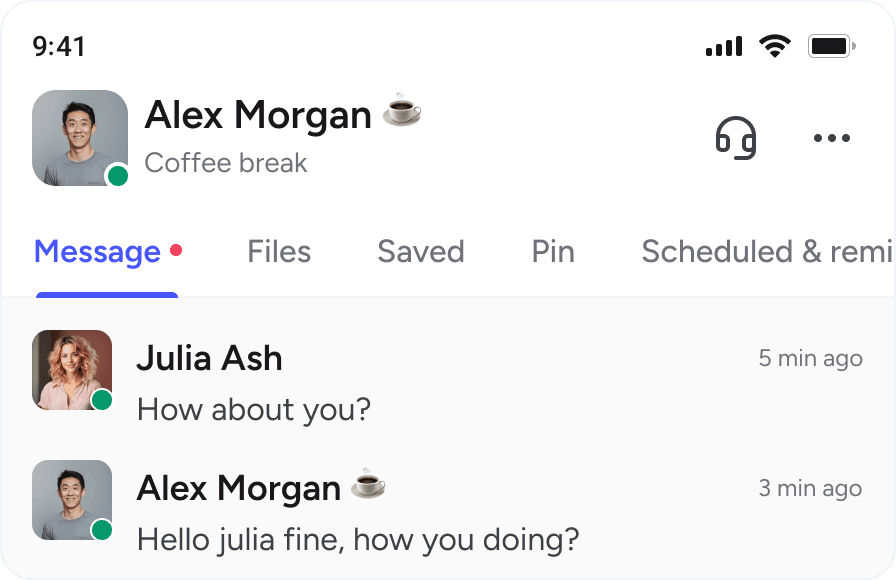
Tixio's team chat includes channels, direct messages, threads, file sharing, and meeting support. The difference from Slack? Your conversations sit right next to your projects. When your team discusses a deliverable in chat, that context doesn't disappear into a separate app, it's adjacent to the task, where it belongs.
Project Management Without the Tab-Switching
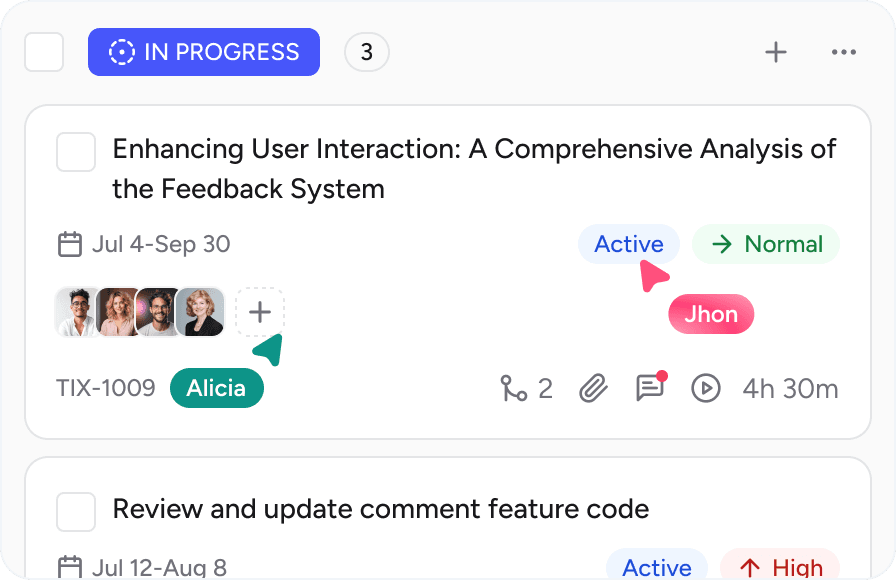
Kanban boards, roadmaps, calendar views, task and subtask tracking, automations, Tixio's project module covers the full range of what agencies need to run client work. You're not bouncing between a chat app and a project app. It's all in one place.
A Knowledge Hub That Actually Gets Used
Most agencies have documentation scattered across Notion pages, Google Docs, and shared drives that nobody updates. Tixio's wiki gives your team one place to build and maintain internal docs, with comments and embeds built in. New hire joins? They find everything in one spot.
The Canvas for Creative and Strategic Work
Collaborative whiteboards are table stakes for agencies doing strategy, UX, or creative work. Tixio's canvas supports embeddable items and flowcharts, so your team can do visual thinking without opening yet another tool.
HR and CRM Without the Extra Subscriptions
This is where Tixio separates itself from most collaboration platforms. The Tixio HR add-on covers attendance, leave management, payroll, contracts, and onboarding. The Tixio CRM add-on handles lead management, deal pipelines, email and calendar integration, and activity tracking.
For a growing agency, that's two entire tool categories you don't need to buy separately.
The Real Cost of Tools And What You Get Back
Let's be direct about what consolidation actually returns to your team:
- Time - less switching, fewer logins, faster context-finding
- Money - fewer per-seat subscriptions across multiple vendors
- Clarity - one source of truth for projects, conversations, and documentation
- Onboarding speed - new team members learn one tool, not six
- Client confidence - you can walk clients through your operations without cringing
If you want the broader picture on why more companies are moving this direction, why modern companies are replacing multiple tools with one collaboration platform covers the shift well.
This Isn't Just "Picking a Bigger Tool"
You might be thinking: "We already tried Notion. Or ClickUp. Or Monday. It didn't stick."
Fair. The problem with most all-in-one attempts is that they're strong in one area and weak everywhere else. A project tool that adds chat as an afterthought. A wiki that can't run a CRM. A chat app that bolts on tasks.
Tixio was built from the ground up to cover all of these areas at real depth. Chat isn't an add-on. Projects aren't a plugin. The HR and CRM modules aren't third-party integrations, they're native.
That's the difference between a tool that tries to do everything and one that's actually designed to. If you're curious about the thinking behind it, the story behind the concept is worth a read.
How to Make the Switch Without Losing Your Mind
Migrating your stack sounds painful. It doesn't have to be. Here's a practical approach:
- Audit what you're actually using - not what you pay for, but what your team opens daily
- Identify your core workflows - chat, project tracking, documentation, client management
- Map those workflows to Tixio - most agencies find 80% of their daily work fits natively
- Run a parallel period - two to four weeks where both systems are live; let the team migrate naturally
- Cut the old tools - once adoption is solid, cancel the subscriptions you no longer need
The goal isn't a perfect overnight migration. It's a gradual shift toward less friction.
Built for Teams That Move Fast
Tixio is designed for fast-moving teams - agencies, startups, and growing businesses that need to stay organized without spending half their day managing tools. If you want a broader foundation for why this kind of platform matters, what team collaboration tools actually are and why they matter is a solid starting point.
The bottom line: a technology agency running on a bloated, disconnected stack isn't just inefficient. It's inconsistent with the value you sell.
Tixio gives you the operational backbone to match the story you tell clients.
Start free at tixio.io - no credit card required.